

Last updated on August 27th, 2026 at 08:58 am
Degrees can get you a job, but soft skills decide how far you go.
In today’s busy world, just having good technical knowledge isn’t enough for long-term success. No matter if you’re working in a company, starting your own business, studying, or already running things—your ability to talk clearly, get along with people, and handle changes makes a big difference in how you grow.
That’s why soft skills are like your hidden strength.
Learning how to improve your soft skills can open up better job chances, help you build real friendships and work relationships, and make you feel more sure of yourself every day.
Learning how to improve your soft skills can open up better job chances… For more on overall growth, check our personality development category.
Key Takeaways
- Soft skills like good communication, being flexible, and understanding emotions are super important right now.
- Many companies say soft skills are just as important—or even more—than technical ones.
- You can build these skills with regular practice and asking for honest feedback.
- Good soft skills help you get promotions quicker, work better in teams, and feel happier at your job.
- Anyone can learn how to improve your soft skills, no matter where you start.
How to Improve Your Soft Skills?
Soft skills can be improved by practicing clear communication, teamwork, emotional control, time management, and adaptability in daily life. Regular feedback and real-life practice help develop strong interpersonal skills over time.
What Are Soft Skills?
Soft skills are those everyday personal qualities that help you get along with people and deal with different situations. They’re not like specific job knowledge (like using software or doing calculations), but they’re key for working well with others.
Some common ones are communication skills, teamwork, adaptability, problem-solving skills, emotional intelligence, leadership skills, time management skills, and creative thinking.
The great part? You can always work on and develop soft skills, even if they don’t come naturally at first.
Why Soft Skills Matter So Much Today
The job world is changing fast with new technology and different ways of working. Companies need people who can connect with others, stay calm during changes, and come up with good ideas together.
Reports from big organizations like the World Economic Forum and LinkedIn show that soft skills like communication, adaptability, leadership, and emotional intelligence are in high demand. Hiring managers often say these people skills make the real difference when deciding who to promote or keep on the team.
As highlighted in this Forbes article on soft skills in the age of AI, skills like strategic thinking, communication, honesty, critical thinking, and adaptability are becoming even more critical as AI takes over routine tasks.
Strong soft skills help you build trust, solve problems smoothly, handle stress better, and create a positive vibe around you—at work and in life. That’s why knowing how to improve your soft skills is one of the smartest moves you can make.
Top Soft Skills That Help You Stand Out
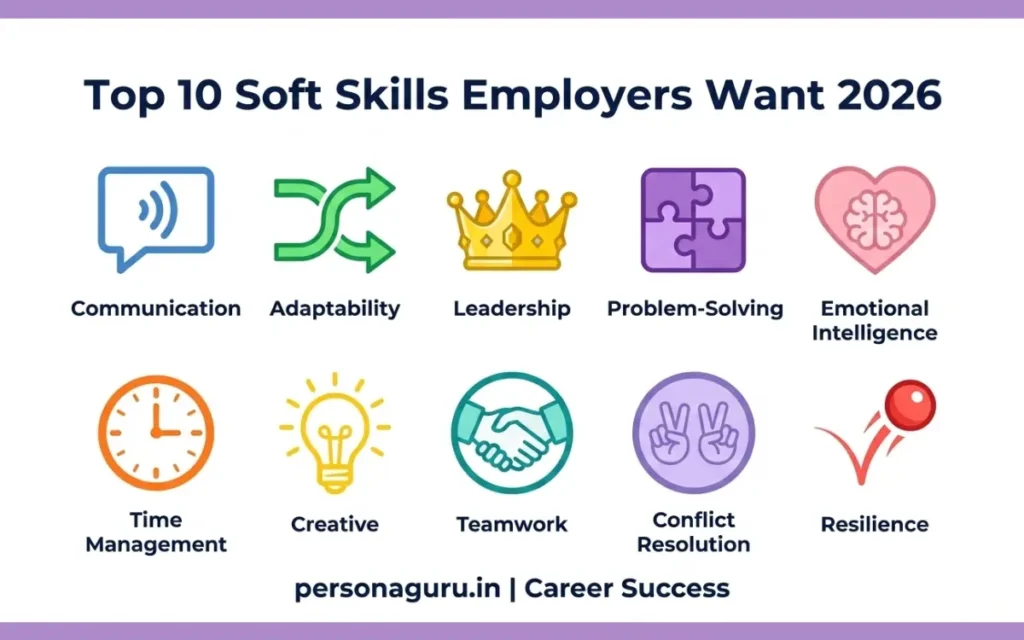
Here are some of the most useful ones people look for:
- Communication Skills – Talking clearly and listening well.
- Adaptability – Handling changes without getting stressed.
- Leadership Skills – Guiding others and building trust.
- Problem-Solving Skills – Finding smart ways to fix issues.
- Emotional Intelligence – Understanding your feelings and others’.
- Time Management Skills – Getting things done without rushing.
- Creative Thinking – Coming up with new ideas.
- Teamwork – Working well with different people.
- Conflict Resolution – Sorting out disagreements calmly.
- Resilience – Bouncing back from tough times.
How to Improve Your Soft Skills: Easy Tips to Try Today
Building soft skills doesn’t happen overnight, but small steps every day add up. Here are some simple, useful ways to develop soft skills that anyone can start with:
- Work on Communication Skills Listen without interrupting, then repeat back what you heard to make sure you got it right. Practice by chatting more with friends or colleagues. Useful tip: Smile and keep eye contact—it makes people feel heard and builds quick connections.
- Grow Leadership Skills Start small, like suggesting ideas in meetings or helping organize a team task. Give positive feedback to others first. Extra tip: Help someone with their work without being asked—they’ll naturally see you as a leader.
- Get Better at Problem-Solving Skills When something goes wrong, stay calm and list out three possible fixes. Ask “why” a few times to find the real cause. Simple tip: Think of problems as puzzles—it makes finding solutions more fun.
- Improve Time Management Skills Make a short to-do list each morning and tackle the most important things first. Try working for 25 minutes straight, then take a short break. Helpful tip: Turn off phone notifications during focus time—it saves hours every week.
- Boost Creative Thinking Try new things, like cooking a different recipe or reading a book outside your usual topics. Ask “what if” questions often. Easy tip: Go for a walk when stuck—fresh air brings new ideas quickly.
- ‘Build Emotional Intelligence Notice how you are feeling during the day and why. When someone is upset, try to see things from their side. Practical tip: Take a few deep breaths before replying in heated moments—it helps you respond kindly.
- Strengthen Adaptability and Resilience Change one small habit each week, like trying a new way to do a task. See mistakes as chances to learn. Good tip: At the end of a tough day, write down three things that went well—it keeps you positive.
- Better Teamwork and Conflict Resolution In group work, share credit and ask for other’s opinions. When there’s a disagreement, say “Let’s find a solution together.” Useful tip: Start conversations with “I feel” instead of pointing fingers—it keeps things friendly.
read more: Why are Communication Skills important in an Interview?
More easy ideas: Watch free videos on YouTube about soft skills, take short online courses, or ask a close friend “What do you think I can improve?” Keep trying one new tip each week—you will notice changes soon.
Examples of Soft Skills
Take Rahul and Sandeep—both smart and got the same job. Rahul was great at the technical side but got frustrated easily with his team. Sandeep wasn’t quite as technical, but he explained things kindly and motivated everyone. Guess who moved up faster? Sandeep, thanks to his people skills.
Or think of a shop manager who calmed an angry customer by listening carefully, saying sorry, and offering a simple fix. He turned a bad situation into a happy, returning customer.
These show how soft skills improvement often beats just being good at the job tasks alone.
Wrapping It Up
Knowing how to improve your soft skills is one of the best things you can do for your career and life. Focus on talking well, adapting easily, understanding people, and staying positive—these make you stand out everywhere.
Pick one tip from here and try it starting today. Keep practicing, and you’ll see better opportunities, stronger relationships, and more confidence coming your way.
You have got this—small changes lead to big results!
FAQs
Why are soft skills important?
They help you connect with people, handle challenges, and grow faster at work. Many bosses value them more than just technical knowledge.
What are examples of soft skills?
Communication skills, leadership skills, problem-solving skills, emotional intelligence, adaptability, time management skills, teamwork, creative thinking, and resilience.
What soft skills should I focus on in the workplace?
1. Communication
2. Adaptability
3. Leadership
4. Problem-solving
5. Emotional intelligence
6. Time management
7. Teamwork
8. Conflict resolution
What are the best soft skills to have?
Communication skills, emotional intelligence, adaptability, problem-solving skills, and leadership—these open the most doors.

Ayanshi is the founder of PersonaGuru.in, a blog dedicated to personality development, relationships, and mental health. With 3+ years of writing experience and 250+ published articles, she simplifies psychology into practical, everyday advice for real people.