
Last updated on February 6th, 2026 at 09:53 am
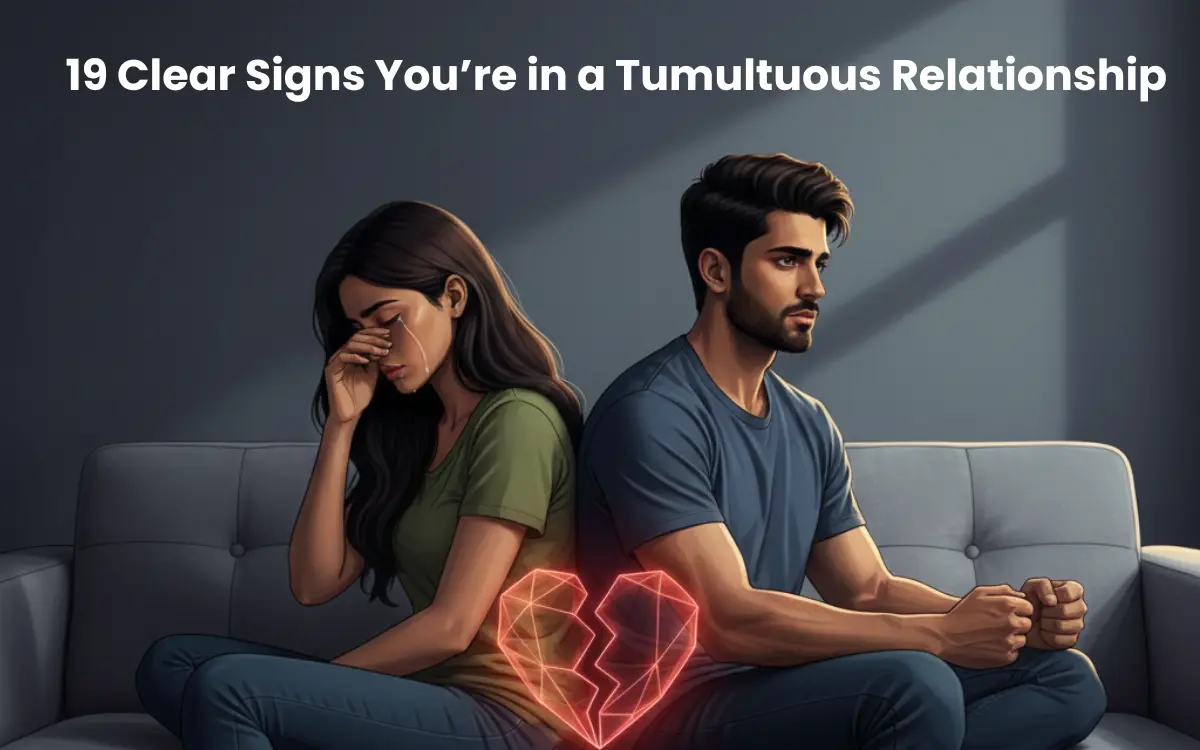
Does your relationship often feel stressful, with lots of arguments, breakups, and making up? If that sounds familiar, you might be in a tumultuous relationship. Instead of feeling safe and happy, things might feel unpredictable and tiring.
Many people experience these kinds of ups and downs in their relationships. The good news is that understanding the signs and reasons behind this can help you either improve your relationship or find the strength to move on. This guide will show you 19 clear signs of a tumultuous relationship, explain why it happens, and offer simple steps to heal or make a change.
You deserve a steady and caring relationship that feels good. Let’s explore what you need to know.
What is a Tumultuous Relationship?
A tumultuous relationship is a romantic connection marked by frequent emotional ups and downs, intense arguments, breakups and make-ups, jealousy, and instability. It causes stress and confusion instead of comfort and trust. This kind of relationship can harm your emotional well-being if it continues without change.
Quick Definition: “A tumultuous relationship is an unstable, chaotic romantic connection full of drama, emotional volatility, and recurring conflict that leaves both partners exhausted instead of supported.”
Synonyms:
- Rollercoaster relationship
- Volatile relationship
- Toxic on-again-off-again relationship
- Stormy relationship
- Chaotic love
Dr. John Gottman:
“Intensity is not intimacy. Couples often mistake drama for passion — but real love feels calm, safe, and emotionally secure.”
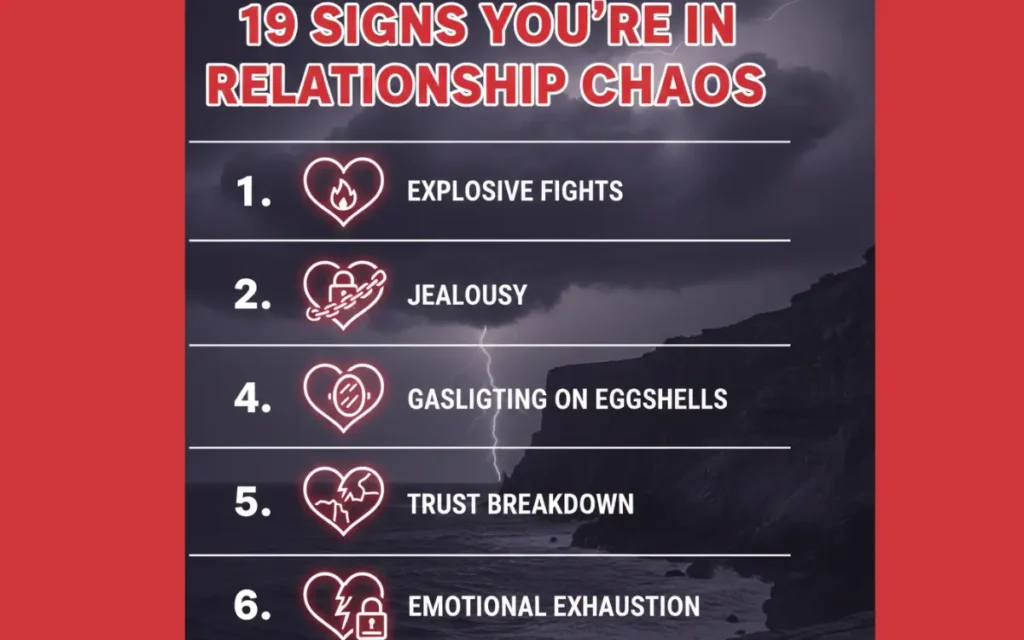
19 Deep Signs You’re in a Tumultuous Relationship
If you recognize 6 or more, your relationship is officially tumultuous.
- Explosive fights over tiny things
- Constant on-again, off-again cycles
- Gaslighting and emotional manipulation
- Extreme jealousy and possessiveness
- Hot-and-cold behavior
- Walking on eggshells every day
- Complete breakdown of trust
- Growing resentment — old fights never die
- Repeated boundary violations
- Chronic emotional and physical exhaustion
- Loss of your own identity and goals
- Partner’s unpredictable mood swings
- Strong codependency
- Love bombing after every fight
- Feeling unseen, unheard, and misunderstood
- Friends and family keep warning you
- Arguments sometimes turn physical (pushing, shoving, throwing objects)
- Trauma bonding — pain creates stronger attachment
- Your gut constantly says “This isn’t normal”
read more: Emotional Intelligence for Relationships
Psychology & Root Causes
- Incompatible attachment styles: Anxious + avoidant pairs create emotional chaos
- Unresolved childhood or past trauma fuels instability
- Ego clashes and poor emotional regulation escalate conflicts
- Rushing into commitment too fast leads to disappointment
- Mental health challenges worsen communication and trust
- Social media-fueled unrealistic expectations increase dissatisfaction
- Major external stress (work, finances, health) strains the bond
Read More: Avoidant Attachment Relationship:
Learn more about attachment styles and their impact on adult relationships at The Attachment Project
Statistics
| Statistic | Number | Source |
|---|---|---|
| Couples in on-again-off-again relationships | 34–37% | Talkspace 2025 Report |
| Young adults with recent breakup (18–35) | 36.5% (last 20 months) | Journal of Social Relations |
| Lifetime intimate partner violence (women) | 41% | CDC / NCADVC |
| Couples who improve after therapy | 70–75% | Gottman Institute |
Case study: “Maya & Raj” — a realistic 90-day recovery attempt (composite)
Background: Maya (29) and Raj (31) loved each other deeply but fought almost daily. They broke up three times in a year, then returned, each reunion more intense. Friends warned Maya; Raj called her clingy. Both were exhausted and thought leaving was the only choice — until they tried one structured plan.
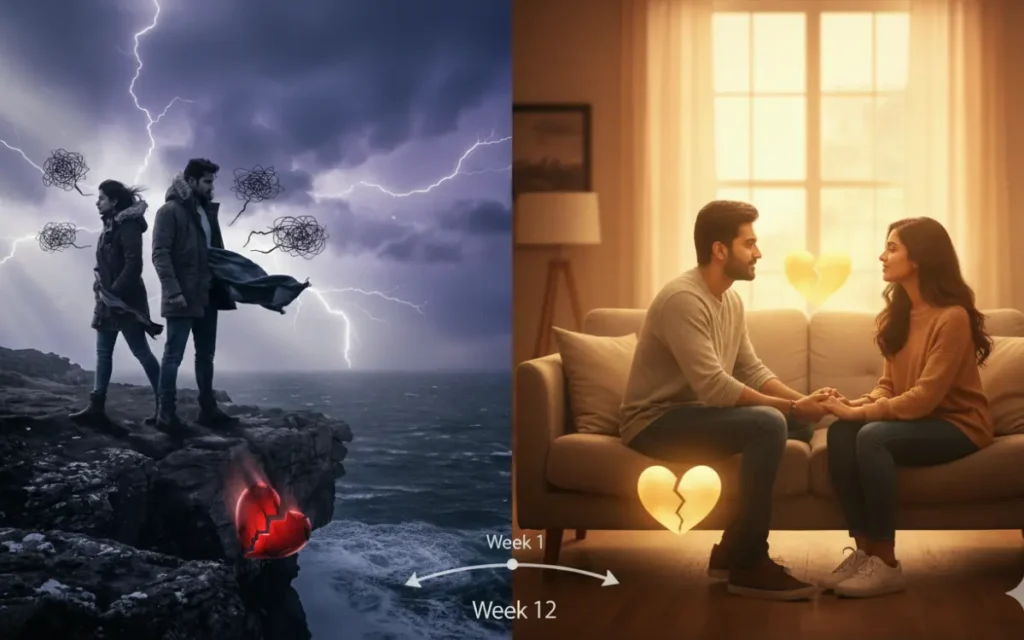
Week 0: Both admitted the relationship was tumultuous and agreed to a 90-day committed plan. They agreed to weekly check-ins and a therapist.
Weeks 1–2: They set three firm boundaries: no silent treatment over 24 hours, no name-calling, and a 30-minute “cooldown” when voices rise. They practiced “I feel…” phrases in check-ins.
Weeks 3–6: With a therapist, they mapped patterns — Raj’s withdrawal triggered Maya’s pursuit, which made Raj flee more. They learned small rituals to repair: a daily 5-minute gratitude check, a calm apology script, and Raj committed to a text each morning that he would follow.
Weeks 7–12: Trust rebuilt slowly. Maya reactivated friendships and hobbies; Raj took responsibility for phone secrecy. After 90 days, fights reduced and repair happened faster. They continued therapy, grateful for measurable change.
Outcome: Not every couple will recover. But the structure, mutual commitment, boundaries, and consistent repair work gave Maya and Raj a real chance.
8 Expert Ways to Fix a Tumultuous Relationship
(Only works if both partners truly want change)
- Admit the problem exists — stop calling it passion
- Weekly honest, blame-free check-ins
- Set and respect clear boundaries
- Start professional couples therapy
- Heal individually (personal therapy)
- Rebuild trust with consistent actions
- Master healthy communication skills
- 90-day real improvement trial
Important: Leave immediately if there is physical violence, ongoing abuse, or severe damage to your mental health.
Final Thoughts
Being in a tumultuous relationship can leave you feeling tired, confused, and unsure about what to do next. Keep in mind, a healthy relationship should bring comfort, trust, and peace—not constant stress or emotional ups and downs. Knowing the signs and understanding why this happens is the first step toward making a positive change.
Whether you choose to work on fixing your relationship or decide to move on for your own well-being, trust yourself and focus on what makes you happy. You deserve a relationship that feels steady, loving, and supportive every day.
If you see yourself in the signs shared here, don’t hesitate to ask for help—whether that means talking to a close friend, seeing a therapist, or using the resources available to you. Taking action is the best way to protect your heart and build the loving relationship you deserve.
For more insights on emotional growth, communication, and healthy bonds, explore our relationship guides.
FAQs
1. What exactly is a tumultuous relationship?
A chaotic romantic bond full of extreme emotional swings and frequent conflict.
2. Is tumultuous good or bad?
Almost always bad. The highs feel exciting, but the constant drama and emotional damage destroy mental health and long-term happiness.
3. Can a tumultuous relationship last?
Yes, many last years (average 2–5 years), but they rarely become healthy without serious therapy and effort from both partners.
4. What is another word for tumultuous relationship?
Rollercoaster relationship, volatile relationship, toxic on-again-off-again relationship.
5. Can a tumultuous relationship become healthy?
Yes, with mutual commitment, professional therapy, and consistent work on communication and healing.

Ayanshi is the founder of PersonaGuru.in, a blog dedicated to personality development, relationships, and mental health. With 3+ years of writing experience and 250+ published articles, she simplifies psychology into practical, everyday advice for real people.