
Last updated on February 6th, 2026 at 09:42 am
Relationships can be complex, and it is often difficult to distinguish between a “rough patch” and a dangerous situation. While most people are familiar with “red flags,” those cautionary warnings that something might be off, there is a far more severe category of warning signs: black flags in a relationship.
In this article, we will explore the black flag’s meaning, how it differs from a red flag, and the specific behaviors that signal a relationship is no longer safe or salvageable. If you are thinking about your own relationship or trying to help a friend, knowing these signs is really important. Whether you are evaluating your own partnership or supporting a friend, understanding these black flag conditions is essential for long-term well-being.
What is a black flag in a relationship? A black flag is a non-negotiable, deal-breaking sign that a relationship is fundamentally unsafe, toxic, or dangerous. Unlike red flags, which are warnings to pause and reassess, black flags indicate severe behaviors such as physical violence, extreme control, or systematic gaslighting that require an immediate exit strategy. In short, a red flag is a warning; a black flag is a “point of no return” where your safety must come first.
🚀 Key Takeaways: Protecting Your Well-Being
- Black flags are deal-breakers: These are not issues to be “worked on” through compromise; they are reasons to leave.
- Safety is the priority: Recognizing black flag meaning in person early can prevent severe physical and emotional trauma.
- The Personality Factor: A black flag personality often centers on power, control, and a total lack of empathy.
- Action over Hope: Do not wait for a toxic person to change; prioritize your own exit and recovery.
What is a Black Flag in a Relationship?
In the context of modern dating, the black flag meaning represents a situation that is beyond repair. It is a signal of deep-seated toxicity that threatens your mental, emotional, or physical health.
While every relationship has flaws, black flags in a relationship are fundamentally different. They represent a breach of human rights, dignity, and safety. If you find yourself in black flag conditions, the focus shifts from “fixing the relationship” to “saving yourself.”
Red Flag vs. Black Flag in Relationship: What’s the Difference?
Knowing the difference between red flag and black flag in a relationship can be life-saving.
| Feature | Red Flag (Warning) | Black Flag (Danger) |
| Meaning | A warning sign that something might be wrong. | A clear sign that the relationship is unsafe and toxic. |
| Examples | Small lies, excessive jealousy, or poor communication. | Physical violence, extreme control, or systematic gaslighting. |
| Can it be fixed? | Yes, sometimes through talking and setting boundaries. | No. These are deep personality issues that rarely change. |
| Required Action | Pause, be careful, and observe the partner’s behavior. | Leave immediately. Prioritize your safety and exit. |
| Risk Level | High risk, but may be manageable with effort. | Extreme danger. The relationship is unsalvageable. |
Black Flag Meaning in Relationship Psychology
In relationship psychology, black flags are often linked to “Dark Triad” personality traits: narcissism, Machiavellianism, and psychopathy. These are not merely “bad habits”; they are predatory behavioral patterns.
Latest Statistics (2025):
According to the World Health Organization’s latest 2025 report, nearly 1 in 3 women (approximately 840 million globally) have experienced physical and/or sexual intimate partner violence or non-partner sexual violence in their lifetime. For men, reliable global data is limited, but studies (e.g., CDC) indicate that about 1 in 7 men experience severe physical violence by an intimate partner. (Source: WHO Violence Against Women Prevalence Estimates, November 2025)
While women are disproportionately affected, men can also experience black flags in relationships, and the signs remain the same.
“When someone shows you who they are, believe them the first time.” — Maya Angelou
“You don’t ever have to feel guilty about removing toxic people from your life.”
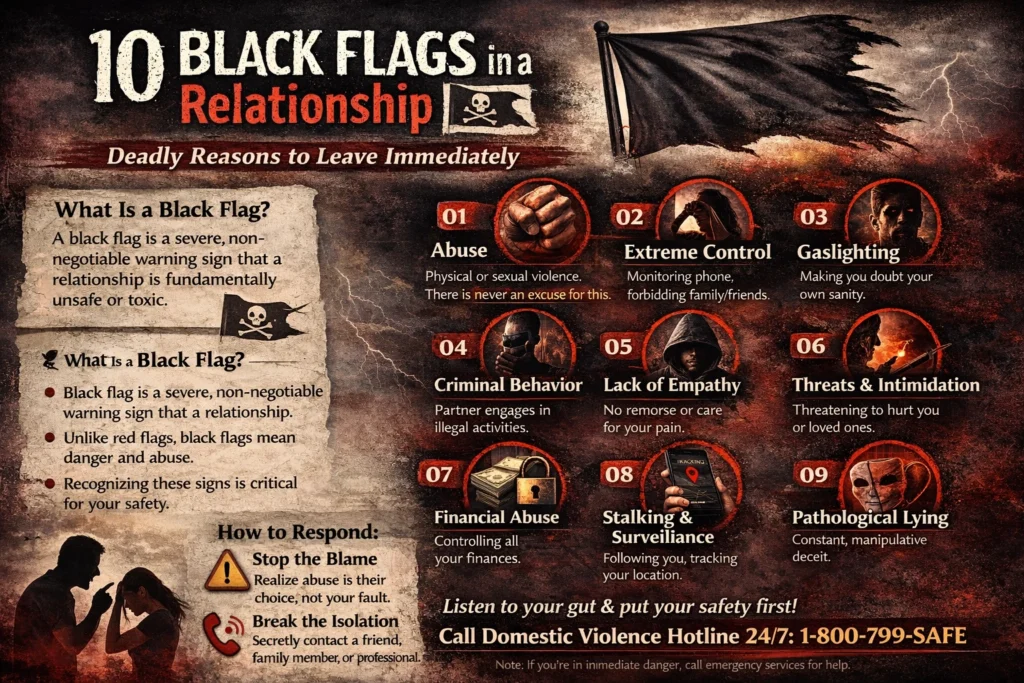
What are the Black Flags in a Relationship? (10 Critical Examples)
If you are wondering what are some black flags, here are the most dangerous signs to identify:
- Physical or Sexual Abuse: Any form of violence, intimidation, or forced intimacy. There are no excuses for this.
- Extreme Control and Isolation: When a partner monitors your phone, controls your social circle, or forbids you from seeing family.
- Systematic Gaslighting: A form of psychological warfare where the partner makes you doubt your own sanity or memory.
- Criminal Behavior: Involvement in illegal activities that endanger you or your family.
- Lack of Empathy: A total inability to feel remorse or care about the pain they cause you.
- Threats and Intimidation: Using threats (to hurt you, themselves, or loved ones) as a tool for control.
- Financial Abuse: Taking complete control of finances to make you dependent on them for basic survival.
- Stalking and Surveillance: Following you, using GPS trackers, or demanding “proof” of your location at all times.
- Pathological Lying: A complete disregard for the truth, creating a false reality to manipulate you.
- Love Bombing followed by Devaluation: Overwhelming you with affection initially, only to use it as a weapon to control you later.
related read: What is Love Bombing in a Relationship?
Black Flag Personality: Traits to Recognize
A black flag personality is someone who views a partner as an object or a “trophy” rather than a human being. They often:
- Refuse to take accountability for their actions.
- Blame you for their own abusive outbursts.
- Deliberately destroy your self-esteem to keep you compliant.
- Have a history of “burning bridges” and toxic past relationships.
read more: 12 Key Aspects of Personality Development
How Do You Respond to a Black Flag?
If you realize you are facing a black flag meaning in person, your response must be swift and safety-oriented.
- Stop Justifying the Behavior: Understand that abuse is a choice made by the abuser; it is not caused by your mistakes.
- Break the Isolation: Contact a trusted friend, family member, or a professional.
- Create a Safety Plan: If there is a risk of violence, do not announce that you are leaving. Secretly pack essentials, secure your documents, and find a safe location.
- Seek Professional Help: Use domestic violence hotlines and trauma-informed therapists.
- Go No Contact: The only way to break a cycle with a black flag personality is to remove their access to you entirely.
Resources for Immediate Help
If you are in danger, reach out right away:
- India: National Women Helpline (24×7): 7827170170 or 14490 | Emergency: Dial 112
- US: National Domestic Violence Hotline: 1-800-799-7233 (SAFE)
- Global: Contact local authorities or search for your country’s domestic violence hotline. Prioritize your safety—help is available.
Final Thoughts:
Recognizing black flags in a relationship can be life-saving. Love should be a source of support and safety, not fear and confusion. If you spot these signs, listen to your gut, reach out for help, and remember that you deserve a life free from manipulation and harm.
Final Thought: Do not wait for a “miracle” change. Black flags do not fade with time; they only grow more prominent.
Disclaimer: This article is for educational purposes only. If you’re experiencing abuse or in immediate danger, seek professional help immediately.
FAQs
1. What are some black flags?
Black flags are severe deal-breakers like physical or sexual abuse, extreme control over your movements, and systematic gaslighting. Other examples include isolating you from your family, financial exploitation, and threats of violence. While red flags are warnings to be careful, black flags are clear signs of a dangerous and unsalvageable relationship.
2. What does it mean to be black flagged?
In a relationship, being black flagged means a person has been identified as fundamentally toxic or dangerous. It indicates that they have crossed a non-negotiable line, such as breaking a safety boundary or a severe breach of trust. Once someone is black flagged, the relationship is usually over for the victim’s own protection.
3. What is the black flag known for?
Historically, the black flag is known for representing “no quarter” or no mercy, often used by pirates. In modern dating, it is known for signaling the most extreme level of toxicity. It represents black flag conditions where love has been replaced by fear, manipulation, and a total lack of human empathy.
4. How do you respond to a black flag?
The best way to respond to a black flag is to prioritize your safety and end the connection immediately. Because black flags involve deep personality issues, they cannot be fixed through talking. You should create a safe exit plan, seek support from friends or professionals, and maintain a “no contact” rule to heal.
5. Is there any black flag?
Yes, there are several objective black flags in psychology. If you are asking “is there any black flag in my life,” look for signs of abuse, threats, or total control. These are not just “rough patches”—they are absolute indicators that a relationship is harmful and that you deserve to move on to a safer environment.

Ayanshi | MBA (HR) & Personality Coach
MBA in HR | 250+ posts helping 50,000+ readers build confidence, emotional intelligence, and healthy relationships. Over 3 years transforming real-life experience into practical, proven growth strategies.
From corporate HR professional to full-time blogger sharing actionable personal development insights.