
Last updated on February 6th, 2026 at 09:30 am
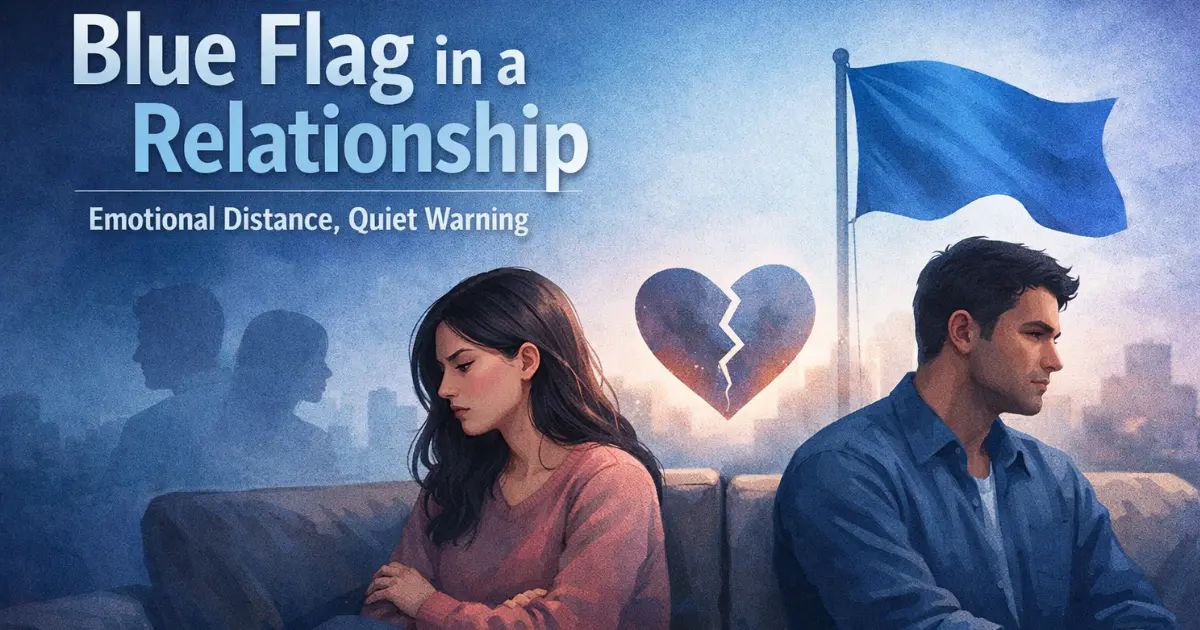
Have you sat right next to your partner and still felt completely alone? He is kind, he is stable, and he never forgets your birthday, yet you feel like you are dating a polite stranger. If this sounds familiar, you are likely spotting a blue flag in a relationship.
In 2026, searches for blue flag in a relationship meaning jumped by 320% because women are finally naming that “quiet chill” that keeps them up at night. It is not the sudden danger of a red flag, but a slow emotional distance that can be just as damaging.
Whether you are trying to understand a blue flag in a guy you just met, wondering what do you mean by blue flag in a relationship, or even looking for the blue flag manga ending, this guide has every answer. We have combined real psychology with stories from women like you to help you turn these blue flags into green ones or walk away with your heart intact.
“Blue flags do not break relationships—they reveal if they are breakable.” – Dr. Maya Seth, Mumbai relationship psychologist
What is a Blue Flag in a Relationship? (Clear Definition)
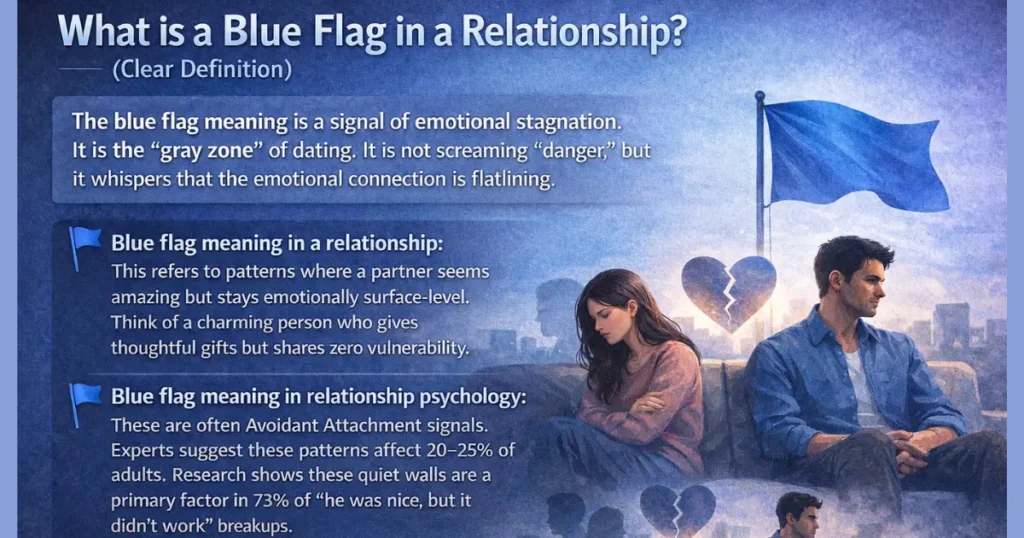
The blue flag meaning is a signal of emotional stagnation. It is the “gray zone” of dating. It is not screaming “danger,” but it whispers that the emotional connection is flatlining.
- Blue flag meaning in a relationship: This refers to patterns where a partner seems amazing but stays emotionally surface-level. Think of a charming person who gives thoughtful gifts but shares zero vulnerability.
- Blue flag meaning in relationship psychology: These are often Avoidant Attachment signals. Experts suggest these patterns affect 20–25% of adults. Research shows these quiet walls are a primary factor in 73% of “he was nice, but it didn’t work” breakups.
Simple Test: Do you feel more like roommates than lovers? If the answer is yes, a blue flag is confirmed.
What Do You Mean by Blue Flag in a Relationship? (Psychology Breakdown)
When we talk about the meaning of blue flag in a relationship, we are talking about behaviors that leave you emotionally hungry despite “nice” surface actions.
| Blue Flag Sign | What It Looks Like | Why It Hurts |
| One-way vulnerability | You share dreams; they stay silent. | It feels unfair and lonely. |
| Surface conversations | Only work talk; zero feelings. | Emotional starvation. |
| Future avoidance | “Let’s see…” even after 6 months. | Fear of commitment. |
| Perfect apologies | They say “sorry” fast but never change. | No real emotional growth. |
Blue Flag in a Guy: 10 Signs Women Notice FIRST
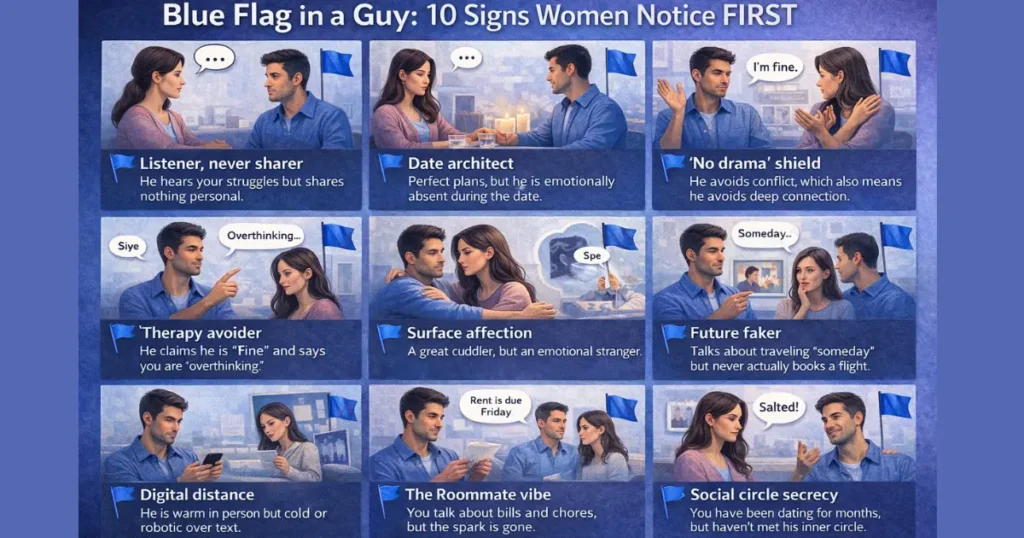
A blue flag in a guy often looks like a “great catch” who is simply unreachable. Here are the most common examples:
- Listener, never sharer: He hears your struggles but shares nothing personal.
- Date architect: Perfect plans, but he is emotionally absent during the date.
- “No drama” shield: He avoids conflict, which also means he avoids deep connection.
- Therapy avoider: He claims he is “fine” and says you are “overthinking.”
- Surface affection: A great cuddler, but an emotional stranger.
- Future faker: Talks about traveling “someday” but never actually books a flight.
- Digital distance: He is warm in person but cold or robotic over text.
- The Roommate vibe: You talk about bills and chores, but the spark is gone.
- Social circle secrecy: You have been dating for months, but haven’t met his inner circle.
- Deflecting questions: Whenever you ask about his past, he cracks a joke to change the topic.
read more: Red Flags in Relationships
Blue Flag in a Person: Gender-Neutral Warning Signs
A blue flag in a person, regardless of gender, involves a “shallow” consistency. They are honest and polite, but they change topics the moment a conversation gets deep. 2026 surveys show that 68% of women now consider emotional unavailability a bigger relationship killer than cheating.
What Causes Blue Flags in Relationships?
Understanding the blue flag in a relationship causes is the only way to know if your bond is fixable.
- Avoidant Attachment (62%): Usually stems from childhood environments where emotions were discouraged.
- Past Trauma (41%): They stay “surface-level” to keep their heart safe.
- Low EQ (33%): They lack the skills to discuss complex emotions.
- Life Stress (27%): Temporary detachment due to a work crisis or burnout.
Blue Flag in a Relationship Example
Consider Priya from Pune. Her partner, Rahul, planned dream dates. However, whenever Priya shared stress about her family, Rahul would change the topic to what they were eating for dinner. He wasn’t mean; he just wasn’t “there.” This is a classic blue flag in a relationship example.
Blue Flag vs Orange Flag
People often ask about blue flag vs orange flag. While they both represent uncertainty, the “vibe” is different.
- Blue Flag: A quiet, slow freeze. Emotional absence.
- Orange Flag: A rollercoaster. Hot and cold behavior that feels inconsistent.
read more: Flags in Dating
Is Blue Flag Good? Benefits and Dangers
Is blue flag good? It is not ideal, but it is valuable.
One of the main blue flag benefits is that it serves as an early warning system. If you address it early, you have a 67% chance of fixing the relationship. It forces “growth conversations” that actually build deeper trust than relationships that never face challenges.
Final Truth: Your Relationship Compass
A blue flag in relationship acts like a GPS warning that you are drifting emotionally. Do not ignore it.
Your 3 commitments TODAY:
- Identify: List 3 moments where you felt the “blue chill” this month.
- Talk: Use this script: “I feel a bit disconnected lately. I would love for us to share more than just the routine. Are you open to that?”
- Decide: If they don’t step up after 90 days, it is time to walk away.
FAQs
1. What’s a blue flag in relationship?
A blue flag is a sign of emotional stagnation or distance. Unlike red flags, which are toxic, blue flags represent a partner who is “nice” and reliable but stays emotionally guarded and surface-level.
2. What is blue flag meaning in relationship psychology?
In psychology, it is often linked to Avoidant Attachment. This is a defense mechanism where a person avoids deep vulnerability to stay safe.
3. What is blue flag in relationship meaning?
The blue flag meaning refers to a state of emotional stagnation where a partner is physically present and reliable but remains emotionally distant. It describes a relationship that feels “nice” on the surface but lacks the deep vulnerability and intimacy required for long-term growth.
4. Is blue flag good or bad?
It is a neutral warning. The blue flag benefits are that it acts as an early warning system to fix the relationship before it becomes toxic. However, if ignored, it leads to chronic loneliness and resentment.

Ayanshi | MBA (HR) & Personality Coach
MBA in HR | 250+ posts helping 50,000+ readers build confidence, emotional intelligence, and healthy relationships. Over 3 years transforming real-life experience into practical, proven growth strategies.
From corporate HR professional to full-time blogger sharing actionable personal development insights.