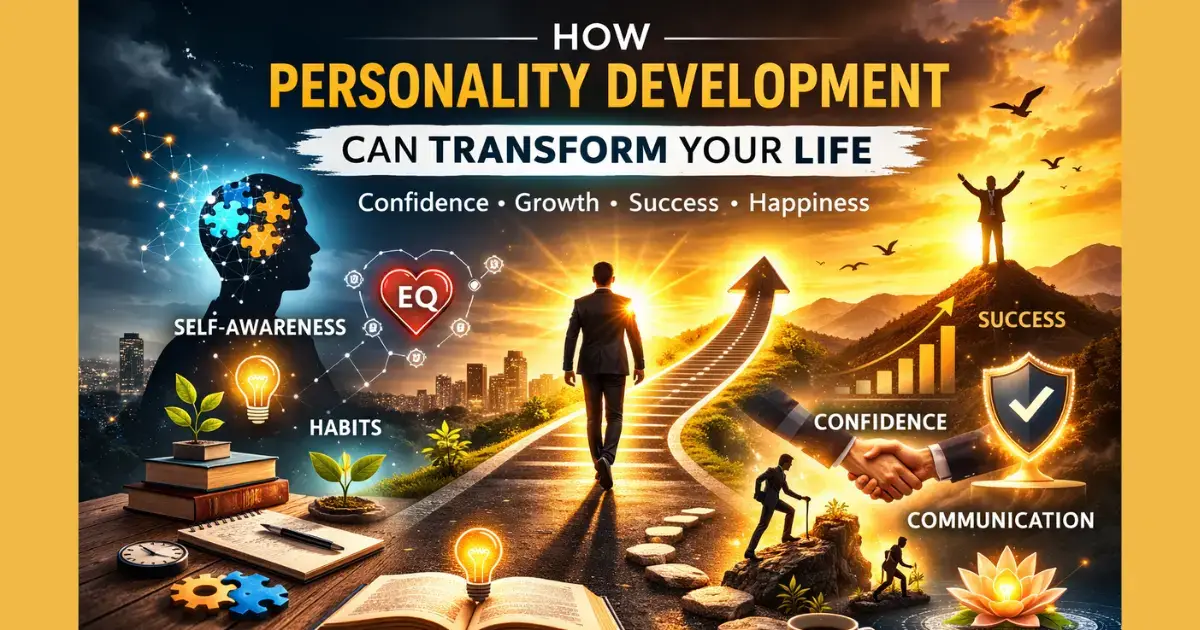
What Are the 5 Most Important Aspects of Personality Development?
1. Self-Awareness, Know Yourself First
Self-awareness is the root of all growth. You cannot improve what you do not understand.
Research by psychologist Tasha Eurich (2024) shows that only 10 to 15% of people are truly self-aware, even though 95% think they are. That gap is where most people stay stuck.
How to build it: Journal for 5 minutes daily. Take the Big Five personality test. Ask a trusted friend for honest feedback. The truth, even when uncomfortable, is where growth lives.
2. Emotional Intelligence (EQ), The Real Success Skill
EQ is your ability to recognize, understand, and manage emotions, yours and others’. According to Talent Smart (2024), emotional intelligence drives 58% of professional performance and is a stronger career predictor than IQ alone.
The four pillars of EQ are self-awareness, self-management, social awareness, and relationship management. Developing even one of these shifts everything.
read more: Powerful Tips to Boost Your Emotional Intelligence
3. Communication Skills, Your Bridge to the World
You can have brilliant ideas, but if you cannot express them clearly, they stay invisible. Effective communication means listening fully, speaking with clarity, reading nonverbal cues, and adapting your style to different people.
The World Economic Forum (2024) lists communication as one of the top three most in-demand human skills for the next decade because AI cannot replicate a genuine human connection.
read more: Action Plan to Improve Communication Skills in the Workplace
4. Confidence, Quiet, Grounded, Real
Confidence is not loudness or arrogance. It is a calm belief in your own worth, the kind that lets you take action even when you feel uncertain.
Build it through small wins, keeping promises to yourself, and stepping into challenges rather than away from them.
“Confidence comes not from always being right, but from not fearing to be wrong.”
by Peter T. McIntyre
5. Resilience, The Ability to Rise
Life will always deliver setbacks. Resilient people do not avoid pain. They process it, learn from it, and come back stronger.
A 2024 study by the American Psychological Association found resilient individuals experience 42% less burnout and recover from failures 60% faster. Resilience is not a personality type. It is a skill you can build deliberately.
What Is the Main Purpose of Personality Development?
The main purpose is not to impress anyone. It is to help you live a more intentional, meaningful life where your habits, relationships, and choices are aligned with who you truly want to be.
More specifically, it helps you build genuine confidence, improve every relationship in your life, unlock career growth, protect your mental health, and adapt to a world that changes faster every year.
“The purpose of life is to be useful, to be honorable, to be compassionate, to have it make some difference that you have lived.”
by Ralph Waldo Emerson
What Are the Three Main Influences on Personality Development?
Three forces shape who we become:
1. Genetics (Nature): Your natural temperament, introversion, emotional sensitivity, baseline energy. This is your starting point, not your ceiling.
2. Environment (Nurture): Family, culture, friendships, and life experiences. A nurturing environment builds confidence, while a critical one can plant self-doubt. Awareness of these patterns lets you consciously break the ones that limit you.
3. Conscious Personal Effort: This is the game changer. While genetics and environment shape you passively, your daily choices and intentional habits shape you actively. This factor is entirely within your control, and that is the most powerful truth in personal development.
What Are the 4 Main Factors That Affect Personality Development?
- Early Childhood Experiences: The emotional patterns absorbed in childhood stay with us. Research by John Gottman (2024) confirms that emotionally attuned parenting produces adults with significantly higher emotional intelligence.
2. Social and Cultural Environment: Your culture defines how you communicate, relate, and measure success. Awareness of this helps you choose which cultural values to carry forward and which to consciously revise.
3. Education and Continuous Learning: Learning, formal or informal, expands your thinking, problem solving, and worldview. All of these are core to a developed personality.
4. Personal Experience plus Reflection: What happens to you matters far less than how you process it. People who reflect on their experiences through journaling, therapy, or coaching grow faster than those who just let life happen to them.
Real Life Example: What Personality Development Actually Looks Like
Rajan was a technically brilliant engineer, but he was losing team members because of his harsh, blunt feedback style. After joining an emotional intelligence program, he learned to pause before responding, acknowledge feelings first, and give feedback that was honest but kind. Within three months, his team retention improved by 40%, and he became someone people genuinely wanted to work for.
No magic. No overnight transformation. Just deliberate, consistent practice of one new skill at a time.
3 Practical Strategies to Start Today
1. Daily Journaling (5 Minutes): Ask yourself three questions every evening. What went well? What could I handle better? What am I grateful for? This single habit builds self-awareness faster than almost anything else.
2. One Weekly Challenge: Growth does not happen in comfort zones. Commit to one uncomfortable action per week, a difficult conversation, a new skill, or a public moment. Each one builds your confidence and adaptability.
3. Seek Feedback Intentionally: Ask someone you trust for honest input on one specific area. Feedback shows you your blind spots and compresses years of growth into months.
Conclusion: Start With One Decision
You are not stuck with the personality you have today. Every person you admire for their confidence, warmth, leadership, or calm built those qualities through conscious, daily effort.
Personality development is not about becoming someone else. It is about removing the fear, the old stories, and the limiting beliefs, and finally letting the strongest version of yourself come through.
Start with one habit. One journal entry. One honest conversation with yourself.
“Be not afraid of growing slowly. Be afraid only of standing still.”
Chinese Proverb
Your future self is waiting. Start today.
Frequently Asked Questions
What are the 5 stages of personality development?
Self-Discovery to Goal Setting to Skill Building to Habit Formation to Integration. Each stage builds on the last, creating change that becomes part of your natural identity.
What are the Big Five personality factors?
Openness, Conscientiousness, Extraversion, Agreeableness, and Neuroticism (OCEAN model). All five can be intentionally developed over time.
What are the 4 P’s of personal development?
Purpose, Plan, Practice, and Persistence are the four pillars that turn intention into lasting transformation.
Is personality development important for students?
Absolutely. It builds the confidence, communication skills, and emotional resilience that no exam can teach and that every career requires.
How long does personality development take?
Meaningful change in specific traits takes 10 to 16 weeks of intentional effort. But it is a lifelong journey, not a destination.
Sources: APA (2024), LinkedIn Workplace Report (2024), WEF Future of Jobs Report (2024), Journal of Personality and Social Psychology (2023), Talent Smart (2024), Harvard Business Review (2023), Psychological Science (2024), Tasha Eurich Research (2024).