
Last updated on February 7th, 2026 at 02:58 pm
Imagine buying a top-end smartphone but never updating its software. Over time, it gets slow, the apps crash, and it just can’t keep up. Our personalities are exactly like that. We spend years getting degrees (the hardware), but we often forget to update our life skills (the software).
Life skills education for personality development gives you the practical tools to handle 2026’s real-world challenges confidently.
World moves fast. Life skills education for personality development is no longer just a “good-to-have” option—it is the foundation for anyone who wants to stop feeling lost and start taking charge of their life. Whether you are a student or a working professional, these skills decide how far you actually go.
“Your personality is the window through which you see the world, and life skills are the tools you use to keep that window clean.” — Dr. Radhika Sharma, Psychologist.
 |
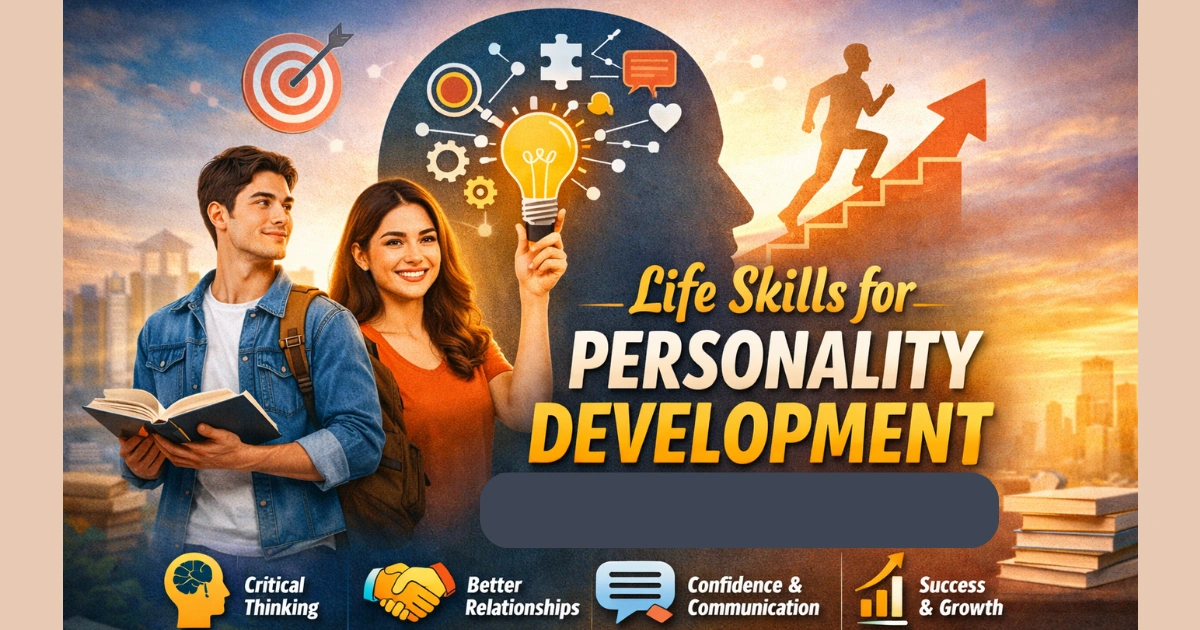
| Empowering Growth: Life Skills Education for Personality Development |
What Is Life Skills Education?
Life skills education means learning the practical abilities that help a person handle real-life situations confidently and responsibly. These are the skills that guide how you think, feel, communicate, and respond in everyday situations—at home, at work, and in society.
Unlike academic subjects that focus on theory, life skills focus on behavior, mindset, and emotional balance. They help individuals make better decisions, manage stress, communicate clearly, and build healthy relationships.
In simple words:
Life skills are the tools that help you deal with life, not just study it.
Life skills education typically includes:
- Critical thinking – analyzing situations before reacting
- Problem-solving – finding practical solutions to challenges
- Decision-making – choosing wisely under pressure
- Communication skills – expressing thoughts clearly and listening actively
- Interpersonal relationships – building trust and cooperation
- Self-awareness – understanding your strengths, weaknesses, and emotions
- Empathy – understanding others’ feelings and perspectives
- Coping with stress and emotions – managing pressure in a healthy way
These skills play a crucial role in personality development, as they help individuals stay confident, emotionally stable, and adaptable in changing situations. This makes life skills education for personality development essential for creating emotionally balanced, confident individuals.
4 Pillars of Life Skills
To build a personality that stays strong under pressure, you need to focus on these four foundational areas:
Learning to Know: Cognitive skills like logic, processing information, and making choices.
Learning to Be: Inner strength, including self-esteem and emotional control.
Learning to Live Together: Social skills, empathy, and how you handle conflict with others.
Learning to Do: Turning your knowledge into real-world action and leadership.
7 Basic Life Skills You Need Today
Based on modern growth standards, these seven habits are the real “game-changers” for personal development:
- Focus and Self-Control: Avoiding distractions to get things done.
- Perspective-Taking: Understanding what others think before you react.
- Making Connections: Seeing how different ideas or people link together.
- Critical Thinking: Asking “why” and “how” instead of just following the crowd.
- Taking on Challenges: Seeing a “failure” as a lesson you haven’t finished yet.
- Self-Led Learning: Taking responsibility for your own growth.
- Effective Communication: Much more than talking; it’s about deep listening.
Mastering these 7 skills through life skills education for personality development creates unstoppable personal growth.
Why Life Skills Are Key for Personality & Personal Growth
Life skills are foundational to personality development. They contribute to the growth of a well-rounded individual capable of adapting to diverse situations and building healthy relationships. Here is why life skills are crucial:
.jpg "Empowering Growth: Life Skills Education for Personality Development") |
| Empowering Growth: Life Skills Education for Personality Development |
1. Enhanced Emotional Intelligence:
2 Improved Problem-Solving Abilities:
3. Effective Communication:
4. Resilience and Adaptability:
5. Self-Confidence:
How Life Skills Contribute to Personal Growth
Life skills are essential for personal growth, as they equip individuals with the tools needed to face various life challenges and opportunities. They foster a growth mindset, encouraging continuous learning and self-improvement. Here are some ways life skills contribute to personal growth:
- Adaptability: Life skills help individuals adjust to new situations and environments, making them more flexible and open to change.
- Decision-Making: Being able to make informed decisions is crucial for personal and professional success. Life skills education teaches individuals how to evaluate options and make sound choices.
- Interpersonal Skills: Building strong relationships is a key aspect of personal growth. Life skills such as empathy, communication, and teamwork are vital for forming and maintaining healthy relationships.
- Self-Management: Life skills help individuals manage their time, set goals, and stay organized, leading to more productive and fulfilling lives.
Factors Affecting Life Skills Development
Several factors influence the development of life skills, including:
- Quality of Education: Access to comprehensive and inclusive education plays a significant role in developing life skills.
- Socio-Economic Background: Resources and opportunities available to individuals can affect their ability to develop and apply life skills.
- Family Environment: Supportive family dynamics can nurture the growth of life skills.
- Cultural Influences: Cultural values and norms can shape how life skills are perceived and developed.
- Personal Experiences: Individual experiences, including challenges and successes, contribute to the development of life skills.
Role of Education in Personality Development
Education is a cornerstone of personality development. It provides individuals with the knowledge, skills, and values necessary for personal and social growth. Schools and educational institutions play a critical role in integrating life skills education into their curricula, fostering holistic development.
“In India, the National Education Policy (NEP) 2020 strongly promotes life skills integration for holistic personality development from early education.”
7-Day Life Skills Challenge (Action Plan)
Don’t just read about growth—start it. Try this simple one-week plan:
Day 1 (Self-Check): Write down three things that made you feel stressed today. Why?
Day 2 (Listen): Let someone finish their entire sentence today without you jumping in.
Day 3 (Breathe): Practice deep breathing for 2 minutes whenever you feel annoyed.
Day 4 (Decide): Use logic (Options vs. Results) for one minor problem you’re facing.
Day 5 (Empathy): In a disagreement, say: “I understand why you’d feel that way.”
Day 6 (Social Confidence): Make eye contact and offer a genuine smile to 5 strangers.
Day 7 (Reflection): Review your week and plan your next 30 days of growth.
Impact of Life Skills Education
- Employment:
According to the World Economic Forum’s Future of Jobs Report 2025, employers increasingly value life skills like problem-solving, critical thinking, and emotional intelligence. On average, 39% of workers’ core skill sets will be transformed or outdated by 2030, and if the global workforce was 100 people, 59 would need reskilling or upskilling by 2030. 85% of employers plan to prioritize upskilling to address this.
- Academic Success:
Research shows students with life skills/SEL education improve academic performance by 11-13 percentile points long-term, with social behaviors enhanced.
- Mental Health Benefits:
WHO 2025 data indicates one in seven adolescents (10-19 years) experiences a mental disorder; life skills training significantly reduces stress, anxiety, and depression, leading to better outcomes.
- Social Development:
CASEL reports life skills education enhances social behaviors, resulting in better peer relationships and a 23% improvement in social and emotional skills. SEL programs offer an 11:1 ROI (every $1 invested yields $11 in long-term benefits).
Start your life skills education for personality development journey today with our proven 7-Day Challenge!
Conclusion
Life skills education for personality development is crucial for shaping confident, resilient, and successful individuals. By providing tools to handle life’s challenges, we invest in a brighter future and a generation that contributes meaningfully.
Let’s prioritize it—start your 7-Day Challenge today! Which skill will you focus on first? Share in the comments.

Ayanshi | MBA (HR) & Personality Coach
MBA in HR | 250+ posts helping 50,000+ readers build confidence, emotional intelligence, and healthy relationships. Over 3 years transforming real-life experience into practical, proven growth strategies.
From corporate HR professional to full-time blogger sharing actionable personal development insights.