
Last updated on February 20th, 2026 at 11:16 am
Have You Ever Walked Away From a Conversation Feeling Guilty — and Had No Idea Why?
You did not say anything wrong. You did not start a fight. But somehow, by the end of the conversation, you were the one apologizing.
That is what manipulative personality traits do. They work quietly. You rarely notice them in the moment. You only feel the damage afterward — the self-doubt, the confusion, the exhaustion.
These traits show up everywhere. In romantic relationships. In friendships. At work. Even in family dynamics. And they rarely look like obvious control at first. They look like concern, humor, care, or love.
In this article, you will learn exactly what manipulative personality traits are, the psychology behind them, 9 real tactics manipulators use, and how to protect yourself.
Just like other toxic personality traits, manipulation follows patterns. Once you see the pattern, you cannot unseen it.
What Are Manipulative Personality Traits?
Manipulative personality traits are repeated behaviors where a person tries to control someone else for personal gain. They do this through guilt, confusion, emotional pressure, or by creating dependency.
One bad conversation is not manipulation. A consistent pattern of making you feel small, confused, or obligated — that is manipulation.
There is a clear difference between healthy influence and manipulation.
Healthy influence is transparent. You know what someone wants and why. You can say yes or no freely.
Manipulation hides its real intent. It creates pressure you cannot always name.
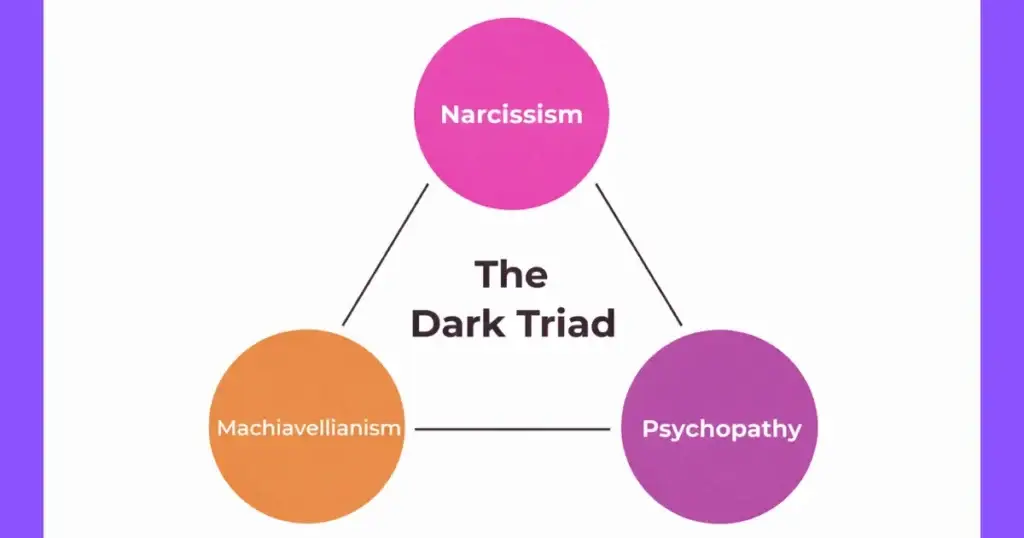
In psychology, manipulative behavior is closely connected to what researchers call the Dark Triad, which includes three personality patterns: Narcissism, Machiavellianism, and Psychopathy. People who score high on these traits are more likely to use emotional tactics to get what they want, especially in personal relationships.
According to Psychology Today, psychological manipulation is the exercise of undue influence through mental distortion and emotional exploitation — designed to seize control at the victim’s expense.
Core Characteristics of Manipulative Personality Traits
- The behavior is intentional, not accidental
- It happens repeatedly, not just once
- It makes the other person doubt themselves
- It benefits the manipulator, not the relationship
What Are the Qualities of a Manipulative Person?
Manipulators are not always easy to spot. Many of them are charming, socially skilled, and well-liked by others.
Manipulative behavior is most common in people with strong narcissistic traits, people with a high need for control, and those who grew up in emotionally unstable environments where manipulation was a survival tool.
Childhood experiences matter here. If someone grew up where emotional needs were ignored, or where control was the only way to feel safe, they may carry those patterns into adult relationships without even realizing it.
Understanding manipulative personality traits starts with recognizing the qualities these individuals share.
Key Qualities You Will Notice
- They read emotions well but use that skill to control, not to connect
- They are warm and charming around others, but different in private
- They rarely take responsibility when something goes wrong
- There is almost always a hidden motive behind their kindness
Therapist Dr. Ramani Durvasula, who has worked extensively on narcissistic and manipulative behavior, puts it clearly: manipulation is not about love. It is about control.
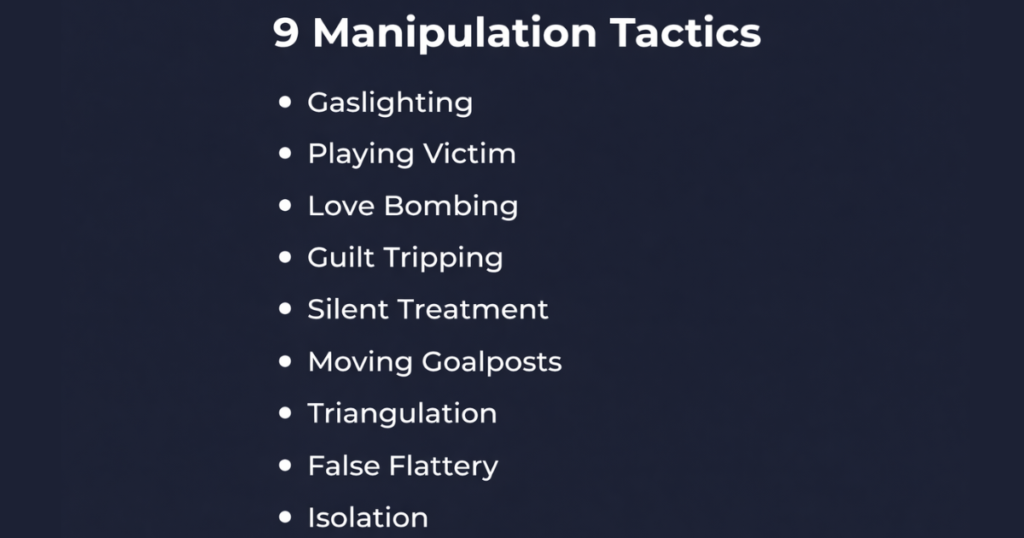
9 Manipulative Personality Traits
1. Gaslighting
Gaslighting is when someone makes you question your own memory, perception, or reality. It is one of the most psychologically damaging things a person can do to another.
Characteristics:
- They deny things that clearly happened
- They change the details of past events
- They make you feel like your memory is always wrong
Example: You clearly remember a conversation. They say, “That never happened. You always exaggerate.” After enough of this, you start wondering if you are the problem.
2. Playing the Victim
When confronted about their behavior, they immediately become the person who is hurt.
Characteristics:
- They turn every difficult conversation into their suffering
- They use sympathy to avoid being held accountable
- They make you feel cruel for even bringing up a concern
Example: You bring up something that upset you. Before you finish your sentence, they are already saying, “I cannot believe you are doing this to me right now. You know what I am going through.” Your concern disappears. Their pain takes over.
3. Love Bombing Followed by Withdrawal
This one creates a cycle that feels almost addictive. Intense closeness, then sudden distance.
Characteristics:
- Overwhelming attention and affection early on
- Sudden coldness with no clear reason
- The cycle repeats, keeping you emotionally off balance
Example: In the beginning, they text constantly, call just to hear your voice, and say things like, “I have never connected with anyone like this.” Then one day, they go quiet. No explanation. You spend days wondering what you did wrong. That wondering is exactly what they want.
read more: What is Love Bombing in a Relationship?
4. Guilt Tripping
Guilt is turned into a control tool.
Characteristics:
- Past favors are brought up as debts you owe
- Your personal needs are framed as selfish
- You feel obligated rather than willing
Example: “After everything I have done for you, you cannot do this one thing?” This is not a question. It is pressure designed to override your judgment.
5. Silent Treatment
Silence is used as punishment, not as space to think.
Characteristics:
- They cut off communication deliberately
- The silence creates anxiety and urgency in you
- You end up apologizing just to make it stop
Example: You disagree on something. They go completely silent for three days. No response to messages, no acknowledgment. Eventually, you apologize, even though you know you did nothing wrong. The silence worked exactly as planned.
This behavior is closely connected to passive-aggressive personality traits, where indirect tactics replace direct communication.
6. Moving the Goalposts
No matter what you do, it is never quite enough.
Characteristics:
- The standard changes every time you meet it
- Your effort goes unrecognized
- Your confidence gradually drops
Example: You work hard and hit every target your manager set. The response: “Good, but your communication with the team still needs work.” Next month, you improve that. Then it is something else. You can never win because winning is not the point.
7. Triangulation
A third person is brought in to create comparison, jealousy, or competition.
Characteristics:
- They reference others to make you feel inadequate
- Jealousy is used to keep you working for their approval
- You are put in a position of competing without agreeing to compete
Example: “My last partner never made such a big deal about this.” That comment is not casual. It is a comparison designed to make you question yourself and try harder.
8. False Flattery and Charm
Compliments are tools, not genuine expressions of appreciation.
Characteristics:
- Praise shows up right before a request
- Charm is selective and situation-based
- Once they get what they want, the warmth disappears
Example: “You are honestly the most capable person I know. I do not trust anyone else with this.” The request comes immediately after. If you say no, the compliments stop.
9. Isolation
This is one of the most serious manipulative personality traits in relationships. It happens slowly, so you rarely notice until it is already done.
Characteristics:
- They create doubt about the people closest to you
- Your support network is gradually painted as negative or toxic
- You become emotionally dependent on them alone
Example: “I just think your friends have a bad influence on you. I want what is best for you.” Six months later, you have stopped spending time with those friends. You did not decide that. It was decided for you, one small comment at a time.
Isolation is one of the most damaging manipulative personality traits because it removes your ability to reality-check what is happening.
What Phrases Do Manipulators Use?
Certain phrases come up again and again because they work. They shift blame, dismiss feelings, and create confusion quickly.
| Phrase | What It Actually Does |
| “You are too sensitive.” | Dismisses your feelings so they do not have to address them |
| “I was just joking.” | Escapes accountability while keeping the damage done |
| “Nobody else has a problem with me.” | Makes you feel like the outlier |
| “After everything I have done for you.” | Creates guilt to override your boundaries |
| “You always misunderstand me.” | Shifts the problem from their behavior to your perception |
| “I would not react like this if you did not provoke me.” | Makes you responsible for their choices |
When you hear these phrases regularly from the same person, that is not a coincidence. That is a pattern.
How Can You Tell If a Person Is Manipulative?
The clearest sign is how you feel after most interactions with them.
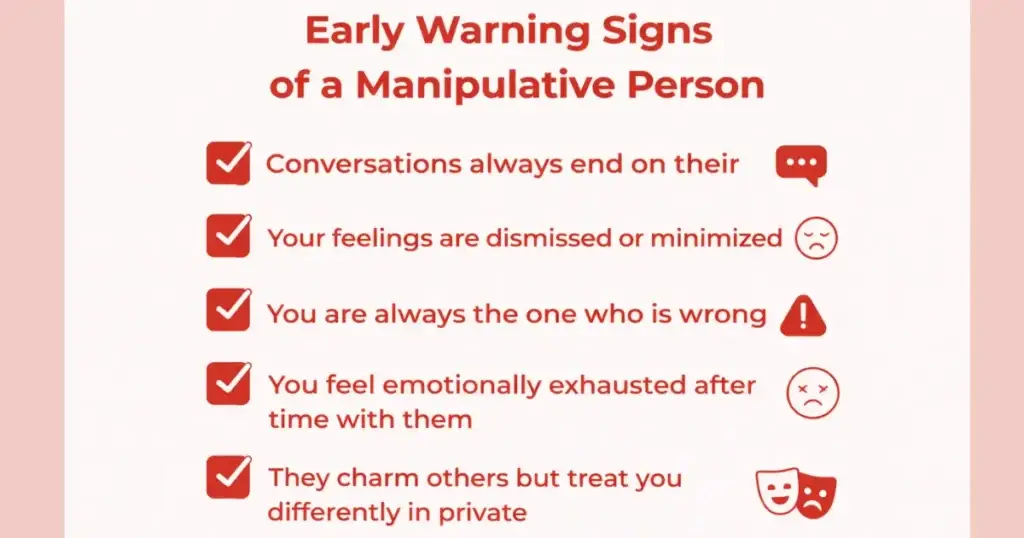
Early Warning Signs
- You feel tired and drained after conversations, not energized
- Your feelings are regularly dismissed or turned back on you
- You are almost always the one who ends up apologizing
- They are charming and easy-going with others but critical with you
- Conversations rarely end in a way that feels fair or resolved
People who are naturally empathetic or who have a tendency to prioritize others often miss these signs early on. They give the benefit of the doubt too many times.
Your discomfort is real information. Pay attention to it.
How to Deal with Manipulative People
You do not need to win an argument. You need to stop being a source of the reaction they want.
- Stay calm and neutral. Manipulators count on emotional reactions. A steady, low-key response gives them nothing to work with.
- Use clear, simple language. “I am not comfortable with this.” “I will not continue this conversation right now.” Short sentences work better than long explanations.
- Try the Gray Rock Method. Keep your responses brief, factual, and emotionally flat. Be boring. Manipulation thrives on emotional engagement.
- Notice the pattern, not just the moment. One incident can look like a bad day. Five incidents in the same direction are a pattern. Trust what you see over time.
For a detailed guide on protecting yourself, read our article on setting boundaries with toxic people.
Can Manipulative People Change?
Yes, but honestly, it is not common without serious self-work.
Real change requires the person to first admit what they are doing. That alone is hard for most manipulative individuals because their behavior is often tied to deep insecurity and a fear of vulnerability.
For genuine change to happen, a person needs to:
- Acknowledge their behavior without justifying it
- Take responsibility instead of deflecting
- Work with a therapist consistently over time
- Stay committed even when it feels uncomfortable
Without those steps, the pattern tends to continue. Wanting someone to change and them actually changing are two very different things.
To understand this better, read our article on whether toxic personality traits can actually change.
Conclusion
Manipulative personality traits are not always dramatic or obvious. They are often quiet, slow, and confusing. That is exactly what makes them hard to spot and hard to leave behind.
But once you understand the pattern, you stop blaming yourself for how you feel.
You deserve relationships where your feelings are taken seriously. Where you do not have to second-guess your own memory. Where communication is honest and direct.
Trusting your instincts is not a weakness. It is self-respect.
If this helped you understand something you have been trying to name, share it with someone who might need it.
FAQs
1. What are manipulative personality traits?
They are repeated behavioral patterns where a person controls or influences others through guilt, confusion, emotional pressure, or charm — always to serve their own interests.
2. What are the four types of manipulation?
The four main types are emotional manipulation, psychological manipulation, social manipulation, and behavioral manipulation. Each one targets a different kind of vulnerability.
3. Who is most likely to be a manipulator?
People with strong narcissistic traits, high control needs, or difficult early emotional experiences are more likely to develop manipulative patterns in relationships.
4. What causes a manipulative personality?
Deep insecurity, fear of vulnerability, childhood emotional experiences, and learned relationship patterns are the most common causes.
5. Can manipulative people change?
Yes, but only when they genuinely acknowledge what they are doing and commit to consistent therapeutic work over time. Without that, the pattern usually continues.

Ayanshi | MBA (HR) & Personality Coach
MBA in HR | 250+ posts helping 50,000+ readers build confidence, emotional intelligence, and healthy relationships. Over 3 years transforming real-life experience into practical, proven growth strategies.
From corporate HR professional to full-time blogger sharing actionable personal development insights.