

Last updated on September 25th, 2026 at 09:37 am
Time management for personality development means setting clear goals, blocking focused time for self-growth, and reviewing your progress every week. Do this consistently, and small daily habits turn into real personality change over months.
Most people put personal growth last on their to-do list. Work, family, and daily tasks take over, and self-improvement keeps getting pushed to “someday.” A structured approach to time management for personality development fixes this by giving growth its own fixed place in your week, not just the leftover minutes.
This guide breaks down easy, proven techniques for time management for personality development, so you can build confidence, discipline, and better habits without overhauling your whole schedule.
Why Time Management Matters for Personality Growth
When you practice effective time management for personality development, you can prioritize activities that help you grow, such as learning new skills, practicing mindfulness, or improving communication abilities. This leads to a more confident, disciplined, and fulfilled version of you.
Proven Techniques Time Management for Personality Development
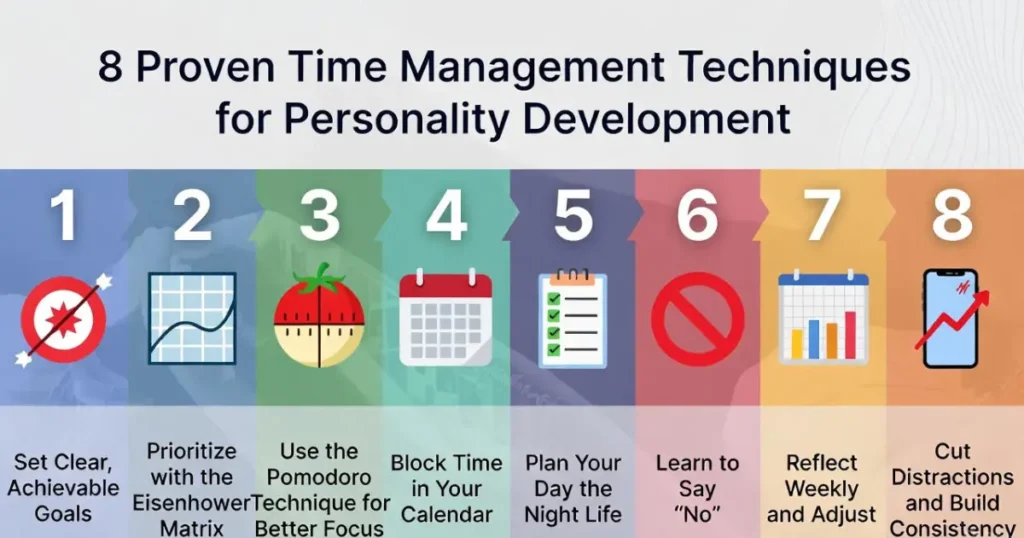
Here are some straightforward and proven time management for personality development techniques you can start using today:
1. Set Clear, Achievable Goals:
Start by deciding what you want to improve in yourself. More confidence? Better emotional control? Stronger leadership skills?
Write down 2–3 specific goals and break them into small daily actions.
Example: To improve public speaking, practice for 10 minutes daily in front of a mirror, then record yourself, and later join a speaking group.
.webp "Techniques for Time Management in Personality Development") |
| Techniques for Time Management in Personality Development |
2. Prioritize with the Eisenhower Matrix
Divide tasks into four categories:
- Urgent and important → Do now
- Important but not urgent → Schedule (this is where most self-growth activities belong)
- Urgent but not important → Delegate or minimize
- Neither → Eliminate. This simple method helps you focus on what actually moves your personal growth forward.
3. Use the Pomodoro Technique for Better Focus
The Pomodoro Technique is a simple yet effective time management tool for personality development. Work for 25 minutes with full concentration, then take a 5-minute break.
After four rounds, take a longer break. Perfect for meditation, journaling, reading self-help books, or learning a new skill. It builds discipline and prevents burnout.
4. Block Time in Your Calendar
Treat personal growth like an important meeting. Block specific times each day or week—morning for mindfulness, evening for reflection or skill practice.
Popular tools: Google Calendar, Todoist, Notion, or any simple planner.
5. Plan Your Day the Night Before
Spend 5 minutes every evening listing your top 3 priorities for tomorrow. Waking up with a clear plan reduces stress and gives you direction from the start.
6. Learn to Say “No”
Protect your time. Politely decline requests or activities that don’t support your goals. Every time you say yes to something unimportant, you are saying no to your own growth.
Effective prioritization means knowing your limits and learning to say no to working extra hours.
7. Reflect Weekly and Adjust
Set aside 15–20 minutes every weekend to review:
- What went well this week?
- What didn’t?
- Am I moving closer to my goals? Adjust your plan as needed. Flexibility shows maturity, not failure.
8. Cut Distractions and Build Consistency
Turn off notifications during focus time. Use apps like Forest or Freedom if needed.
Remember: Small, consistent actions beat intense but irregular efforts. Even 15–20 minutes daily adds up to massive change over months.
Common Obstacles (And How to Beat Them!)
- Distractions: Use focus apps, turn off unnecessary notifications, and create a dedicated workspace.
- Procrastination: Break tasks into micro-steps, and reward yourself for completing them.
- Overcommitting: Learn to say no and delegate when possible.
Science Behind Time Management and Personality
Recent studies (2023–2025) show a strong link between time management, self-control, and positive personality changes:
- Self-control increases by up to 40% with structured time management.
- Reduced phone dependency leads to better focus and improved self-esteem.
- Habit tracking boosts consistency, which is critical for lasting growth.
For more evidence-based insights on time management and personal growth, check out this comprehensive guide from Positive Psychology
Step-by-Step Guide to Effective Time Management for Personality Development
- Set clear goals for your personality development.
- Prioritize tasks using the Eisenhower Matrix or Pareto Principle.
- Use digital tools to schedule, remind, and reflect.
- Work in focused sessions (Pomodoro/Timeboxing).
- Review progress weekly and adjust your plan as needed.
- Stay consistent—make small improvements daily.
- Celebrate achievements (even small ones!) to stay motivated.
Conclusion
Time management for personality development is about choosing yourself every day. When you invest time in growing, you don’t just become more productive—you become a better, stronger, and happier person.
Start small today. Pick one technique, try it for a week, and watch how it changes you. Your future self will thank you.
If this guide helped, share it with someone who needs it or drop a comment about your favorite technique! 😊

Ayanshi is the founder of PersonaGuru.in, a blog focused on personality development, career, relationships, and mental well-being. With over 3 years of writing experience, she turns psychology and everyday experiences into practical, easy-to-understand advice for real life.