
Last updated on September 16th, 2026 at 03:19 pm
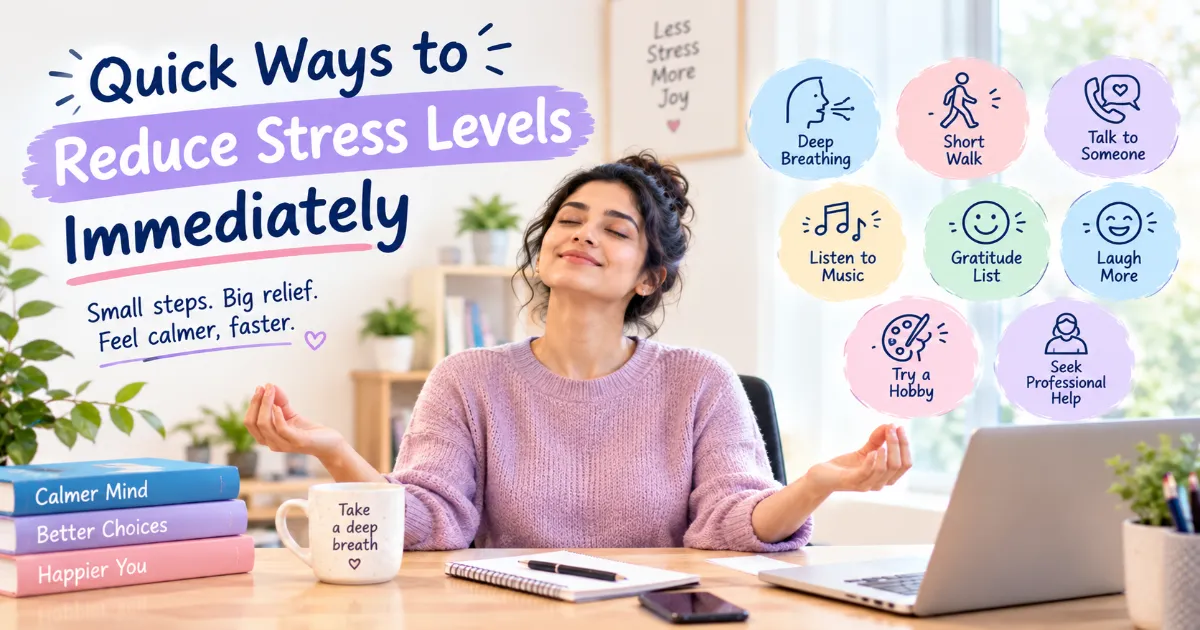
Quick ways to reduce stress levels immediately include deep belly breathing, a short walk, calling someone you trust, or just stepping away from your desk for five minutes. None of these need special equipment or a free afternoon. They work in the moment, when you actually need them.
Stress catches up with almost everyone. I’ve had days where my chest felt tight before I even opened my laptop, and the fix wasn’t a big life change; it was three slow breaths and a short walk around the block. Small moves like that add up more than people expect.
Key Takeaways
- Quick ways to reduce stress levels immediately don’t need to be complicated; small actions work fast.
- Deep breathing for stress relief is one of the fastest tools you have, and it’s free.
- Movement, music, and laughter all lower stress in minutes, not hours.
- Instant stress relief techniques work best when paired with longer-term habits like gratitude and good sleep.
- If stress doesn’t ease up on its own, talking to a professional is a smart next step, not a last resort.
.jpg "Quick Ways to Reduce Stress Levels Immediately") |
| Quick Ways to Reduce Stress Levels Immediately |
8 Quick Stress Relief Techniques at a Glance
| Technique | Time It Takes | Best For |
|---|---|---|
| Deep belly breathing | 2-5 minutes | Sudden anxiety or panic |
| Short walk or stretch | 5-10 minutes | Restlessness, racing thoughts |
| Calling a friend | 5-15 minutes | Feeling alone with a problem |
| Listening to music | 3-10 minutes | Low mood, tension |
| Gratitude list | 2 minutes | Spiraling or negative thinking |
| Laughing at something | 2-5 minutes | Tense, heavy mood |
| A quick hobby break | 10-20 minutes | Mental burnout |
| Talking to a professional | Ongoing | Stress that doesn’t ease up |
1. Breathe Deeply First
When stress hits, your breathing usually gets short and shallow without you noticing. Slow that down on purpose. Breathe in through your nose, let your belly rise, not just your chest, then let it out slowly. This one change tells your body it’s safe to calm down.
Try it right now: breathe in for four counts, hold for four, breathe out for six. Do that five times. You’ll likely feel your shoulders drop a little. For more breathing techniques you can use anywhere, our guide on stress management techniques covers a few more worth trying.
2. Practice Mindfulness
Mindfulness just means paying attention to what’s happening right now, instead of replaying the past or worrying about what’s next. You don’t need to sit cross-legged for twenty minutes. Eating a meal without your phone, or really noticing your surroundings on a walk, counts too.
I’ve found that even two minutes of just noticing my breath, without trying to fix anything, takes the edge off a stressful hour. If you want to go deeper, our piece on how meditation can support your personal growth is a good next read.
3. Move Your Body
Exercise doesn’t need to mean a gym session. A brisk ten-minute walk changes your mood more than people expect, because movement burns off the stress chemicals your body just produced. Stretching, a quick yoga flow, or even pacing while you’re on a call all help.
If you’re new to using movement for calm, yoga’s role in building a steadier mind is worth a look; it’s one of the simplest starting points.
4. Laugh a Little
This one sounds small, but it works. A funny video, a meme from a friend, or just remembering something silly can shift your mood fast. Laughing relaxes your body and gives your mind a break from whatever’s been looping in your head.
5. Connect with Loved Ones
Talking to someone who cares about you does more for stress than most people give it credit for. A short call, a voice note, or even a quick “hey, rough day” text can lighten the load. You don’t need a long conversation, just a real one.
This matters more than ever. A 2025 APA Stress in America survey found that half or more of U.S. adults reported feeling isolated, left out, or lacking real companionship. Strong personal relationships really do help cushion that stress, so don’t skip this one just because it feels simple.
6. Practice Gratitude
When you’re stressed, your brain naturally zooms in on what’s wrong. Gratitude pulls it back. Name three things you’re glad about right now, even small ones like a good cup of coffee. It sounds too simple to work, but it consistently shifts your mood within minutes.
Writing these down, even a couple of lines a day, builds the habit faster. If you want a boost alongside it, a short list of affirmations for self-esteem pairs well with a gratitude practice.
7. Listen to Music
Music changes your mood almost instantly. Slower songs with a steady beat tend to calm you down, while upbeat songs can lift a flat mood. Keep a short playlist ready for stressful moments, so you’re not scrolling for the right song while you’re already stressed.
8. Do a Quick Hobby
Ten minutes with something you enjoy — drawing, gardening, a puzzle, playing an instrument — gives your mind a real break. It’s not about being good at it. It’s about giving your brain something else to focus on besides the stress loop. Redirecting your thoughts like this is one of the simplest ways to quiet a busy mind when it won’t slow down on its own.
Know When to Get Professional Help
Quick fixes help in the moment, but if stress is sticking around week after week, that’s worth talking to someone about. A therapist or counselor can help you understand what’s actually driving your stress, not just manage the symptoms of it. Asking for that kind of help is a practical step, not a sign you’ve failed at handling things yourself.
Example
A friend of mine used to spiral every Sunday night thinking about her Monday workload. She started a simple routine: five slow breaths, a two-minute gratitude list, and a short walk before dinner. Nothing about her Monday changed. But her Sunday nights did. The stress was still there; it just didn’t take over the whole evening anymore.
Conclusion
You don’t need hours of free time to feel calmer. Quick ways to reduce stress levels immediately work because they’re small enough to actually do, even on a bad day. Pick one or two from this list; deep breathing and a short walk are a solid place to start, and use them the next time stress creeps in. If stress keeps coming back no matter what you try, that’s your sign to bring in some extra support, not a reason to push harder alone.
FAQs
1. What’s the fastest way to reduce stress in the moment? Deep belly breathing works fastest, often within a couple of minutes, because it directly calms your nervous system.
2. Can exercise really reduce stress that quickly? Yes. Even a short walk burns off stress hormones and lifts your mood within minutes; you don’t need a full workout.
3. How does gratitude help with stress? It shifts your focus away from what’s wrong toward what’s okay, which calms racing thoughts faster than most people expect.
4. Is it normal to need professional help for stress? Yes, completely. If stress doesn’t ease with daily habits, a therapist or counselor can help you deal with the actual cause of it.
5. What if I don’t have time for any of these techniques? Start with just one slow breath and a five-second pause before reacting. Even that small a step helps more than doing nothing.

Ayanshi is the founder of PersonaGuru.in, a blog focused on personality development, career, relationships, and mental well-being. With over 3 years of writing experience, she turns psychology and everyday experiences into practical, easy-to-understand advice for real life.