
Last updated on April 19th, 2026 at 02:32 pm
Toxic personality traits in the workplace are negative behavioral patterns that damage team morale, reduce productivity, and create a hostile work environment. These toxic traits include bullying, gossiping, manipulation, passive-aggressive behavior, chronic negativity, and emotional outbursts. Recognizing these characteristics of a toxic person early helps protect your mental health, maintain professional boundaries, and prevent long-term workplace toxicity.
If you have ever felt drained, anxious, or demotivated at work because of one person, you have likely encountered toxic personality traits. According to MIT Sloan research, toxic workplace culture is the predictor of employee turnover, ranking higher than salary or work-life balance.
In simple words, toxic traits’ meaning refers to behaviors that repeatedly harm others — emotionally, professionally, or psychologically.
There is a big difference between a “difficult” coworker and a toxic one.
- A difficult person may disagree strongly.
- A toxic person creates patterns of fear, drama, blame, and negativity.
Workplace toxic behavior is more damaging than personal conflict because you cannot easily walk away. You work with these people daily. Over time, work toxicity spreads like emotional pollution.
“A toxic workplace culture doesn’t just reduce performance — it reduces human potential.” — Organizational Psychologist Adam Grant
For deeper psychological understanding, explore our pillar guide:
Toxic Personality Traits: Meaning, Examples, Psychology, and How to Spot Them Early
10 Most Common Toxic Personality Traits in the Workplace
Workplace toxicity rarely appears suddenly. It grows through repeated toxic traits at work that slowly damage trust and morale.
Below are the most common toxic personality traits in the workplace, backed by workplace psychology research and real corporate patterns.
1. The Workplace Bully
Definition: Uses intimidation, humiliation, or verbal aggression to control others.
Workplace Example:
A manager publicly shames an employee during meetings for small mistakes to “teach a lesson.”
Warning Signs:
- Yelling or aggressive tone
- Public criticism
- Targeting weaker employees
- Creating a fear-based culture
🔎 What does a toxic coworker look like?
Often, it looks like someone who gains power by making others feel small.
2. The Office Gossip
Definition: Spreads rumors, shares confidential information, and creates division.
Example:
Sharing private HR conversations or exaggerating stories about coworkers.
Warning Signs:
- “Don’t tell anyone, but…”
- Talking negatively behind others’ backs
- Creating trust issues within the team
📌 Gossip is one of the fastest-growing toxic traits at work because it destroys psychological safety.
3. The Passive-Aggressive Colleague
Definition: Expresses anger indirectly through sarcasm, delay, or silent treatment.
Example:
Agreeing to complete a task but intentionally delaying it to sabotage success.
Warning Signs:
- Backhanded compliments
- Avoiding direct conversations
- Eye-rolling or subtle insults
This is one of the most common characteristics of a toxic person at work because it hides behind politeness.
4. The Chronic Complainer (The Pessimist)
Definition: Constantly focuses on problems without offering solutions.
Example:
Saying “Management doesn’t care” in every meeting lowers morale.
Warning Signs:
- Negative energy in every discussion
- Resistance to change
- Draining team motivation
Negativity spreads emotionally. Studies show that workplace negativity increases burnout risk by 23%.
5. The Credit Stealer (The Narcissist)
Definition: Takes credit for others’ work and lacks empathy.
Example:
Presenting your idea as their own to leadership.
Warning Signs:
- Avoiding acknowledgment of others
- Exaggerating personal achievements
- Entitlement behavior
📌 What qualifies as a toxic workplace?
When leadership rewards credit-stealing and ignores accountability.
read more: 12 traits of a narcissist: Protect Yourself Today!
6. The Manipulator (Machiavellian Type)
Definition: Uses deceit, gaslighting, and strategic drama to control situations.
Example:
Twisting your words in emails to make you look incompetent.
Warning Signs:
- Playing coworkers against each other
- Denying facts
- Fake charm when beneficial
This form of work toxicity is psychologically exhausting.
7. The Victim Player
Definition: Never accepts responsibility and constantly shifts blame.
Example:
Blaming deadlines on “system errors” instead of poor planning.
Warning Signs:
- Always the “misunderstood” one
- Constant excuses
- Rarely apologizes
8. The Slacker (The Underperformer)
Definition: Avoids work and lets others compensate.
Example:
Missing deadlines repeatedly and relying on team members to fix tasks.
Warning Signs:
- Chronic procrastination
- Low effort
- Blaming workload for poor performance
9. The Knowledge Hoarder
Definition: Refuses to share information to maintain power.
Example:
Not training team members to remain “indispensable.”
Warning Signs:
- Secretive about processes
- Avoids documentation
- Blocks collaboration
This creates dependency and slows team growth.
10. The Volcano (Emotionally Explosive)
Definition: Has unpredictable emotional outbursts.
Example:
Shouting during meetings over small issues.
Warning Signs:
- Mood swings
- Creating a fear-based environment
- Apologizing without behavioral change
📌 What is an example of unacceptable behavior at work?
Emotional explosions that intimidate coworkers.
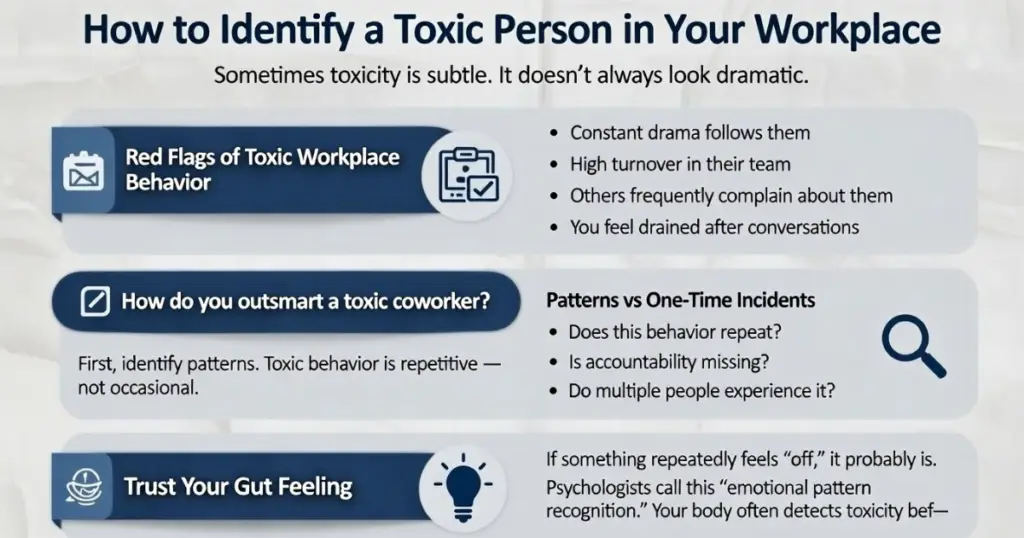
How to Identify a Toxic Person in Your Workplace
Sometimes toxicity is subtle. It doesn’t always look dramatic.
Red Flags of Toxic Workplace Behavior
- Constant drama follows them
- High turnover in their team
- Others frequently complain about them
- You feel drained after conversations
🔎 How do you outsmart a toxic coworker?
First, identify patterns. Toxic behavior is repetitive — not occasional.
Patterns vs One-Time Incidents
Everyone has bad days. But toxicity is consistent.
Ask yourself:
- Does this behavior repeat?
- Is accountability missing?
- Do multiple people experience it?
Patterns define workplace toxic behavior.
Trust Your Gut Feeling
If something repeatedly feels “off,” it probably is.
Psychologists call this “emotional pattern recognition.” Your body often detects toxicity before logic does.
read more: How to Control Your Mind
The Impact of Workplace Toxicity on Teams
Workplace toxicity is not just uncomfortable — it is expensive.
Mental Health Consequences
According to SHRM:
- 35% of employees say job harms mental health
- Toxic culture increases burnout significantly
Stress leads to anxiety, depression, and even physical illness.
When toxic behavior is tolerated, culture deteriorates. As leadership coach Lisa Quinn notes, “a toxic workplace goes beyond the behavior of one or two individuals—it’s systemic,” affecting the entire organization.
Productivity Impact
MIT Sloan research found that toxic culture is the #1 reason employees resign.
Gallup estimates global disengagement costs businesses $8.8 trillion annually.
A toxic environment at work reduces collaboration and innovation.
Culture Damage
- High turnover
- Hiring struggles
- Employer brand damage
“Culture is not what you preach. It is what you tolerate.” — Unknown
When toxic behavior is tolerated, culture deteriorates.
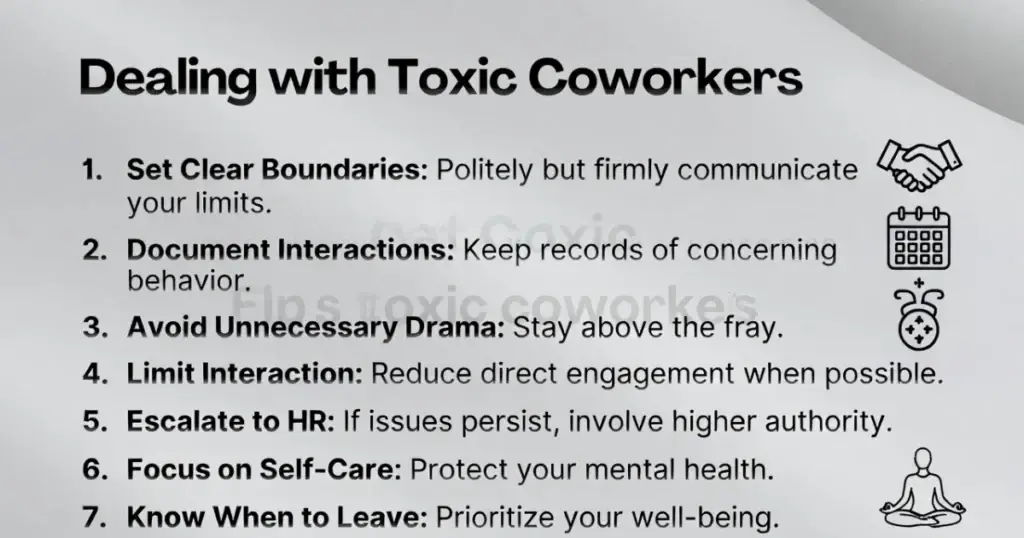
How to Deal with Toxic Coworkers Effectively
You cannot always change others. But you can protect yourself.
1. Set Clear Boundaries
Say calmly:
“I prefer to keep our conversations professional.”
Boundaries reduce emotional access.
🔎 How do I shut down a toxic coworker?
Use calm, firm communication — no emotional reaction.
2. Document Everything
Keep:
- Emails
- Messages
- Meeting notes
Documentation protects you during escalation.
3. Don’t Engage in Drama
Avoid gossip.
Redirect conversations to work tasks.
Professional distance weakens toxic influence.
4. Limit Interaction
Use email instead of verbal conflict.
Keep responses short and neutral.
5. Talk to HR or Management
Escalate when:
- It affects performance
- It impacts mental health
- It violates policy
Present facts — not emotions.
🔎 Is my workplace toxic, or am I overreacting?
If patterns exist and others experience similar issues, it is likely toxic.
6. Focus on Self-Care
- Exercise
- Talk to trusted people
- Practice stress management
Toxic environments should not define your self-worth.
read more: How to Handle Stressful Situations in the Workplace
7. Know When to Leave
If:
- Toxicity is normalized
- Leadership ignores complaints
- Mental health declines
Leaving is not failure — it is self-respect.
Can Toxic Personality Traits Be Changed?
Yes — but only with self-awareness.
Change requires:
- Accountability
- Therapy or coaching
- Genuine willingness
Without self-reflection, toxic traits usually persist.
Conclusion
Toxic personality traits in the workplace can silently destroy morale, productivity, and mental well-being. By recognizing the 10 most common toxic traits at work — from bullying to manipulation — you can protect your peace and professional growth.
Remember:
- Identify patterns
- Set boundaries
- Document behavior
- Escalate when needed
- Prioritize your mental health
Your career should grow you — not drain you.
read more: Toxic Personality Traits in a Relationship: 7 Signs You Are Stuck, Not In Love
FAQs
1. What are the top 5 toxic behaviors?
Bullying, gossiping, manipulation, passive-aggression, and chronic negativity are the most damaging toxic behaviors in professional environments.
2. What are the red flags of a toxic workplace?
High turnover, constant conflict, favoritism, gossip culture, lack of accountability, and poor leadership communication.
3. What qualifies as a toxic workplace?
A toxic workplace includes harassment, discrimination, fear-based leadership, no accountability, and normalized disrespect.
4. How do you outsmart a toxic coworker?
Stay emotionally neutral, document interactions, set boundaries, and maintain professionalism. Avoid reacting impulsively.
5. Is my workplace toxic, or am I overreacting?
Look at consistent patterns, not isolated incidents. If behavior repeats and others feel similarly, toxicity is likely present.
6. What does a toxic coworker look like?
They create drama, blame others, manipulate situations, and leave you emotionally drained
7. How do I shut down a toxic coworker?
Set firm boundaries, avoid engaging in gossip, use the grey rock method, and involve HR if necessary.

Ayanshi is the founder of PersonaGuru.in, a blog focused on personality development, career, relationships, and mental well-being. With over 3 years of writing experience, she turns psychology and everyday experiences into practical, easy-to-understand advice for real life.