
Last updated on July 21st, 2026 at 10:07 am
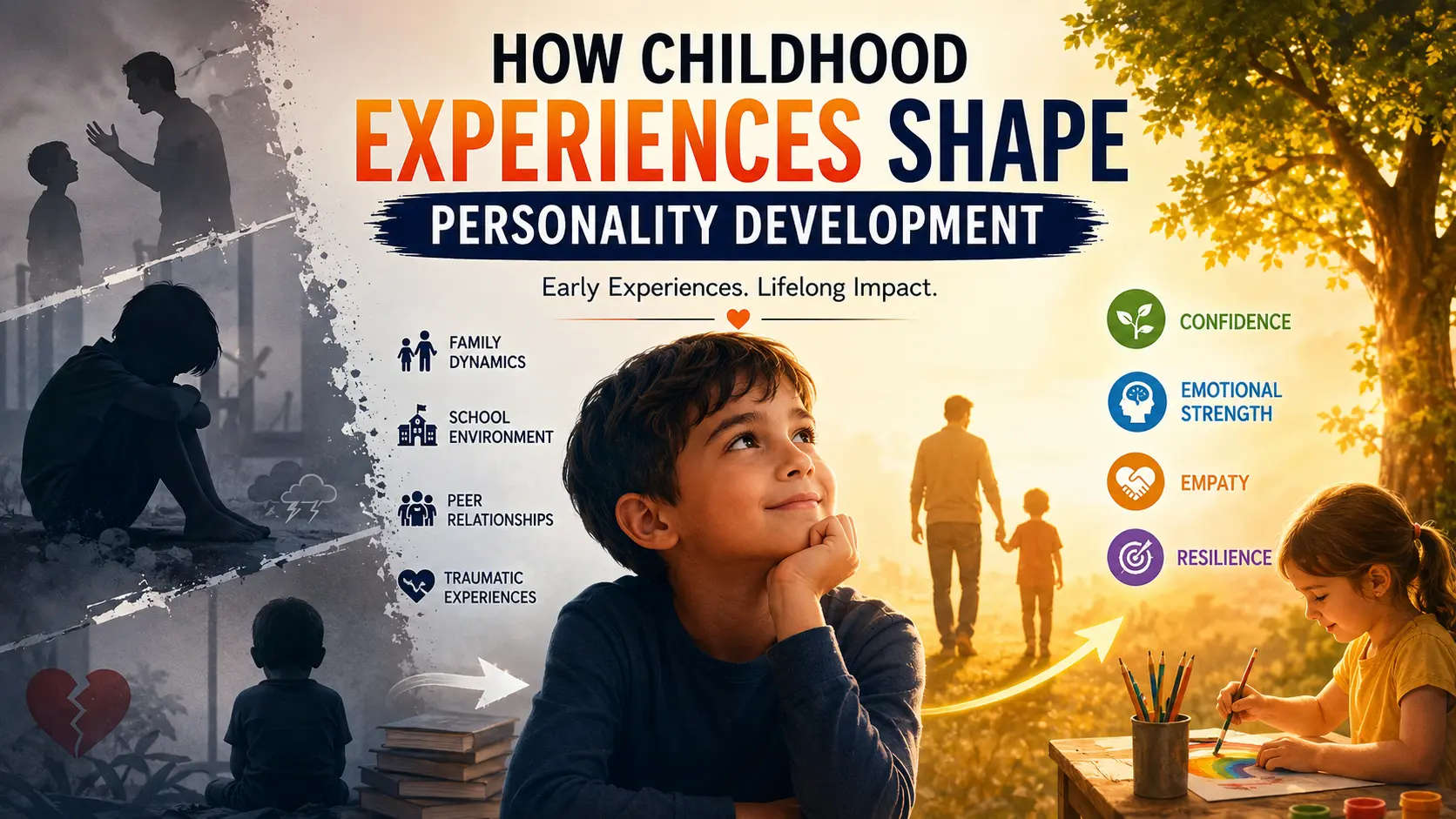
Our childhood is like a blank canvas, waiting to be filled with the colors of our early experiences. How we interact with others and the challenges we face during these formative years profoundly impact how childhood experiences shape personality development. But how does all of this actually shape our personalities? Let’s look at the connection between our childhood experiences and the people we become as adults.
This is part of a bigger picture — read our complete Personality Development to understand how self-awareness, communication, and confidence all connect.
 |
| How Childhood Experiences Shape Personality Development |
Understanding Childhood Experiences
Childhood experiences include everything a child goes through from when they are born until they are a teenager. These experiences can be good, like having a loving family and going to a great school, or bad, like going through a tough time or feeling ignored. Each of these experiences significantly shapes how a person thinks, feels, and acts, demonstrating clearly how childhood experiences shape personality development.
Common Examples of Childhood Experiences:
Parental Relationships
The bond with parents or primary caregivers plays a crucial role in a child’s sense of security, self-worth, and attachment styles. A nurturing relationship fosters confidence, while neglect or conflict can lead to emotional challenges.
A study of 1,708 adults found that childhood attachment was significantly associated with self-esteem, adult attachment, and psychological distress, with self-esteem acting as a key link between early attachment and adult emotional wellbeing. This shows clearly how childhood experiences shape personality development at a measurable level, not just in theory.
Peer Interactions
Friendships and social interactions help children develop empathy, social skills, and a sense of belonging. Positive peer relationships can boost self-esteem, while bullying or exclusion can lead to social anxiety.
A study comparing bullied and non-bullied twins found that the bullied twin had a 27% higher rate of social anxiety, even though both grew up in the same household. Comparing twins this way helps researchers separate the effect of bullying from genetics and home life.
Academic Environment
School experiences, including interactions with teachers and classmates, influence a child’s academic motivation, self-esteem, and learning style. A supportive educational environment encourages intellectual curiosity and resilience.
Research on teacher-student relationships consistently finds that students who see their teacher as warm, close, and supportive feel more motivated to engage in school than students who do not feel this connection. This pattern holds from elementary school through college.
Family Dynamics
The overall family environment, including sibling relationships and parental conflict, shapes a child’s understanding of relationships and conflict resolution. Positive family dynamics can create a stable emotional foundation, while constant conflict can lead to stress and insecurity.
Research from the Institute for Family Studies found that children from high-conflict homes are more likely to struggle with interpersonal skills, problem solving, and social competence, and that these struggles often carry into adult relationships. On the other hand, when parents handle disagreements calmly and resolve them in front of their children, kids can actually pick up healthy conflict resolution skills just by watching, a pattern closely tied to attachment style and how it shapes adult relationships.
Traumatic Events
Adverse experiences such as abuse, neglect, or loss can have profound and long-lasting effects on personality development. These events often lead to difficulties in emotional regulation and can impact mental health into adulthood.
The landmark CDC-Kaiser Permanente Adverse Childhood Experiences Study followed more than 17,000 adults and found that those with four or more adverse childhood experiences were two to five times more likely to develop chronic health conditions, clinical depression, substance abuse disorders, and suicidality compared to those with none. This remains one of the most cited findings in childhood development research.
Understanding Adverse Childhood Experiences (ACEs)
Adverse Childhood Experiences, known as ACEs, are specific categories of harm a child may face before turning eighteen. These include physical, emotional, or sexual abuse, neglect, and growing up in a household affected by addiction, mental illness, incarceration, or domestic violence.
Researchers Vincent Felitti and Robert Anda created the original ACE Study in the late 1990s. They surveyed more than 17,000 adult patients about their childhood and compared the results to their current health records. The odds of seriously considering or attempting suicide in adulthood increased more than threefold among those with three or more ACEs compared with those who had none.
An ACE score is not a prediction of the future. It points to risk, not destiny. Many people with high ACE scores go on to build strong, stable, and fulfilling lives, especially when protective factors such as a caring adult or a stable routine are present during childhood.
How Personality Is Shaped
Personality development stems from a combination of genetic predispositions and environmental influences, with a significant emphasis on how childhood experiences shape personality development. While our genes give us a starting point, it’s the things we experience, especially in childhood, that really bring out our personality. These experiences help shape our key personality traits, how we handle our feelings, and how we get along with others.
Key Building Blocks of Personality
- Attachment Style: How we connect with our caregivers when we’re little affects how we build relationships as grown-ups. Feeling secure in these early relationships helps us have healthier relationships later on, while feeling unsure can make it hard to trust others.
This connects back to the attachment research mentioned earlier, where secure attachment in childhood predicted higher self-esteem and steadier emotional regulation decades later.
- Temperament and Traits: Temperament refers to the inherent traits that influence how a child interacts with the world. Early childhood experiences can either reinforce or moderate these traits. For example, a child with a naturally cautious temperament may become more open to new experiences if supported in a nurturing environment.
- Self-Esteem: Getting praise and support when we are young helps us feel good about ourselves. But if we are always criticized or ignored, it can make us doubt ourselves. This stage of childhood maps closely onto what psychologists call industry versus inferiority, the period when a child either builds a belief in their own competence or starts doubting it.
Research from the University of Michigan shows that children who receive consistent, positive reinforcement are 40% more likely to have higher self-esteem and self-confidence in their adolescent years compared to those who receive minimal praise.
- Resilience: Facing and overcoming challenges when we are young helps us become strong and good at solving problems. It’s like building up our ability to bounce back when things get tough.
Psychologist Emmy Werner’s Kauai Longitudinal Study followed 698 children for more than 40 years and found that about one third of the children growing up in high risk conditions, including poverty and family conflict, still grew into competent, caring, and confident adults. This remains one of the most influential resilience studies in developmental psychology, and the same pattern shows up in everyday life too, since actively taking on challenges builds confidence and resilience well beyond childhood.
- Cognitive Development: Cognitive development is significantly shaped by early experiences. Engaging in problem-solving activities, receiving encouragement to explore ideas, and being exposed to diverse learning opportunities help develop critical thinking skills. This cognitive growth is a fundamental aspect of personality development.
- Empathy: Interaction with others during childhood teaches empathy and emotional awareness. Positive experiences with others make individuals more caring and understanding, reflecting how childhood experiences shape personality development. This early empathy is one of the building blocks behind what later develops into the different types of emotional intelligence we rely on as adults.
- Risk-Taking: Trying new things and being independent when we are young can make us more willing to take risks. Being encouraged to explore and be creative can make us more confident.
How Childhood Experiences Shape Brain Development
Personality does not form in the mind alone. It forms inside a developing brain, and childhood is when most of that development happens.
According to the Center on the Developing Child at Harvard University, the brain forms 700 to 1,000 new neural connections every second during the first few years of life. This is the fastest period of brain growth in a person’s entire life.
Toxic stress, which happens when a child faces ongoing adversity without enough support from a caring adult, can disrupt the healthy development of brain architecture, particularly in areas tied to language, attention, and decision-making. This is one reason why childhood experiences shape personality development so strongly. The brain itself is being built around those experiences.
The good news is that the same research shows responsive, caring relationships can buffer a child against the effects of stress. Harvard researchers call this back and forth pattern between a child and a caregiver serve and return. A baby babbles or points, and an adult responds with attention and warmth. This simple loop, repeated thousands of times, helps build a stronger, more resilient brain.
Protective Factors That Build Resilience
Not every child exposed to hardship experiences the same outcome. Research on resilience points to specific protective factors that help children thrive despite difficult circumstances.
- A strong bond with at least one caring adult. This adult does not have to be a parent. It can be a grandparent, teacher, coach, or family friend. Werner’s Kauai study found that this single relationship was one of the strongest predictors of resilience.
- A sense of competence and purpose. Children who feel skilled at something, whether it is schoolwork, sports, art, or music, tend to carry that confidence into other areas of life, supporting the kind of holistic personality growth that continues well into adulthood.
- Consistent routines. Predictable mealtimes, bedtimes, and family rituals give children a sense of safety, even when other parts of life feel unstable.
- Opportunities to help others. Taking on small responsibilities, like caring for a younger sibling or a pet, can build a sense of purpose and self-worth.
Understanding how childhood experiences shape personality development also means understanding that protection and support can change a child’s path, even after a difficult start.
Lasting Impact of Childhood Experiences on Personality Development
How childhood experiences shape personality development is crucial, forming the foundation for an individual’s emotional, cognitive, and social development. Research indicates that early experiences significantly influence self-concept, social skills, and overall well-being.
 |
| How Childhood Experiences Shape Personality Development |
However, the impact of negative experiences cannot be overlooked. Traumatic or adverse experiences can lead to long-term challenges in emotional regulation and mental health, affecting personality development well into adulthood. Understanding how childhood experiences shape personality development is essential for providing appropriate support and interventions to promote healthy personality growth.
Can Personality Change After Childhood?
While how childhood experiences shape personality development is substantial, personality is not fixed and can evolve throughout life. Core personality traits tend to remain relatively stable, but significant changes can occur in response to life experiences, personal growth, and conscious efforts to change.
Parenting Tips to Support Healthy Personality Development
- Practice serve and return. Respond warmly and consistently when your child reaches out, whether through words, sounds, or gestures. This builds the secure attachment that supports lifelong emotional health.
- Praise effort, not just outcome. Tell your child you noticed how hard they worked, rather than only praising the result. This builds persistence and a steadier sense of self-worth.
- Keep routines predictable. Consistent mealtimes, bedtimes, and family habits give children a sense of safety they can rely on.
- Resolve conflict calmly in front of your child sometimes. Children learn conflict resolution by watching adults handle disagreements with respect.
- Stay connected during hard moments. A child who feels heard during a tough time is more likely to develop healthy emotional regulation than a child who feels dismissed.
Healing From Difficult Childhood Experiences as an Adult
Adults who had a difficult childhood are not stuck with the same patterns forever. Personality continues to develop well beyond childhood, and many adults make real, lasting changes. If you often catch yourself asking what is wrong with me because of old patterns, it usually traces back to learned coping habits rather than something broken in you.
Steps that research links to healthier outcomes include building one stable, trusted relationship, practicing self-compassion instead of self-criticism, and working with a licensed therapist who has experience with childhood trauma. Therapy approaches such as trauma-focused cognitive behavioral therapy and EMDR have research support for helping adults process difficult childhood experiences.
If you are working through difficult memories from childhood, support from a qualified mental health professional can make a meaningful difference. This article is meant to inform, not replace personalized care.
Conclusion
Our early experiences play a big part in shaping who we are. They influence our beliefs, values, and behaviors, laying the groundwork for our life paths. Understanding how childhood experiences shape personality development is vital in creating environments that nurture positive traits and resilience, leading to healthier and more balanced adults.
It is important to know that while these experiences are powerful, they do not set our personality in stone. By being aware of ourselves, being strong when things get tough, and being open to learning, we can overcome challenges and make good changes in our lives.
Understanding how important childhood experiences are can help us create environments that support positive traits and strength, leading to healthier and more balanced adults. This shows that our early experiences are really important and can make a real difference in how we grow up.

Ayanshi is the founder of PersonaGuru.in, a blog dedicated to personality development, relationships, and mental health. With 3+ years of writing experience and 250+ published articles, she simplifies psychology into practical, everyday advice for real people.