
Last updated on February 6th, 2026 at 09:50 am
Have you ever come home from a date feeling more confused than excited? One part of you feels hopeful, but another whispers, “Something feels off.” That inner voice matters—and learning to listen to it can save you heartache down the road.
Dating is not just about chemistry, butterflies, or witty texts. It’s about patterns, respect, and shared values.
That’s where dating flags come in. Think of them as road signs in relationships: they help you move forward safely, pause when needed, or turn around entirely.
What Are Flags in Dating? (And Why Pay Attention)
Dating flags are behavioral signals—they show you how someone truly treats you over time, beyond what they say.
Anyone can say the right things, but patterns reveal a person’s real intentions and character.
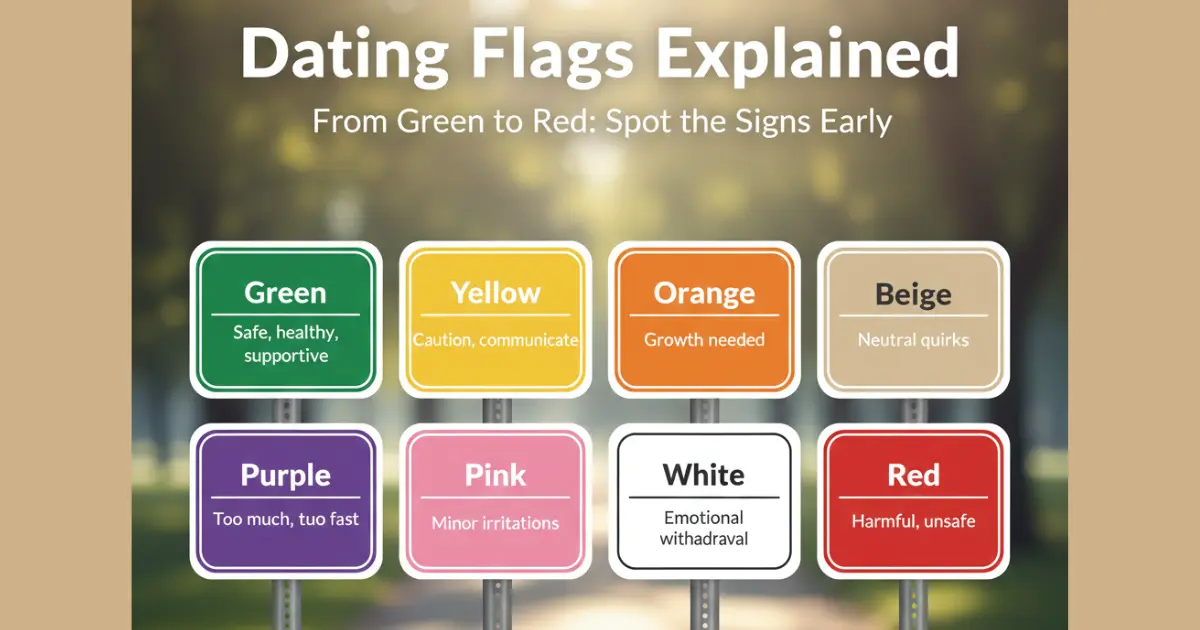
Here’s a quick breakdown of the most important flag colors you should know:
| Flag Color | Meaning | Takeaway |
|---|---|---|
| 🟢 Green | Safe, healthy, supportive | Go ahead, explore the connection |
| 🟡 Yellow | Caution, differences | Communicate, observe |
| 🟠 Orange | Struggles, but effort | Watch for growth, discuss |
| 🟤 Beige | Neutral/quirky traits | Personal preference |
| 🟣 Purple | Too much, too fast | Slow down, set boundaries |
| 💗 Pink | Minor irritations | Notice, discuss, adjust |
| ⚪ White | Giving up, emotional withdrawal | Reassess relationship |
| 🔴 Red | Harmful, unsafe | Leave, protect yourself |
Expert Insight:
“One incident doesn’t define a relationship—patterns do. Healthy relationships show consistent respect and repair, while unhealthy ones repeat the same negative behaviors.”
— Dr. John Gottman, Relationship Researcher.
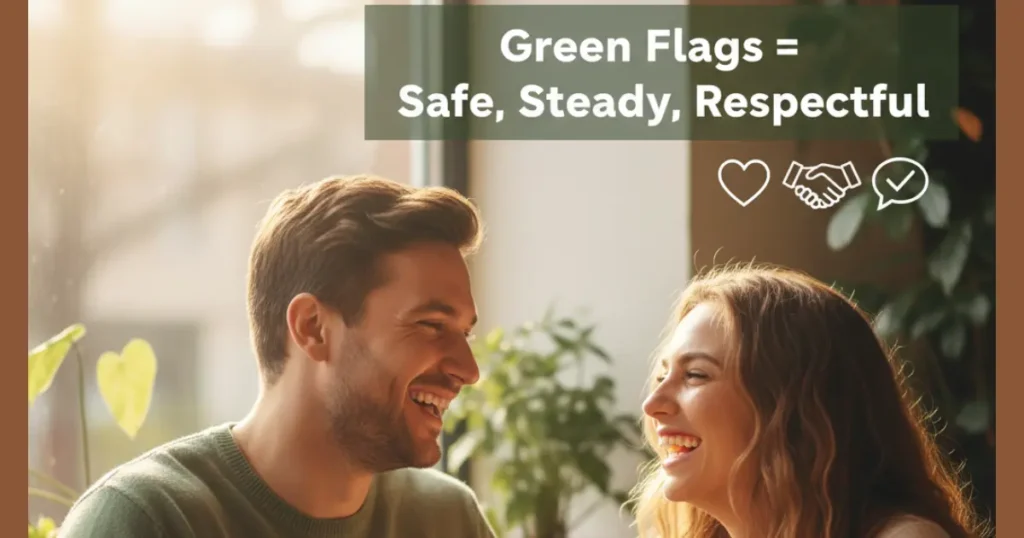
🟢Green Flags: Signs of a Healthy Connection
Green flags make you feel safe, respected, and calm. You don’t need to perform or pretend.
Research shows that kindness, honesty, and emotional support are foundations of lasting love.
Common Green Flags:
- You feel relaxed and authentic around them
- They listen without interrupting or dismissing you
- They respect your boundaries—big and small
- They are kind to everyone, not just you
- They communicate clearly and honestly
- They support your goals and growth
- They take responsibility for mistakes and work to repair
- They value family, commitment, and long-term stability
How it feels:
Peaceful, steady, secure. If you notice lots of green flags, it’s worth getting to know the person at a healthy pace.
read more:
🟡Yellow Flags: Pause and Observe
Yellow flags aren’t deal-breakers—they are signals to pay attention.
Many healthy couples work through yellow flags over time, especially when communication is open.
Common Yellow Flags:
- Different texting or communication styles
- Different interests or routines
- Slow emotional connection at the start
- Mild defensiveness in tough conversations
- Different comfort levels with planning or commitment
What to do:
Talk openly. Ask yourself, “Can I accept this difference, or will it become a bigger issue?”
Yellow flags can become green with time and understanding.
read more: Yellow Flag Meaning in Relationships
🟠Orange Flags: Growth Needed
Orange flags show areas where effort and honesty are needed.
They are not automatic deal-breakers, but they require attention, teamwork, and real change.
Common Orange Flags:
- Financial stress, but willing to plan and improve
- Emotional outbursts, followed by sincere apologies and changed behavior
- Uncertainty about future goals, but open to discussing them
- Insecurities or past mistakes, they are actively working on
Key Question:
Are they making real efforts, or just promising to change?
Watch actions over time—not just words.
read more: Orange Flag Meaning in a Relationship
🟤Beige Flags: Neutral or Quirky Traits
Beige flags are harmless quirks—neither positive nor negative, just different.
Some people find them endearing, others not. What matters is your personal comfort.
Examples of Beige Flags:
- Awkward or unusual texting style
- Very specific or niche hobbies
- Following the same routine every date
- Unusual food or music preferences
- Being unusually quiet or extremely talkative
Ask yourself:
Does this trait feel neutral or even cute, or does it drain you over time?
read more: Beige Flag meaning in a Relationship
🟣Purple Flags: Too Much, Too Fast
Purple flags appear when things move at an overwhelming pace.
It might feel flattering at first, but it often leads to confusion or pressure.
Common Purple Flags:
- Saying “I love you” very early
- Talking about marriage or moving in right away
- Constant texting or calling, wanting your attention 24/7
- Lavish gifts or grand gestures in the first few weeks
- Making you feel guilty for needing space
Healthy love grows gradually.
If it feels overwhelming, it’s okay to ask for more time and space.
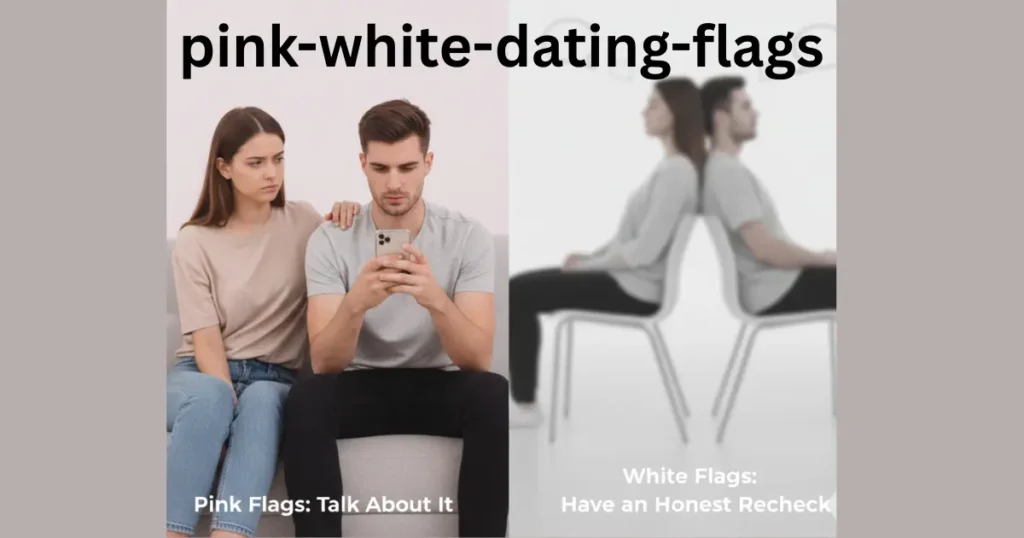
💗 Pink Flags: Minor Irritations to Notice
Pink flags are small, less severe behaviors that aren’t deal-breakers but could become annoying or problematic if ignored. They often signal areas where partners can improve or adjust.
Examples of Pink Flags:
- Forgetting small promises or plans
- Occasional inattentiveness or distracted behavior
- Mild passive-aggressiveness or sarcasm
- Forgetting important dates or details
- Slightly inconsistent communication patterns
What to do:
Discuss pink flags openly with your partner. They’re opportunities for growth and understanding, not immediate reasons to leave.
read more: Pink Flags in a Relationship
⚪ White Flags: Signs of Giving Up
White flags symbolize surrender or emotional withdrawal, where one or both partners stop investing effort in the relationship. This can be a critical sign that the relationship needs reassessment.
Signs of White Flags:
- Avoiding important conversations or conflicts
- Lack of interest in resolving problems
- Emotional numbness or detachment
- Reduced affection or communication
- Feeling overwhelmed and defeated in the relationship
What to do:
White flags mean the relationship needs honest reassessment. Consider couples counseling, open dialogue, or if necessary, an amicable separation if renewal isn’t possible.
read more: white flag meaning in a relationship
🔴Red Flags: Stop and Protect Yourself
Red flags are serious warning signs.
They impact your safety, dignity, and mental health.
Never ignore these.
Never Ignore These Red Flags:
- Lying, manipulation, or hiding important information
- Mocking, belittling, or disrespecting you
- Controlling behavior (who you see, what you do)
- Ignoring your boundaries
- Explosive anger or aggression
- Blaming you (or everyone else) for their problems
- Pressure around intimacy or big decisions
What the experts say:
“Red flags are not just about one bad day—they are about repeated behaviors that harm trust, safety, and self-worth.”
— Love is Respect. read more warning signs of abuse
read more: Biggest Red Flags in a Guy
Why Patterns Matter More Than Moments
Everyone has off days. Healthy people apologize and change. Unhealthy patterns repeat.
Ask yourself:
- Is this behavior happening again and again?
- Do apologies actually lead to new patterns?
- Do I feel calmer or more anxious as time goes on?
Trust your body:
Often, your gut will notice red flags before your mind does.
Quick Reference Table: Dating Flags at a Glance
| Flag Color | Meaning | Examples | Action |
|---|---|---|---|
| 🟢 Green | Safe, healthy, supportive | Respect, honesty, kindness | Continue |
| 🟡 Yellow | Caution, differences | Different communication, mild defensiveness | Communicate |
| 🟠 Orange | Growth needed | Apologies, working on issues | Observe, discuss |
| 🟤 Beige | Neutral/quirky | Awkward texting, niche hobbies | Personal choice |
| 🟣 Purple | Overwhelming intensity | Love bombing, constant contact | Slow down |
| 💗 Pink | Minor irritations | Forgetting small promises, mild sarcasm | Notice, discuss |
| ⚪ White | Emotional withdrawal | Avoiding conflict, detachment | Reassess |
| 🔴 Red | Harmful, unsafe | Lying, manipulation, disrespect | Leave |
Final Thoughts
Dating should feel safe, steady, and hopeful, not confusing or exhausting all the time.
If you want to work on yourself while you date wiser, read: Good Habits for Personality Development.
You deserve a connection that brings peace, not constant doubt.
- Trust your observations.
- Take your time.
- Choose clarity over urgency.
Healthy love doesn’t rush. It respects, grows, and feels steady.
You are your own best guide when it comes to dating flags. Listen to yourself, and never be afraid to choose what’s right for you.
If you found this guide helpful, share it with friends or leave a comment below! You deserve healthy, joyful love—always.💚
FAQ: Dating Flags Explained
1. What are dating flags and what do the colors mean?
Dating flags are behavioral signals in relationships. Green means go, yellow means slow down, orange means caution, beige means neutral quirks, purple means too much too soon, and red means stop.
2. How do I know if a behavior is a red flag or just a quirk?
Red flags harm your well-being or safety and are patterns, not one-offs. Quirks are harmless and don’t violate your core values.
3. Can yellow or orange flags turn into red flags?
If ignored, ongoing yellow or orange flags can escalate. Open communication and observation are key.
4. What are the most common red flags in dating?
Lying, control, manipulation, disrespect, and ignoring boundaries are top red flags.
5. Is it normal to feel confused in early dating?
Yes! Mixed feelings are common. Trust your instincts and watch for patterns over time.
6. What are pink and white flags?
Pink flags are small irritations that can be discussed and adjusted. White flags indicate emotional withdrawal or giving up, signaling a need to reassess the relationship.

Ayanshi | MBA (HR) & Personality Coach
MBA in HR | 250+ posts helping 50,000+ readers build confidence, emotional intelligence, and healthy relationships. Over 3 years transforming real-life experience into practical, proven growth strategies.
From corporate HR professional to full-time blogger sharing actionable personal development insights.