
Last updated on August 12th, 2026 at 09:21 am
Have you ever wondered why some people seem naturally calm and confident? Often, it comes down to their daily habits. Good habits shape how we think, feel, and act. They build our personality slowly, one repeated action at a time.
This article covers why good habits matter for personality development, how to build them, and 10 simple habits you can start today. For the full framework, see our career and workplace growth guide.
.jpg "Good Habits for Personality Development") |
| Good Habits for Personality Development |
Why Good Habits Matter for Personality Development
Good habits do more than keep you organized. They shape who you become over time.
1. Build Confidence:
2. Develop Emotional Intelligence:
3. Enhance Resilience:
4. Improve Mental Health:
What Makes a Good Habit
A good habit is simple. It should be:
- Beneficial: It improves your health, work, or relationships.
- Sustainable: You can keep doing it without burning out.
- Positive: It moves you toward your goals, not away from them.
How to Develop Good Habits
Developing a good habit involves several steps:
- Start small. Pick one simple action. Build from there.
- Set a clear goal. Know exactly what you want and why.
- Build a routine. Attach the habit to a fixed time of day.
- Track your progress. Use a journal or an app.
- Stay committed for the long run. Don’t expect results in a week.
- Shape your environment. Remove distractions that pull you away from the habit.
- Stack it on an existing habit. Pair it with something you already do daily.
- Stay positive. Celebrate small wins along the way.
- Repeat daily. Consistency matters more than intensity.
- Remove temptations. Keep tempting things out of sight.
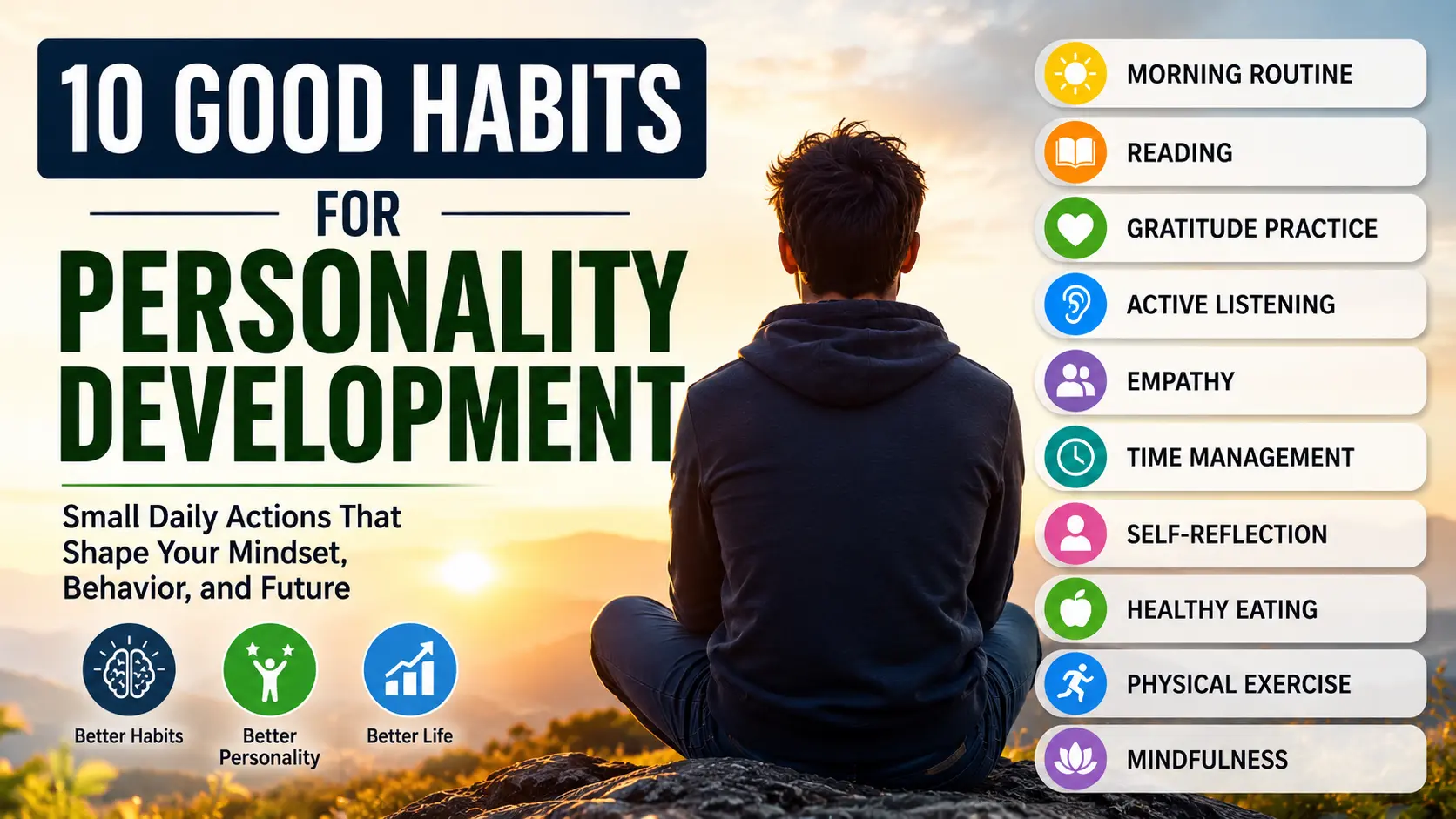
10 Good Habits for Personality Development
.jpg "Good Habits for Personality Development") |
| Good Habits for Personality Development |
- Morning Routine: Start your day with one calm activity, like a short walk or five quiet minutes. It sets the tone for the day.
- Reading: Read a little every day. It builds your vocabulary and gives you new ideas to think with.
- Gratitude Practice: Write down three things you’re grateful for each day. It trains your mind to notice the good, not just the stress.
- Active Listening: Focus fully on the person speaking. Don’t plan your reply while they talk. This ties closely to the body language and tone covered in oral communication basics.
- Empathy: Try to see a situation from the other person’s side before reacting.
- Time Management: Plan your day the night before. Decide your top three tasks first.
- Self-Reflection: Spend five minutes each evening reviewing what went well. It’s the same reflection habit covered in the key aspects of personality development.
- Healthy Eating: Add one more fruit or vegetable to your day. Small changes add up over weeks.
- Physical Exercise: Move your body for at least 20 minutes a day. Walking counts.
- Mindfulness: Take a few slow breaths before a stressful moment. It helps you respond instead of react.
How Long Does It Take to Build a Good Habit?
Most people have heard that a habit takes 21 days to form. This is actually a myth. It comes from a 1960 book about plastic surgery patients, not real habit research.
The real number comes from a 2009 study at University College London. Researchers found that habits take an average of 66 days to feel automatic, with a wide range of 18 to 254 days, depending on the habit and the person.
So don’t worry if a new habit still feels hard after three weeks. That is normal. Stay consistent, and it gets easier with time.
Conclusion
Good habits for personality development don’t need to be complicated. Start with one small, sustainable habit. Build it slowly. Be patient with yourself.
Over time, these small daily actions shape a calmer, more confident, and more resilient version of you.

Ayanshi is the founder of PersonaGuru.in, a blog focused on personality development, career, relationships, and mental well-being. With over 3 years of writing experience, she turns psychology and everyday experiences into practical, easy-to-understand advice for real life.