

Last updated on June 30th, 2026 at 10:51 am
A strong personality is not just about confidence, speaking well, or looking smart. A truly strong personality also includes emotional maturity, self-discipline, and the ability to stay calm in difficult situations. That is why aggression management plays such a valuable role in personality development.
What is the Aggression Management in Personality Development?
Aggression management in personality development refers to the process of identifying, understanding, and controlling aggressive thoughts, emotions, and behaviors. It helps a person deal with anger, stress, and frustration healthily and constructively.
Everyone feels angry sometimes. Anger itself is normal. However, when anger turns into shouting, threatening, insulting, hurting others, or passive-aggressive behavior, it can negatively affect a person’s personality and relationships.
Aggression management teaches people how to recognize their emotional triggers, control impulsive reactions, communicate more calmly, healthily solve conflicts, and improve self-awareness and emotional stability.
In personality development, this skill is very important because it supports positive behavior, better social interaction, and emotional growth.
Difference Between Anger and Aggression
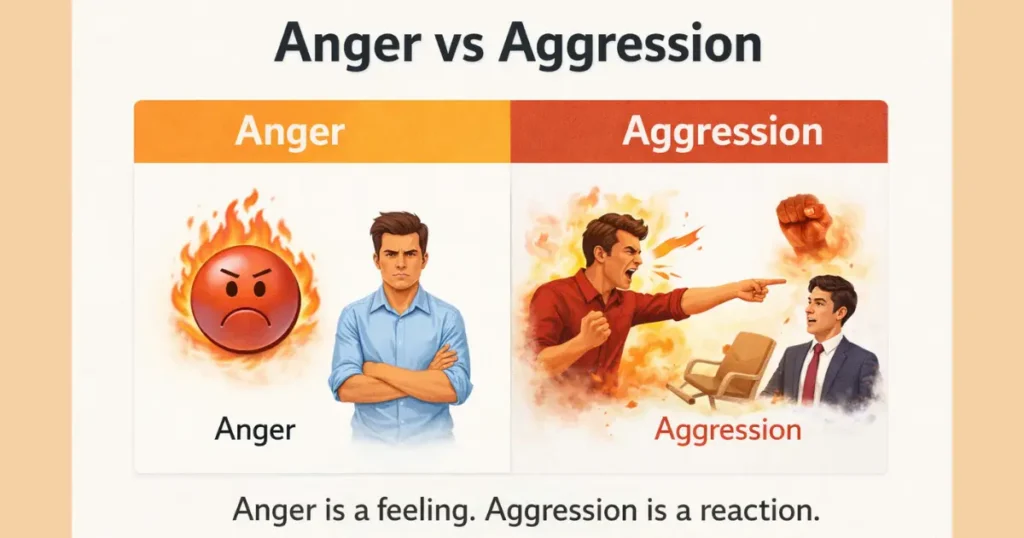
Many people think anger and aggression are the same, but they are not.
Anger is a natural emotion, and according to the American Psychological Association (APA), it can become harmful when it is expressed in unhealthy or destructive ways.
Aggression is the harmful way anger may be expressed. It can involve shouting, insulting, threatening, physical violence, breaking things, or indirect negative behavior.
According to APA research, nearly 90% of aggressive incidents are preceded by anger, but only about 10% of anger experiences actually lead to aggression — clear proof that anger and aggression are not the same thing.
A person can feel angry without becoming aggressive. The real goal of aggression management in personality development is not to remove anger completely. Instead, it is to teach a person how to express anger in a respectful, controlled, and healthy way.
Example
Imagine your coworker takes credit for your idea in a meeting. Anger means you feel upset, hurt, or frustrated. Aggression would be shouting at them in front of everyone or insulting them later. A better response would be calmly addressing the issue after the meeting in private. That is aggression management in real life.
Is Some Aggression Normal? (Positive Aggression)
Not all aggression is harmful. In personality development, it is important to understand that a small and healthy level of assertiveness or drive is actually needed in life.
When a student pushes themselves harder before an exam, when an athlete competes with full intensity, or when a person firmly says “no” to something unfair, this is healthy aggression. It protects self-respect and drives progress.
The problem begins when aggression goes beyond these healthy limits and starts harming others or damaging relationships.
Real-Life Example
A cricketer showing intensity on the field is using positive aggression productively. That same person screaming at a teammate after a mistake is uncontrolled aggression. The difference is direction and intention.
Managing aggression means keeping it within healthy limits, not removing it entirely.
.jpg "Aggression Management in Personality Development") |
| Aggression Management in Personality Development |
Why Aggression Management Is Important in Personality Development
Aggression management is important because it directly affects the way a person behaves, communicates, and handles pressure. A person who cannot control aggression may struggle in relationships, social situations, work environments, and their own emotional well-being.
When aggression is managed properly, it helps a person become more emotionally mature and socially aware.
Benefits of aggression management in personality development include better emotional control, improved communication skills, healthier relationships, stronger self-awareness, fewer unnecessary conflicts, better decision-making, more patience and empathy, and improved self-confidence.
A balanced personality is not built only by learning how to speak confidently. It is also built by learning how to stay calm, respectful, and thoughtful during emotionally difficult moments.
Example
A student receives criticism from a teacher in front of the class. Without aggression management, the student may argue loudly, walk out angrily, or insult the teacher later. With aggression management, the student stays calm, asks for feedback privately later, and uses the criticism to improve. This difference shapes personality over time.
Goals of Aggression Management
The main purpose of aggression management is to reduce harmful reactions and build emotional stability. The main goals include:
- Self-Awareness: Recognizing what makes you angry and how your body and mind react to it.
- Self-Control: Learning how to pause and think before reacting emotionally.
- Healthy Expression: Expressing frustration or anger without harming yourself or others.
- Better Communication: Speaking honestly and respectfully, even during conflict.
- Stronger Relationships: Reducing misunderstandings and building trust with others.
- Emotional Maturity: Becoming calmer, wiser, and more balanced in daily situations.
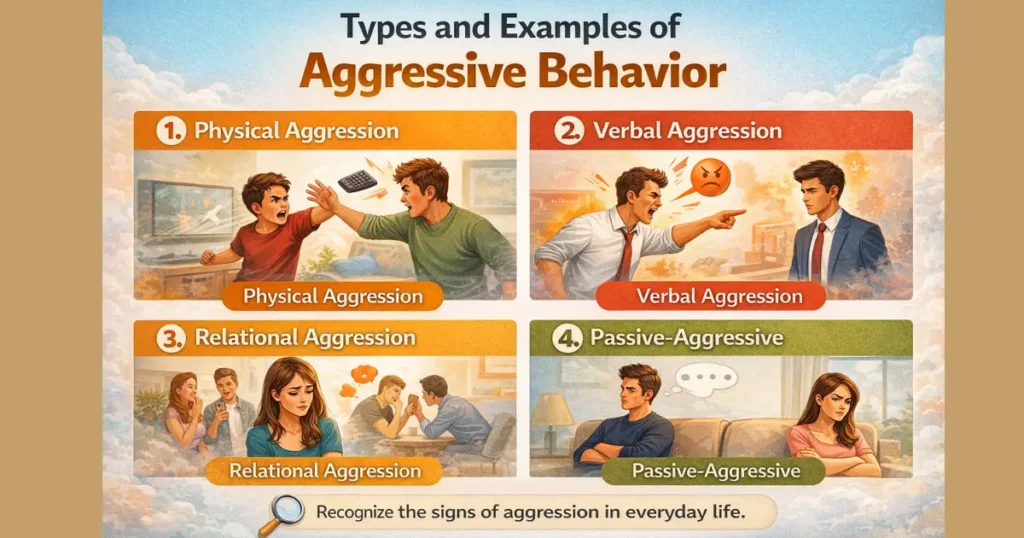
Types and Examples of Aggressive Behavior
Aggressive behavior can appear in different forms. Some are direct and obvious, while others are subtle and indirect. Understanding these types makes it easier to recognize and manage them.
1. Physical Aggression
Physical aggression involves actions that can cause physical harm to another person or damage property. Examples include hitting, pushing, slapping, kicking, throwing objects, or breaking things in anger.
Example:
A younger brother gets angry during an argument and throws a TV remote at his sibling. This is physical aggression because the anger is being expressed through a harmful action. Physical aggression is one of the most serious forms because it can cause injury, fear, and long-term damage in relationships.
2. Verbal Aggression
Verbal aggression involves using harmful, insulting, or threatening words to hurt or dominate another person. Examples include shouting, insulting, mocking, threatening, using abusive language, or humiliating someone with words.
Example
A manager gets frustrated with an employee’s mistake and says, “You are completely useless. You cannot do anything right.” Even though there is no physical violence, the emotional harm from such words can be very serious and long-lasting.
3. Relational Aggression
Relational aggression is aimed at harming someone socially or emotionally by affecting their relationships or reputation. Examples include spreading rumors, gossiping, excluding someone from a group, embarrassing someone publicly, or manipulating friendships.
Example
A group of college friends deliberately leaves one girl out of plans and starts gossiping about her behind her back after a small disagreement. The goal is to hurt her socially and emotionally, even without any physical or verbal confrontation.
Read more: Toxic Personality Traits: Signs, Examples & Psychology
4. Passive-Aggressive Behavior
Passive-aggressive behavior is an indirect way of expressing anger or resentment. Instead of talking openly, the person shows frustration through behavior or attitude. Examples include silent treatment, sarcasm, sulking, intentional procrastination, or pretending everything is fine while acting cold.
Example
A husband feels upset after an argument, but instead of discussing it, he ignores his wife for two days and responds only with one-word answers. This is passive-aggressive behavior because the anger is being shown indirectly instead of being addressed directly.
Causes of Aggression in Personality Development
Aggression does not usually appear without a reason. It often develops due to a combination of emotional, psychological, social, and situational factors. Understanding the root causes makes aggression management more effective.
- Biological factors: Some people may naturally have a stronger emotional response due to genetics, brain chemistry, or hormonal influences. These factors may affect how a person reacts to stress, fear, or frustration. This does not mean aggression is unavoidable. It simply means some people may need more emotional regulation practice than others.Example:Two people face the same stressful situation at work, but one reacts calmly while the other becomes instantly explosive. Part of this difference may be linked to natural temperament and emotional sensitivity.2. Psychological Factors
Emotional and mental struggles can increase aggressive behavior, especially when a person does not know how to process difficult emotions. Common psychological causes include chronic stress, anxiety, depression, emotional dysregulation, unresolved trauma, low frustration tolerance, and poor coping skills.
Example
A person dealing with unresolved childhood trauma may overreact to small disagreements because their emotional pain is already sitting close to the surface. In such cases, aggression is often not just about the present moment.
3. Social and Family Environment
A person’s surroundings strongly influence behavior. If someone grows up in an environment where shouting, disrespect, violence, or emotional neglect is common, they may start seeing aggression as a normal way to respond.
Example
A child who grows up watching constant shouting between parents may later use the same aggressive communication style in friendships or marriage. This shows why early environment matters so much in personality development.
4. Situational Triggers
Sometimes aggression is not part of a person’s usual personality. It may be triggered by temporary stress or overwhelming situations. Common triggers include work pressure, financial stress, sleep problems, relationship issues, repeated criticism, or feeling ignored and disrespected.
Example
A man who is already stressed from work, poor sleep, and money problems may suddenly snap at his child for a very small mistake. The child may not be the real cause. The aggression is often the result of accumulated emotional overload.
5. Substance Abuse
Alcohol and drugs reduce self-control, affect judgment, and increase emotional instability. This often raises the chances of aggressive behavior.
Example
A person who usually behaves calmly may become verbally abusive or physically aggressive after heavy alcohol consumption, showing how substances can completely change a person’s behavioral patterns.
 |
| Aggression Management in Personality Development |
Intermittent Explosive Disorder (IED) and Aggression
Sometimes aggression is not just a behavioral habit. In some cases, it is connected to a psychological condition called Intermittent Explosive Disorder (IED). People with IED experience sudden, intense outbursts of anger that are completely out of proportion to the situation.
Example
A person may shout aggressively over a small traffic inconvenience, break household items over a minor argument, or react violently to a very small frustration. After the episode, they often feel regret and confusion about their own behavior.
If someone notices frequent, extreme, and uncontrollable anger that they cannot explain, it may be worth speaking to a mental health professional. IED is treatable, and recognizing it is the first step.
How to Channel Aggression in a Healthy Way
One of the most overlooked aspects of aggression management is that aggression does not always have to be eliminated. Sometimes it can be redirected into productive and healthy activities.
This is called channeling or sublimation, and it is one of the most natural ways to release built-up tension without harming anyone.
Ways to channel aggression healthily:
Exercise and sports release physical tension stored in the body. Martial arts, boxing, running, or gym sessions are effective ways to release pent-up anger safely.
Creative expression through writing, painting, music, or journaling allows emotions to come out in a constructive form. Many people find that writing about their anger reduces its intensity significantly.
Focused work and problem-solving redirect emotional energy into productive tasks. Many driven professionals and leaders use their competitive energy to achieve goals instead of reacting aggressively.
Example
An office worker who feels furious after a difficult meeting goes straight to the gym after work. By the time he finishes his workout, the anger has reduced significantly. He can now think more clearly and calmly about the situation.
Effects of Uncontrolled Aggression on Personality Development
Uncontrolled aggression can seriously affect personality, growth, relationships, and emotional health. Over time, it creates a negative impact on many areas of life.
Major effects include poor communication, damaged relationships, reduced self-respect, guilt and regret after angry outbursts, low self-esteem, trust issues, workplace or academic conflicts, social isolation, and poor decision-making.
Example
A talented employee keeps losing career opportunities because they cannot control their temper during team meetings. Even though they are skilled, their aggression becomes the reason people avoid working with them. This shows that personality development is not only about talent or intelligence. Emotional behavior matters equally.
How to Manage Aggression Effectively
Aggression can be managed with awareness, practice, and the right habits. The goal is not to become emotionless, but to learn how to respond in a healthier and more constructive way.
1. Identify Your Triggers
The first step is knowing what usually makes you angry or reactive. Common triggers include disrespect, criticism, rejection, feeling ignored, stress, tiredness, frustration, and personal insecurity.
Example
If you notice you always become tense when someone interrupts you mid-sentence, that interruption is one of your emotional triggers. Once you know it, you can prepare yourself better and avoid impulsive reactions.
2. Pause Before Reacting
A short pause can prevent a long regret. When you feel anger rising, do not react immediately. Give yourself a few seconds or minutes to calm down. Simple techniques include counting to 10, drinking water, stepping away briefly, or staying silent for a moment.
Example
A mother feels extremely angry when her child spills juice on an important document. Instead of shouting immediately, she walks to the kitchen, takes a breath, and returns calmer. That short pause protects both the child and the relationship.
3. Practice Deep Breathing
Deep breathing helps calm the body and mind during emotionally intense moments. It slows down the physical stress response and makes it easier to think clearly. Try inhaling for 4 seconds, holding for 4 seconds, and exhaling for 4 to 6 seconds. Repeat several times.
Example
A college student feels angry during a heated group discussion. Instead of reacting sharply, they take a few deep breaths before speaking. This simple habit can stop an aggressive response before it starts.
4. Use Assertive Communication
Many aggressive reactions happen because a person does not know how to express feelings clearly and respectfully. Aggressive communication attacks others. Assertive communication expresses feelings honestly without disrespect.
Instead of “You never listen to me!” try “I feel unheard when I am interrupted.”
Example
A wife feels frustrated because her husband keeps arriving late without informing her. Instead of shouting, she says clearly, “I feel worried and upset when you do not update me. I need you to inform me next time.” This creates communication instead of conflict.
If you often confuse standing up for yourself with being aggressive, our complete guide on aggression vs assertiveness breaks down the real difference with practical examples.
5. Manage Stress in Healthy Ways
Stress often makes aggression worse. Healthy habits include regular exercise, proper sleep, healthy food, relaxation time, and spending time outdoors.
Example
A person sleeping only 4 to 5 hours daily may find themselves becoming angry over small things. Once sleep improves, emotional control often improves as well. Sometimes aggression is not only an emotional issue. It is also a lifestyle issue.
also read: Effective Stress Management Techniques for Personal Growth
6. Build Better Conflict Resolution Skills
Not every disagreement has to become a fight. Useful habits include listening before reacting, avoiding personal attacks, focusing on the issue, not the person, asking questions instead of assuming, and looking for solutions instead of blame.
Example
Two coworkers disagree about project responsibility. One starts blaming, while the other says calmly: “Let us focus on how we can solve this together.” That is emotional maturity in practice.
read more: Communication Tips for Effective Conflict Resolution
7. Seek Professional Support if Needed
If aggression feels frequent, intense, or difficult to control, getting professional help can make a big difference. A therapist or counselor can help identify deeper emotional patterns, heal unresolved pain, and build better coping skills.
Example
A person who has frequent outbursts in relationships may realize through therapy that their aggression is connected to old rejection wounds or childhood stress. Seeking help is a step toward growth, not weakness.
Daily Habits to Reduce Aggression
Aggression management becomes more effective when practiced daily, not only during emotional moments. Healthy daily habits include getting enough sleep, exercising regularly, eating balanced meals, taking breaks when overwhelmed, practicing patience, staying away from toxic environments, reducing overstimulation, and reflecting on emotional reactions.
Real-Life Example
A person who starts journaling every night may begin noticing that they become aggressive, mostly on days when they feel ignored or overworked. That daily awareness helps reduce future outbursts before they happen.
read more: Good Habits for Personality Development
Download Free PDF Notes
You can also download the free Aggression Management in Personality Development PDF for quick revision, offline reading, and exam preparation. [Download PDF Notes]
Conclusion
Aggression management is an essential part of personality development because it teaches a person how to handle strong emotions in a healthy, respectful, and mature way. It helps improve self-control, communication, emotional intelligence, and relationships.
A truly strong personality does not react with anger or aggression. A strong personality is calm, self-aware, patient, emotionally balanced, and able to handle difficult situations wisely.
Practicing aggression management in personality development every day helps a person become more emotionally stable, confident, and mature in all areas of life. By practicing aggression management in daily life, a person can become more confident, peaceful, and emotionally healthy in both personal and professional settings. Over time, this creates not only a better personality but also a better quality of life.
FAQs
1. What is aggression management in personality development?
It means learning how to understand, control, and express anger or aggressive behavior in a healthy and constructive way, which supports personal growth and better relationships.
2. Why is aggression management important?
Because it improves emotional control, communication, relationships, self-awareness, and overall personality development.
3. What are the main causes of aggression?
Aggression can be caused by stress, trauma, poor emotional control, environmental influences, psychological struggles, and biological factors.
4. What are the 4 main types of aggression?
Physical aggression, verbal aggression, relational aggression, and passive-aggressive behavior.
5. Is anger the same as aggression?
No. Anger is a normal emotion, while aggression is a harmful behavior that may result from poorly managed anger.
6. Can aggression be channeled positively?
Yes. Exercise, sports, creative writing, and focused work are healthy ways to redirect aggressive energy without harming anyone.
7. What is Intermittent Explosive Disorder?
It is a psychological condition where a person experiences sudden, intense anger outbursts that are completely out of proportion to the situation. It is treatable with professional help.
8. How does aggression affect personality development?
Uncontrolled aggression harms communication, emotional stability, confidence, relationships, and overall personal growth. Managing it helps build a calmer and more balanced personality.

Ayanshi is the founder of PersonaGuru.in, a blog dedicated to personality development, relationships, and mental health. With 3+ years of writing experience and 250+ published articles, she simplifies psychology into practical, everyday advice for real people.