
Last updated on September 25th, 2026 at 09:46 am
The best communication tips for effective conflict resolution come down to one thing: listen fully, speak honestly, and watch for tone and body language. Do this, and most disputes get sorted before they grow into bigger problems.
Priya once avoided a coworker for three days. The reason? A tense email over a missed deadline. No one meant to sound rude. But the tone got lost in the text. The silence that followed hurt the team more than the deadline ever did.
This happens in most offices. A tone lands wrong. A concern stays unspoken. A small issue turns into a week of tension. Workplace conflict rarely starts with a big fight. It starts with a gap in communication.
For a broader understanding of how workplace confidence, leadership mindsets, and professional positioning connect, explore our comprehensive guide on Career & Workplace Growth.
Key Takeaways
- Workplace conflict resolution starts with communication, not confrontation.
- Active listening at work stops small issues from turning into big ones.
- Tone and body language often say more than words.
- Empathy helps you understand the other side.
- Effective communication in the workplace protects both the point and the relationship.
 |
| Communication Tips for Effective Conflict Resolution |
Why Workplace Conflict Happens So Often
Conflict at work is common. A recent SHRM report found that over half of U.S. workers who saw or faced incivility said it happened at work. That’s millions of small incidents every day. Add tight deadlines and unclear roles, and friction becomes routine.
Conflict itself is not the problem. Ignored conflict is. Talk it through, and you often land on a better decision. Stay silent, and it turns into resentment. This is why knowing how to resolve conflict at work matters more than avoiding it.
Common Causes of Workplace Conflict
| Cause | What It Looks Like | Communication Fix |
|---|---|---|
| Unclear expectations | Confusion over task ownership | Confirm roles and deadlines in writing |
| Passive-aggressive remarks | Sarcasm, silent treatment | Say the concern directly |
| Poor listening | Interrupting, half-hearing replies | Let the other person finish first |
| Personality clashes | Friction over style, not substance | Focus on the issue, not the person |
| Resource competition | Tension over time, budget, or credit | Talk about limits early |
5 Communication Skills for Conflict Resolution
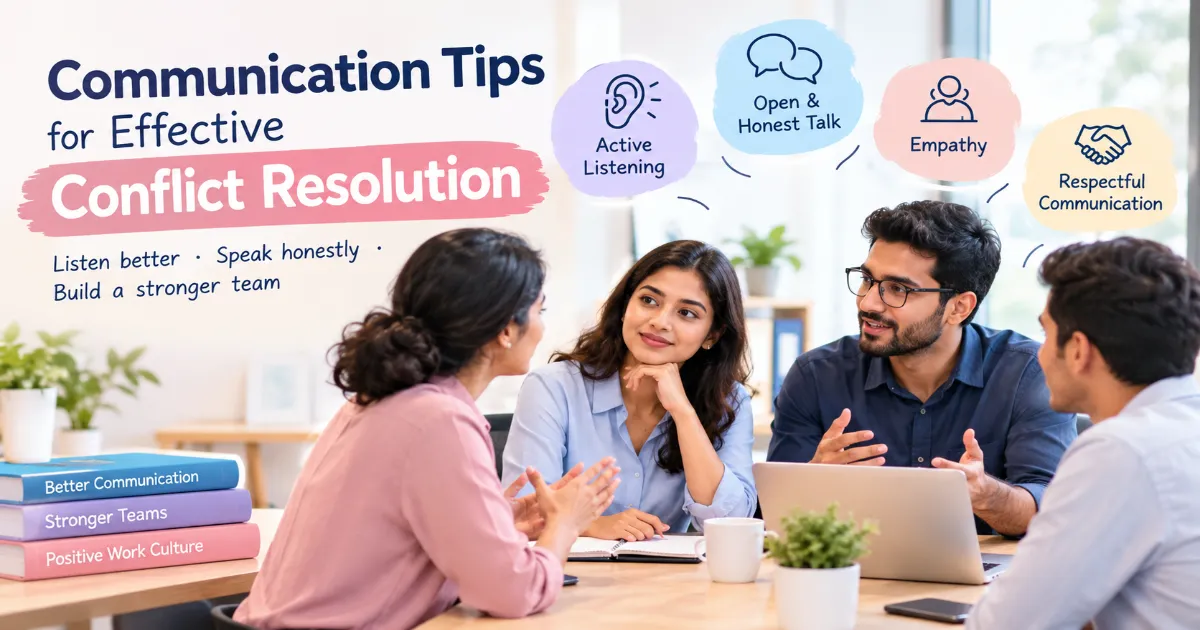
1. Active Listening. Give full attention. Don’t plan your reply while someone talks. Nod. Ask a follow-up. Repeat their point back. Active listening prevents more conflict than any other habit.
2. Open, Honest Talk. Hold back a concern too long, and it turns into resentment. Say it early. It stays a small conversation. This is where strong communication skills make the biggest difference.
3. Reading Body Language. Words are only part of the message. A flat tone or a delayed reply often says more than the sentence itself.
4. Empathy. Ask why someone reacted the way they did. Maybe they’re overloaded. Maybe they misread your tone. A moment of empathy stops most arguments before they start. Building emotional intelligence makes this easier over time.
5. Assertiveness. State your point clearly, without attacking. “I felt left out of that decision. Can we talk?” works better than silence or a sharp reply. Know the line between being assertive and aggressive so your point lands without hurting the relationship. Disagreements with managers require tactful phrasing, particularly regarding what to say when your boss pushes back.
A Real Example
A team lead noticed two teammates had gone quiet after a project handoff went wrong. She asked each one, separately, what happened. One thought the other ignored an email. The email had landed in spam. One short chat fixed a week of cold silence. No meeting needed. Just a direct question. This is workplace conflict resolution in its simplest form.
Cost of Unresolved Conflict
- Lost productivity. Tension eats up real work hours every week.
- Higher turnover. People leave teams where conflict festers.
- More stress. Ongoing tension lowers job satisfaction for everyone nearby.
- Lower morale. Even bystanders feel the drag.
Many organizations still have no formal process for handling disputes, according to a workplace conflict statistics roundup. That leaves resolution to chance. Good communication skills for conflict resolution close that gap without needing a policy at all.
Build These Habits as a Team
- Ask people to summarize the last speaker’s point before replying.
- Encourage direct phrasing over sarcasm or hints.
- Start meetings with a quick check-in.
- Shift language from “whose fault” to “how do we fix this.”
- Normalize give-and-take so no one always loses.
Conclusion
Workplace conflict isn’t something to avoid. It’s something to handle well. Most disputes trace back to a communication gap, not a real difference in goals. Listen fully. Speak honestly. Stay calm and direct. Master effective communication in the workplace, and conflict turns from a headache into a chance to build stronger relationships.
FAQs
1. What causes most workplace conflict? Unclear expectations and poor communication, more than actual disagreements over goals.
2. How does active listening reduce conflict? It makes the other person feel heard. That lowers defensiveness and speeds up resolution.
3. Assertive vs. aggressive communication: what’s the difference? Assertive states your point with respect. Aggressive attacks the person. One resolves conflict; the other fuels it.
4. Can avoiding conflict hurt a team? Yes. Small issues left unspoken build up into bigger problems.
5. How can managers help resolve conflict between employees? Hear both sides separately. Stay neutral. Help them find a next step, not a blame target.
6. Is workplace conflict always bad? No. Handled well, it often leads to better decisions and stronger working relationships.

Ayanshi is the founder of PersonaGuru.in, a blog focused on personality development, career, relationships, and mental well-being. With over 3 years of writing experience, she turns psychology and everyday experiences into practical, easy-to-understand advice for real life.