

Last updated on September 22nd, 2026 at 10:42 am
Have you ever felt really good after helping someone feel more confident or giving advice that actually helped them? If yes, then you are already on your way to becoming a personality development trainer. At personaguru.we believe everyone can grow and improve.
Today, I will show you how to become a trainer who teaches important skills like communication, confidence, and personal growth. Whether you want to help students, working professionals, or companies, this career lets you support others while building your own future. For the full framework, see our career and workplace growth guide and our complete guide to personality development.
Key Takeaways
- Passion Pays Off: Combine your love for helping others with certifications to earn $67K+ annually as a part-time trainer (ICF data).
- Practice Makes Pro: Log 100+ coaching hours to master your craft and build unshakable confidence.
- Brand Smart: A niche-focused website and free value (e.g., webinars) can convert 20-30% of leads into clients.
- Stay Ahead: Embrace trends like AI tools and virtual workshops to stand out in the $67B personal development market.
- Impact First: Every session you lead changes lives—start small, dream big!
.jpg "How to Become a Personality Development Trainer") |
| How to Become a Personality Development Trainer |
Why This Field Is Growing So Fast
Personality development training is not just a trend. The world is changing quickly. People need soft skills, like teamwork, leadership, positive thinking, and public speaking, more than ever. The personal development industry is now worth over $51 billion, and it’s expected to reach $67 billion by 2030. Trainers are needed everywhere: schools, companies, online workshops, and even social media.
Main reasons for growth:
- Online learning: Workshops and classes are easy to attend from anywhere.
- Remote work: Companies want employees who communicate well and adapt quickly.
- Career changes: People want to improve their skills to get better jobs.
- Personal growth: More people care about self-improvement and mental health.
For a head start on one of the most in-demand trainer skills, see our guide on public speaking confidence.
Qualities of a Good Personality Development Trainer
You don’t need to be perfect, but some qualities matter a lot:
- Genuine interest in people: If you enjoy listening, sharing, and helping, that’s a strong foundation.
- Good communication: Speak clearly, listen patiently, and explain things in a way anyone can understand.
- Empathy: Understand others’ feelings and challenges.
- Flexibility: Every person is unique. Be ready to change your style.
- Continuous learning: The best trainers keep learning themselves.
Story Example: Imagine a college student who starts by helping classmates prepare for presentations. She notices she genuinely enjoys encouraging others and, over a few years, turns that into a full-time coaching career. This is a common path into the field, not an overnight jump.
For more on the emotional side of this work, see our guide on powerful tips to boost your emotional intelligence.
Step-by-Step: How to Become a Personality Development Trainer
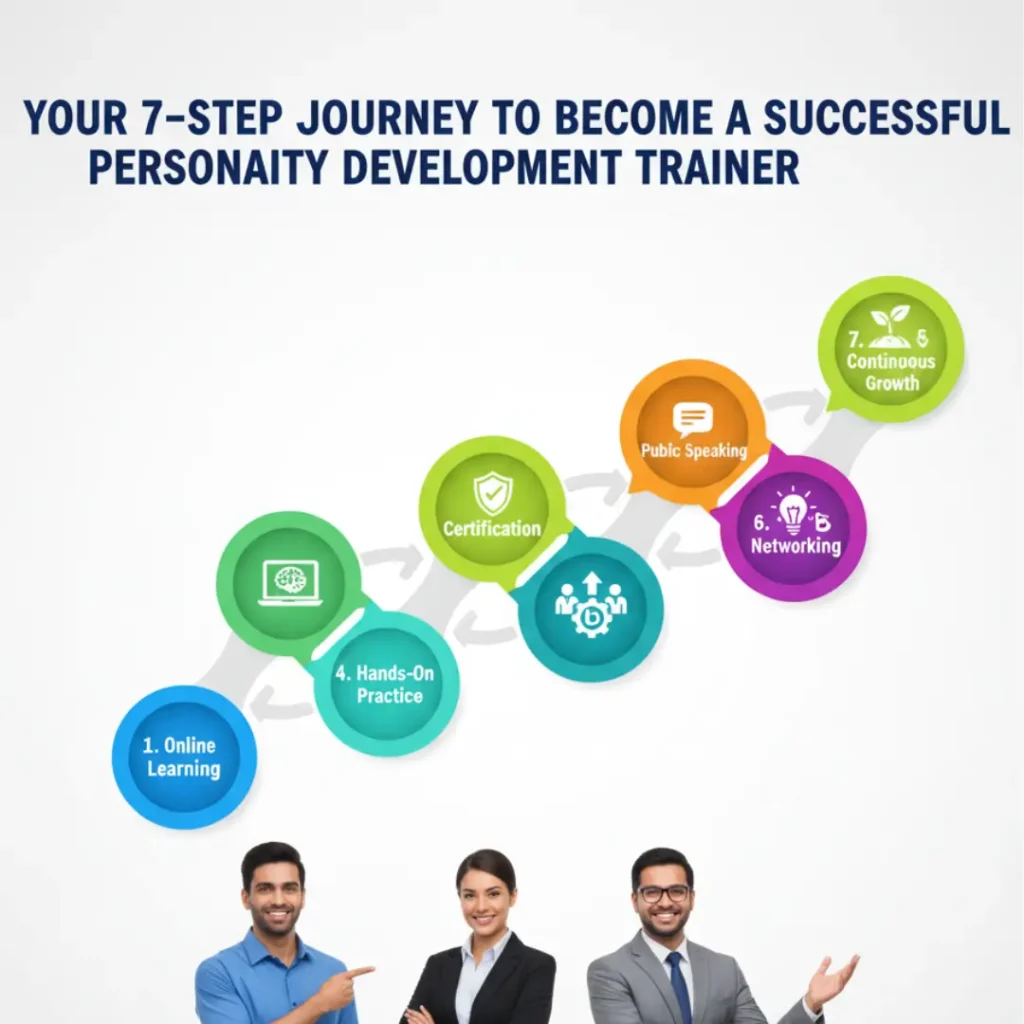
1. Learn the Basics
Start with simple online courses on psychology, public speaking, body language, and emotional intelligence. Websites like Coursera, Udemy, and YouTube have affordable courses, many for under ₹1,000. Books like “Mindset” by Carol Dweck are also great and pair well with building your own growth mindset before you try to teach it to others.
Tips:
- Take a course when it is on sale.
- Follow 5 trainers on LinkedIn or Instagram for ideas and inspiration.
2. Get Certified
A certificate gives you trust and credibility. Clients and HR managers prefer certified trainers. The International Coaching Federation (ICF) is the gold standard, but affordable options like Transformation Academy also work well.
Facts: Real ICF data is worth knowing here, including the less flattering part. The 2023 ICF Global Coaching Study puts the global average annual income from coaching at $52,800, with North America averaging higher at $67,800. But more than half of all coaches, 53%, report earning under $30,000 a year from coaching. Certified coaches do tend to earn more than uncertified ones, and clients consistently say they value working with credentialed coaches. Go in with realistic expectations, especially in your first year or two as a part-time trainer.
If you are on a budget: Start with free or low-cost courses, and upgrade later.
3. Improve Your Communication
Practice talking, listening, and giving feedback. Join Toastmasters or practice with friends. Record yourself and notice how you sound.
Pro tip:
Ask a friend to role-play a client. Give feedback, and ask for theirs.
For a structured approach, see our action plan to improve communication skills.
4. Get Real Experience
Nothing beats practice. Offer free sessions to friends, family, or at local NGOs. Run a few online workshops—these can be on Zoom or even WhatsApp. Collect honest feedback.
Goal:
Try to coach at least 100 hours. This builds your portfolio and confidence.
5. Build Your Personal Brand
Choose a niche—maybe you love helping students, women returning to work, or people with stage fright. Make a simple website (WordPress is cheap) and share tips on Instagram or LinkedIn.
Tip: Specialize early. For example: “Personality Development for College Students” or “Confidence Coaching for Working Moms.” See our full guide on how to build a strong personal brand.
6. Network and Connect
Join online groups, attend webinars, and introduce yourself to HR professionals or other trainers. Partnerships can lead to new clients. Our guide on networking skills for career growth covers this in more depth.
Quick ideas:
- Offer a free consultation call.
- Guest post on someone’s blog or podcast.
7. Keep Improving
Every month, learn something new, like mindfulness, time management, or using AI tools for coaching. Ask your clients for feedback after every session.
Tips:
Add one skill per quarter (e.g., neurodiversity-inclusive coaching).
Survey clients post-session for improvements.
How to Plan a Great Session or Workshop
1. Know what your client wants:
Send a Google Form or simple message to ask about their biggest challenge.
2. Make it practical:
Start with a small task (like a 1-minute speech), and give real-life examples.
3. Use visuals:
Canva is great for making slides. Memes, pictures, or short videos keep things interesting.
4. Set goals:
Help your client set a simple, clear goal (like “I will speak up in the next meeting”).
5. Track progress:
Check in after 30 days. Celebrate small wins.
Pro Tip: Share anonymized client stories—like how Ravi overcame stage fright—to inspire trust.
How to Land Clients
No clients, no impact. Here’s your 2025 playbook:
Build a Website: Blog on “Overcome Public Speaking Fear” with keywords like personality development and confidence coach.
Offer Free Value: Create a “5-Day Confidence Booster”.
Social Media Shine: Share Instagram Reels, LinkedIn tips, or YouTube body language hacks.
Testimonials: Ask early clients for reviews.
Partner Up: Connect with schools or HR for workshops.
Final Thoughts
Becoming a personality development trainer is possible for anyone who is willing to learn, practice, and connect with people. Start small, help a friend, take a course, or run a free workshop. As you grow, so will your confidence and client list.
Remember: Every small step counts. If you are ready to help others, this is a meaningful and rewarding career.
Who will you help first? Take that step today.

Ayanshi is the founder of PersonaGuru.in, a blog focused on personality development, career, relationships, and mental well-being. With over 3 years of writing experience, she turns psychology and everyday experiences into practical, easy-to-understand advice for real life.