Presentation Skills in Personality Development: What They Are and How to Build Them
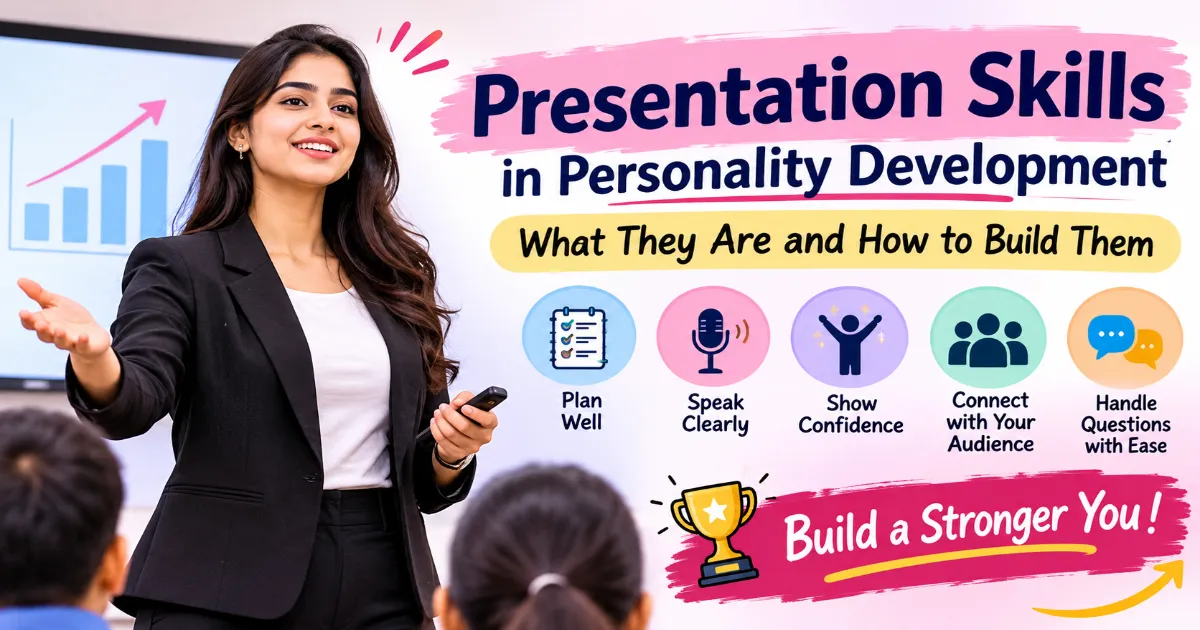
Presentation skills in personality development showing confidence, clear speaking, body language, audience connection, and question handling.

Presentation skills in personality development mean the habits you use to plan, build, and deliver a talk, and the traits those habits train, such as confidence, clarity, and calm. You do not need a big stage for this. A class seminar, a viva, a team update, or one answer in an interview all count. Presentation … Read more


How to Disagree With Your Boss Without Losing Their Trust

How to disagree with your boss respectfully and professionally

How do you disagree with your boss? Start by agreeing on the shared goal. Share your view using facts or a question, not a flat “you are wrong.” End with one clear alternative. Choose a private moment, keep your tone calm, and accept that your boss makes the final call, even if they don’t choose … Read more

9 Assertiveness Techniques You Can Actually Use at Work

9 assertiveness techniques that actually work at work

What are assertiveness techniques? They are specific verbal and body language methods that help you express your needs clearly, without being passive or aggressive. Common ones include the broken record method, fogging, using “I” statements, and holding steady eye contact with an open posture while you speak. Manisha had a clear point to make in … Read more

How to Speak Up in Meetings (Even When You Feel Nervous)

How to speak up in meetings with confidence

How do you speak up in meetings? Prepare one point before the meeting starts. Speak early, even with a small comment, so the first sentence is the hardest part done. Use a short opening phrase like “Building on that” to enter the conversation naturally. Keep your point to two sentences, then stop. If your boss … Read more

Coworker Taking Credit for Your Work? Here Is What to Say

Coworker taking credit for my work in an office

A coworker taking credit for my work can be frustrating, especially when your contribution gets overlooked in front of your manager or team. There is a clear way to handle it. Pause before you react. Decide if it happened once or if it is a pattern. If it is small, let it go. If it … Read more

How to Say No to Extra Work (Without Losing Your Boss’s Trust)

how to say no to extra work

How to say no to extra work? Start by thanking the person for thinking of you. Name your current priority in one line. Say clearly that you cannot take it on right now. Then offer one option, such as a later date, a smaller task, or another person who can help. A smart way is … Read more

How to Improve Your Cross-Cultural Communication Skills (With Real Examples)

How to improve cross-cultural communication skills with diverse people, global teams, and five key communication skills

How to improve cross-cultural communication skills? Focus on four things: cultural awareness, active listening, adaptability, and clear language. Then practice all four in real conversations with people from different backgrounds, not just in theory. This guide breaks the process into simple steps you can start using this week, whether you work with global clients, lead … Read more

7 Steps to Practice Active Listening Skills That Actually Work

How to practice active listening skills for better conversations and relationships

How to practice active listening skills in real conversations: give the speaker your full, undivided attention, notice their body language, avoid planning your reply while they talk, and reflect what you heard before you respond. It is a skill you build through repetition, not something you either have or do not have. Last month, a … Read more