
Last updated on September 13th, 2026 at 12:36 pm
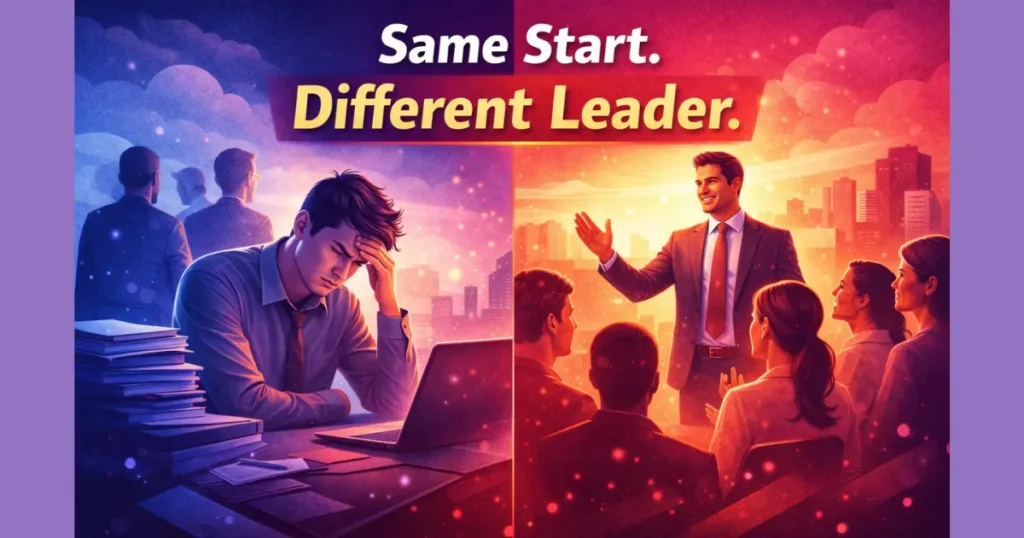
Two people join a company on the same day. Same background, same degree, same starting point. Five years later, one of them is leading a team of 20 people who genuinely respect them. The other is still wondering why nobody takes them seriously despite having the same experience.
What went wrong? Nothing went wrong with their skills. The gap was in their personality.
How they talked to people under pressure. How they handled being wrong. Whether they listened or just waited for their turn to speak. These small things, practiced or ignored over the years, created two completely different leaders from the same starting material.
So how can personality development enhance leadership quality in real, practical ways? That is exactly what this article answers — with examples, research, and steps you can actually use.
Personality development and leadership go hand in hand. Building self-awareness, emotional intelligence, communication skills, confidence, resilience, and accountability — together these qualities help leaders earn genuine trust, make better decisions, and create teams that actually want to work hard.
👉 [Download Free PDF: Personality Development & Leadership Guide] (With Action Steps)
Key Takeaways
- Leadership quality comes more from who you are than what you know
- Self-awareness in leadership is the starting point of every genuine leadership improvement
- Emotional intelligence in leadership determines how your team feels working with you every day
- The Big Five personality traits are directly linked to how effective a leader becomes
- Real leaders like Satya Nadella and Ratan Tata show what personality-driven leadership produces
- Personality is not fixed, and it responds to consistent effort over time
What Personality Development Really Means
People often confuse personality development with surface-level improvements like speaking confidently in presentations or dressing professionally. That is not what it means.
Personality development and leadership improvement is the process of understanding how you actually think, react, communicate, and affect the people around you, and then working to improve those things honestly over time.
It is not a weekend workshop. It is not a certificate course. It is slow, honest work that never fully stops.
The good news is that research backs this up. A study from the University of Leeds found that people who take on leadership roles experience genuine changes in their conscientiousness and emotional stability over time. Your personality responds to the effort you put into it. It is not a fixed thing.
Here is a simple way to see the real difference between personality development and leadership makes in practice:
| Without Personality Development | With Personality Development |
|---|---|
| Reacts instantly when things go wrong | Pauses, thinks, then responds |
| Sees feedback as personal criticism | Uses feedback as a tool to improve |
| Talks far more than listens | Listens properly before speaking |
| Blames the team or situation | Takes ownership of outcomes |
| Leads because of their title | Leads because people genuinely trust them |
The shift from the left column to the right one is not natural talent. It is practice over time – exactly how personality development enhances leadership quality.
Why Does Personal Development Matter in Leadership?
Here is a question worth sitting with honestly. How many people do you know who are technically very good at their job but genuinely difficult to work with?
Probably more than a few. That is the gap personality development and leadership fills.
Getting a leadership role and being genuinely accepted as a leader are two different things. Your technical skills might get you promoted. But personal development for leaders determine whether people actually follow you once you are there.
A Gallup study found that 70% of team engagement depends directly on the manager. Not the company. Not the product. The manager. And what creates that engagement? Whether people trust their manager, feel heard by them, and feel safe enough to do their best work.
Those are all personality qualities. Every single one of them.
Most leadership failures are not caused by someone not knowing enough. They happen because of poor self-awareness in leadership, weak emotional control, or communication that leaves people more confused and frustrated than before.
Key Ways Personality Development Enhances Leadership Quality
People do not follow titles. They follow behavior.
1. Self-Awareness in Leadership
Self-awareness in leadership is where everything starts. A leader who genuinely understands their own triggers, blind spots, and default reactions makes far better decisions. They do not let their personal mood become the team’s daily problem.
Organizational psychologist Tasha Eurich found in her research that while 95% of people believe they are self-aware, only around 10 to 15% actually are. That gap costs leaders more than they realize.
Here is a simple example. A manager gets visibly defensive whenever someone questions their decision in a meeting. They probably do not notice it themselves. But the team notices immediately. Over months, people stop raising concerns or sharing ideas. The manager then wonders why no one speaks up anymore.
The fix is not complicated. It is honest observation, regular reflection, and the habit of asking for feedback without dismissing it when you actually get it.
Tip you can use today: At the end of each week, write down one moment where you reacted in a way you are not proud of. Then write what you would have done differently. Five minutes a week builds more genuine self-awareness in leadership than most leadership programs. Start with simple good habits for personality development.
2. Emotional Intelligence in Leadership
Emotional intelligence in leadership is how you handle pressure, conflict, and other people’s feelings without making the situation worse. It is one of the most studied and most important leadership qualities of the last 30 years.
Daniel Goleman, whose research brought emotional intelligence into mainstream management thinking, found that emotional intelligence accounts for nearly 90 percent of what separates high-performing leaders from everyone else with similar technical skills.
A team member misses an important deadline. A leader with strong emotional intelligence in leadership asks what happened before drawing conclusions. A leader without it fires off a sharp message — and creates someone who disengages and starts looking for another job. Same situation. Two completely different outcomes.
- Tip you can use today: When something at work frustrates you, wait 90 seconds before responding. Neuroscientist Dr. Jill Bolte Taylor found that the physical sensation of an emotional reaction passes through the body in about 90 seconds. Waiting that long gives you a genuine choice about how to respond rather than just reacting automatically.
3. Communication Skills in Leadership
Strong communication in leadership is not about being articulate or confident in presentations. It is about being clear, being honest, and making the people around you feel genuinely heard.
Personality development sharpens all three of these things. You learn when to speak, how much to say, how to give feedback without crushing someone’s confidence, and how to actually listen rather than just waiting for your turn to talk.
A Salesforce research report found that 86% of employees and executives point to poor communication as the main reason for workplace failures. That number is worth taking seriously.
Strong communication is a direct example of how can personality development enhance leadership quality.
Think about a simple comparison. A leader who clearly defines roles, expectations, and goals at the start of a project creates a team that can work confidently and independently. A leader who gives vague directions and then criticizes the team when results fall short creates anxiety, resentment, and eventually people who stop caring.
The Big Five personality research consistently shows that conscientiousness and openness to experience are both strongly linked to effective communication in leadership. The good news is that both of these traits respond well to deliberate practice.
Tip you can use today: After your next team meeting, ask one person privately whether the objectives were clear to them. Their honest answer will tell you more about your communication than any self-assessment ever could.
4. Confidence in Leadership
Real leadership confidence is quiet. It does not need to fill every room or dominate every conversation.
The confidence that comes from genuine personal development for leaders is built on self-awareness and clarity. It is not built on ego or the need to always appear right.
There is an important difference between confidence and arrogance that is worth naming clearly. Arrogance avoids admitting mistakes because it feels threatening. Real confidence admits mistakes openly because it does not need a perfect image to feel secure.
A leader who stands in front of their team and says clearly, “I made the wrong call on this one and here is how we are going to fix it,” earns more genuine trust in that single moment than months of getting everything right.
Real example: When Satya Nadella became CEO of Microsoft in 2014, the company was struggling with internal competition and a culture of fear around failure. Nadella openly acknowledged what was not working and built a new approach around empathy, learning from mistakes, and honest communication.
He did not pretend the problems did not exist. He addressed them directly and consistently. Under his leadership, Microsoft’s market value grew from around $ 300 billion to over $ 2 trillion. That transformation started with his personality, specifically his honesty, emotional intelligence, and genuine confidence.
“The most courageous act is still to think for yourself. Aloud.” — Coco Chanel
5. Resilience in Leadership
Every leader faces setbacks. What separates effective leaders from ineffective ones is not that they avoid failure. It is how they respond when failure happens.
Teams watch their leader closely during difficult moments. If the leader panics or falls apart, the team takes that as a signal and follows. If the leader stays steady and focused, the team takes that cue instead. It really is that direct.
The American Psychological Association confirms that resilience is not something people are simply born with. It is a set of behaviors and thinking patterns that anyone can develop through consistent practice over time.
Real example: When the Tata Nano commercially underperformed despite years of effort and genuine innovation, Ratan Tata did not assign blame or quietly distance himself from the project. He acknowledged what did not work, spoke openly about it, and continued building. His team watched someone handle a very public setback with dignity and without bitterness. That behavior built more long-term trust than a successful product launch would have.
This is personal development for leaders at its most visible — staying steady in public failure and showing your team how to move forward.
Tip you can use today: After any significant setback, sit down and ask yourself just two questions. What did I learn from this? What is the most useful next step? That simple practice keeps you moving forward. Build resilience with how to control your mind
6. Accountability and Mindset in Leadership
A leader’s daily attitude shapes team culture more quietly and more powerfully than any official policy document ever could.
When a leader consistently owns their decisions, looks for solutions before looking for someone to blame, and stays steady without being unrealistic, the team gradually picks up that same standard and applies it to their own work.
This connects to what leadership researchers describe as the three Cs of effective leadership: character, consistency, and clarity. All three are personality qualities. All three are built through conscious practice over time, not handed out with a job title.
Big Five Personality Traits and Leadership
If you want a clear framework for understanding exactly which personality qualities matter most in leadership, the Big Five personality traits research gives you that directly.
- Openness to experience means being genuinely curious and receptive to new ideas. Leaders who score high on this do not feel threatened by different perspectives. They welcome them and use them. This directly encourages creativity and fresh thinking across their teams.
- Conscientiousness means being organized, reliable and following through on what you commit to. Teams trust leaders who do what they say they will do. Research consistently shows this trait as one of the strongest predictors of long-term leadership performance. See practical steps in personality development tips for professionals.
- Extraversion connects to communication comfort and energy in social situations. Extroverted leaders tend to engage teams more visibly and naturally. However, research also shows that introverted leaders often outperform in situations requiring deep listening and careful thinking before acting.
- Agreeableness means genuine empathy and real care for the people around you. Leaders who score well here build actual collaboration rather than just managing tasks and outputs. People feel valued rather than processed.
- Emotional stability is the ability to stay steady under pressure without letting personal feelings drive team decisions. Teams feel more secure working under emotionally stable leaders and perform better as a result.
None of these traits is permanently fixed. All of them respond well to deliberate practice, which is exactly why personality development and leadership are so closely connected.
Can You Actually Develop Your Personality for Leadership?
This is a fair question and one worth answering directly.
Yes, you can.
Certain baseline tendencies may have some genetic component. But a large body of research confirms that personality traits change meaningfully in response to experience, deliberate effort, and environment over time.
The University of Leeds study mentioned earlier found clear evidence that people who took on leadership roles experienced genuine changes in their conscientiousness and emotional stability. The responsibilities and demands of leadership itself changed their personality.
What does not work is passive exposure. Watching videos about leadership, attending seminars, and reading books creates awareness. But awareness alone does not change behavior. Change comes from applying what you know in real situations, getting honest feedback from people around you and adjusting how you act based on what you learn.
What Holds Most People Back From Growing as Leaders
- They consume a lot of content about personal development for leaders, but never apply anything to their actual behavior
- They wait for the right title before working on themselves, but self-awareness in leadership begins right now, wherever you currently are
- They invest time in how they speak while completely ignoring how well they actually listen
- They receive honest feedback and treat it as a personal attack rather than useful information
- They try to improve everything at once and end up making no real progress on anything specific
How to Start Building These Qualities Right Now
You do not need an expensive program to begin. You need a few simple practices done consistently over time.
Pick one quality from this article and focus only on that for the next 30 days. Not all six. Just one. Give it your full attention for a full month before moving to the next one.
Ask one person you genuinely trust for honest feedback this week. Listen to their complete answer without defending yourself, explaining your reasoning, or minimizing what they share with you.
Spend five minutes each evening writing down one moment from your day that you handled well and one moment you would handle differently next time. No judgment. Just an honest observation of your own behavior.
Next time a situation at work frustrates you, wait 60 seconds before responding. That pause is where better leadership decisions actually get made consistently.
Find one leader you genuinely admire and study their personality closely. Not their achievements or their business strategy. Their behavior. How do they respond when things go badly? How do they treat people during difficult moments? What do they practice consistently, even when no one is watching?
You can explore structured resources for this kind of growth at PersonaGuru, built specifically for personal development for leaders who want real direction without wasted time.
Conclusion
Understanding how personality development enhances leadership quality is important, but applying it is what creates real change. The leaders people actually remember are rarely the ones who had all the answers or never made mistakes.
They are the ones who stayed calm when everything was falling apart. Who listened when it would have been much easier to talk over people. Who admitted when they were wrong without making a big production out of it. Who kept working on personality development and leadership long after anyone expected them to.
That is what personality development gives you. Not a new identity. A stronger, steadier version of the leader you are already capable of being.
The best time to start was a year ago. Today works just as well.
FAQs
How can personality development enhance leadership quality?
Personality development and leadership quality improve together when you build self-awareness, emotional intelligence, clear communication, resilience, and genuine accountability.. These qualities create real trust between a leader and their team. Trust is the actual foundation of effective leadership, not authority or job title.
Why is personal development important in leadership?
Because trust and engagement depend on the leader’s daily behavior. Personal development for leaders directly improves how you show up for your team every single day.
How does personality influence leadership?
Personality shapes every interaction a leader has. How they communicate under pressure, how they handle failure, how they respond to people when things are difficult. These behaviors either build or quietly destroy the trust that leadership depends on.
Can introverts become strong leaders through personality development?
Yes, absolutely. Introverts tend to listen carefully, think before speaking, and build genuine trust in one-on-one interactions. Self-awareness in leadership helps introverts use what they already have more deliberately and effectively.
What personality traits matter most in leadership?
Research on the Big Five consistently shows that conscientiousness, emotional intelligence in leadership, openness to experience, and agreeableness are among the strongest predictors of leadership quality improvement.
What is a personal development plan for leadership?
It is a practical plan where you identify specific qualities you want to build, set clear goals around each one, seek regular honest feedback from people you trust, and track your own progress over time. The simpler you keep the plan, the more likely you are to actually follow through on it.
Can personality be changed, or is it fixed?
Personality is not fixed. Research confirms that personality traits change meaningfully in response to experience, deliberate effort, and the demands of new responsibilities. The key ingredient is consistent practice over time rather than a single event, course, or seminar.

Ayanshi is the founder of PersonaGuru.in, a blog focused on personality development, career, relationships, and mental well-being. With over 3 years of writing experience, she turns psychology and everyday experiences into practical, easy-to-understand advice for real life.