
Last updated on April 10th, 2026 at 07:05 am
Most people want to grow. They want to be calmer, more confident, less reactive, and better in their relationships. But they keep looking for answers outside themselves, in books, videos, or advice from others.
The truth is, real growth starts from within. And that is exactly where mindfulness for personal growth comes in.
Mindfulness is not about meditating for hours or going on a spiritual retreat. It is simply the practice of paying attention to the present moment, your thoughts, your feelings, your reactions, without judging any of it. This one habit, when done regularly, quietly changes who you are from the inside out.
As Jon Kabat-Zinn, who brought mindfulness to modern medicine, once said: “Wherever you go, there you are.” Growth begins the moment you actually show up to your own life.
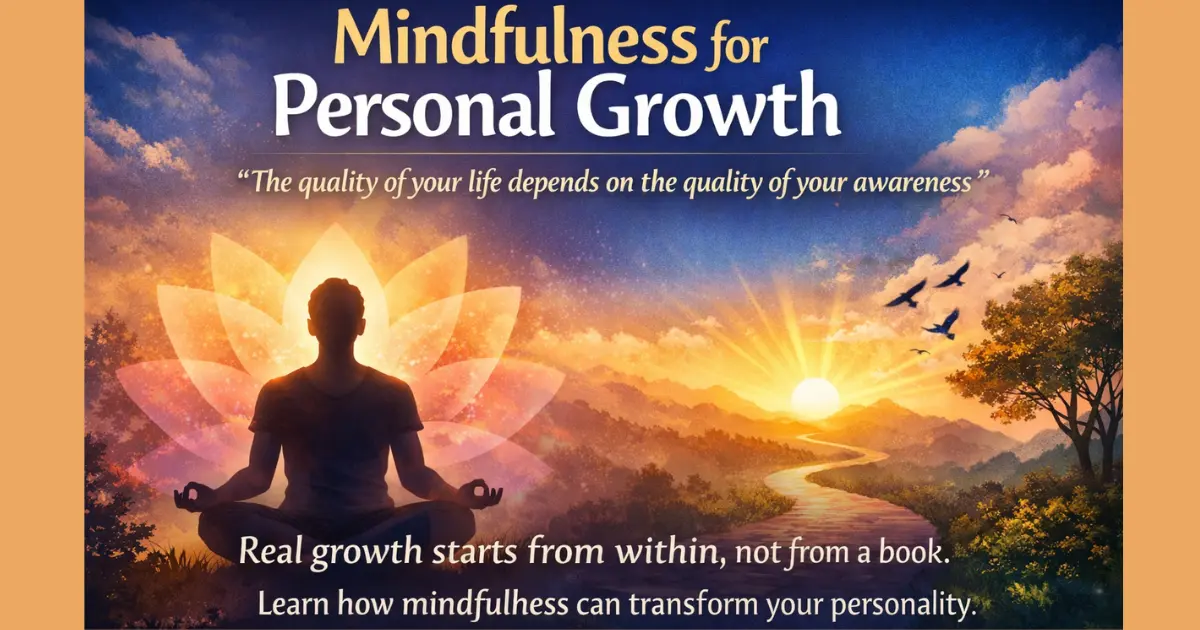
.webp "Mindfulness for Personal Growth a Transformed Personality") |
| Mindfulness for Personal Growth a Transformed Personality |
What Is Mindfulness, in Simple Words
Mindfulness means being fully present in whatever you are doing right now. Not lost in yesterday. Not worried about tomorrow. Just here.
Most of us live on autopilot. We eat while scrolling, talk while thinking about something else, and react to situations without really understanding why. Mindfulness breaks that cycle. It helps you slow down enough to actually notice what is happening inside you, and that awareness is the starting point of all genuine personal growth.
In simple terms, mindfulness teaches you to become more aware of yourself before life forces you to.
Why Mindfulness for Personal Growth Matters
When people talk about personality development, they usually focus on communication skills, body language, or confidence. These things matter, but they are surface level. If your inner world is chaotic, no skill can fix that for long.
Mindfulness goes deeper. It works on the root of your behavior, which is your awareness.
A strong personality is not built only by speaking well or looking confident. It is built by knowing how to manage your thoughts, emotions, and reactions in real life.
This is why mindfulness and personality development are so closely connected. When awareness improves, behavior improves too.
When you understand your own triggers, patterns, and emotional responses, you stop reacting blindly. You start responding with intention. That shift alone can change your relationships, your confidence, and how people experience you.
How Mindfulness for Personal Growth Actually Works
1. It Builds Real Self-Awareness
You cannot change what you cannot see. Mindfulness teaches you to observe yourself without judgment.
Over time, you start noticing things you never caught before. Maybe you always get defensive when someone gives feedback. Maybe you talk too much when you are nervous. Maybe you say yes to things out of guilt, not genuine desire.
This kind of honest self-observation is uncomfortable at first. But it is also freeing. Once you see a pattern clearly, you can change it.
Many people notice the first signs of personal growth in small everyday moments, like staying calm in a difficult conversation or catching a negative thought before it takes over.
That is where real change begins.
2. It Improves Emotional Control
One of the most important benefits of mindfulness is that it creates a small pause between a trigger and your response. That pause is where emotional intelligence lives.
When you become more mindful, you are less likely to say things in anger, panic under pressure, or carry emotional stress into every situation.
Instead of reacting instantly, you learn to pause, think, and choose your response more wisely.
Emotional control is one of the most respected personality traits a person can have. And mindfulness builds it naturally over time.
If you are wondering how mindfulness helps personal growth, one of the clearest answers is this: it helps you respond with awareness instead of reacting on autopilot.
read more: how to improve emotional intelligence
3. It Builds Quiet Confidence
Many people chase confidence through achievements or appearance. But that kind of confidence is fragile. It breaks the moment things go wrong.
Mindfulness builds confidence from a different place. When you are comfortable with your own thoughts and feelings, you stop needing constant validation. You become less controlled by what others think.
That steadiness is real confidence, and people notice it.
You may not become louder, but you do become stronger within yourself. And that kind of confidence often creates the biggest shift in personality.
read more: How to Boost Self-Confidence with Expert Tips
4. It Makes You a Better Listener and a Better Friend
When you are fully present with someone, they feel it. You are not half distracted, planning what to say next. You are actually listening.
This one change improves every relationship in your life, personal and professional.
Mindfulness helps you become more patient, more understanding, and less reactive in conversations. That naturally improves the way people experience you.
If you are also working on emotional intelligence, confidence, or communication skills, mindfulness can quietly strengthen all three at the same time.
That is why it is not just a mental wellness habit. It is also a powerful relationship skill.
Simple Mindfulness Practices You Can Start Today
You do not need any special setup for mindfulness for self improvement. These practices fit easily into an ordinary day.
- Morning Breathing, 5 Minutes: Before you pick up your phone in the morning, sit quietly and focus on your breath. Inhale slowly for four counts, exhale for four counts. When your mind wanders, gently come back. This small habit sets a calm tone for your whole day.
- Pause Before Responding: Whenever you feel triggered, annoyed, or anxious, pause for a few seconds before saying or doing anything. Just breathe. This one habit alone will change how people experience you.
- Mindful Walking: On your next short walk, leave your phone in your pocket. Notice the feeling of your feet on the ground, the sounds around you, the air on your skin. This is not wasted time. It is training your mind to stay present.
- Body Scan Before Sleep: Lie down and slowly move your attention from your feet to your head, noticing tension without trying to fix it. This practice reduces stress and helps you sleep better.
- Single-Task for 15 Minutes: Pick one task, close every other tab, and do only that for 15 minutes. No multitasking. This is one of the most underrated mindfulness practices and one of the most effective for focus and mental clarity.
As Thich Nhat Hanh wrote: “The present moment is the only moment available to us, and it is the door to all moments.”
What Changes When You Practice Consistently
The benefits of mindfulness do not arrive all at once. They come quietly, and then suddenly you notice things have shifted.
A clinical trial involving over 1,400 employees found that even short daily mindfulness practice averaging just 5 minutes led to an 85 percent reduction in stress levels that lasted for four months. Consistency mattered far more than duration.
In daily life, you may find that you handle conflict without losing your calm. You feel less overwhelmed by small problems. You make decisions more clearly because your mind is not cluttered. You become more patient, not because you are forcing it, but because you have genuinely slowed down.
This is also why mindfulness for personal growth works so well. It creates change that is subtle at first, but meaningful over time.
One Common Mistake to Avoid
Many people try mindfulness once, feel restless, and give up. They think their mind is supposed to go blank. It is not.
The mind will always wander. That is what minds do. The practice is simply noticing when it wanders and bringing it back. Every time you do that, you are building mental strength, the same way a bicep curl builds physical strength.
Restlessness is not a sign of failure. It is the practice itself.
Conclusion
Mindfulness for personal growth is one of the most practical things you can do for yourself right now. It does not require money, special tools, or hours of free time. It simply asks you to become a little more present in your own life.
When you practice consistently, your personality starts changing in ways that truly matter. You become calmer under pressure, more honest with yourself, more emotionally balanced, and more present with others.
That is why mindfulness for personal growth is not just a habit. It is a long-term investment in the person you are becoming.
Start with five minutes tomorrow morning. No phone, no noise, just your breath.
That small beginning may look simple, but over time, it can lead to a deeply changed version of you.
Frequently Asked Questions
Q1. How does mindfulness help in personal growth?
Mindfulness helps personal growth by building self-awareness, improving emotional control, and helping you understand your own patterns and habits. When you see yourself clearly, you can grow intentionally.
Q2. Can mindfulness change your personality?
Yes, mindfulness can positively influence your personality by helping you become calmer, more self-aware, emotionally balanced, and thoughtful in the way you respond to life.
Q3. How long does it take to see results from mindfulness?
Some people feel calmer within days. Deeper personality changes usually take a few weeks to months of consistent practice. Even 5 minutes a day can make a measurable difference over time.
Q4. Can beginners practice mindfulness without any experience?
Yes, completely. Starting with simple mindful breathing for 5 minutes a day is more than enough. No background or training is needed.
Q.5 Does mindfulness help in professional life too?
Yes. Improved focus, emotional control, and clearer decision-making are direct outcomes of mindfulness practice, all of which improve professional performance and workplace relationships.

Ayanshi | MBA (HR) & Personality Coach
MBA in HR | 250+ posts helping 50,000+ readers build confidence, emotional intelligence, and healthy relationships. Over 3 years transforming real-life experience into practical, proven growth strategies.
From corporate HR professional to full-time blogger sharing actionable personal development insights.