
Last updated on February 8th, 2026 at 09:01 am
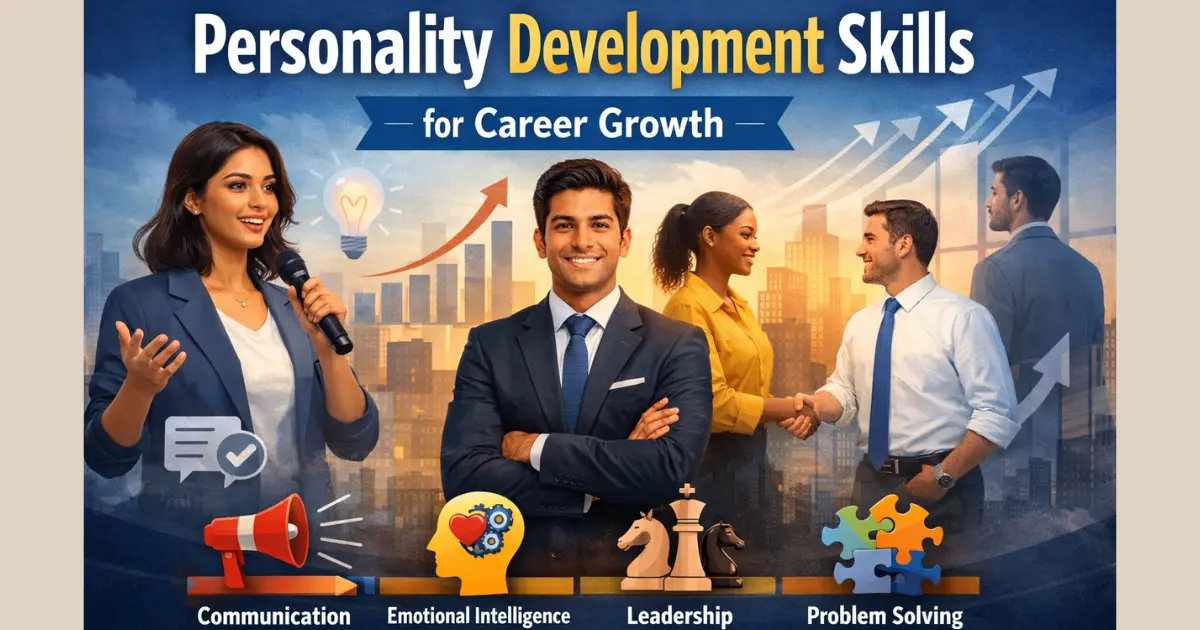
Let’s keep it real, getting ahead in your career isn’t just about having the right degree or technical skills anymore. Jobs are changing fast, teams are spread out, and companies want people who can communicate, stay calm, and step up when it matters. That’s where personality development skills for career growth come in. These are the human skills that make you stand out, get promotions, and actually enjoy your work.
Daniel Goleman put it perfectly: “What really matters for success is a definite set of emotional skills, your EQ, not just purely cognitive abilities.”
In this article, we explain the most important personality skills you need right now, real quotes, and easy ways to start improving today.
Quick Takeaways
- These skills help you get better pay, faster promotions, and more job security
- Employers value them just as much as (or more than) technical know-how
- Anyone can improve them with small daily habits
- They make your career stronger, no matter how the world changes.
(Read more in the World Economic Forum’s Future of Jobs Report 2025 – it shows how soft skills are rising to the top.)
What Are Personality Development Skills for Career Growth?
Personality development skills encompass Your True Potential pass a range of abilities and Personality development skills are the personal qualities that help you connect with people, handle pressure, and grow in your job. Think communication, confidence, emotional smarts, teamwork, the things that make you someone others trust and want on their team.Companies everywhere say the biggest gap they see isn’t technical knowledge, it’s these softer skills. When you work on them, you become more adaptable, more likable, and more ready for bigger roles.Takeaway: People who are strong in emotional intelligence often earn more and stay happier in their careers.
Why Communication Is the Most Important Skill for Career Growth
Good communication is the foundation of everything. It’s about speaking clearly, listening properly, and making sure your message actually gets across—whether it’s in emails, meetings, or casual chats.
Simon Sinek said it best: “Communication is not about speaking what we think. It’s about ensuring others hear what we mean.”
When you communicate well, you build trust, avoid misunderstandings, and get things done faster.
Takeaway: Teams that communicate clearly can be up to 30% more productive.
How to Improve Communication Quickly
- Practice active listening: repeat back what someone said to show you understand
- Keep emails short and clear—use bullet points
- Ask for feedback: “Did I explain that well?”
read more: Effective Communication Skills for career growth
How Does Time Management Help You Move Up Faster?
Time management means knowing what’s important, cutting distractions, and keeping a healthy balance between work and life. It makes you look reliable and keeps stress low.
Brian Tracy said: “Every minute you spend in planning saves 10 minutes in execution.”
Start small—make a to-do list every morning or use the Eisenhower Matrix (focus on urgent and important tasks first).
Takeaway: Better time management = better performance and less burnout.
read more: Time Management for Personality Development
Why Is Self-Confidence a Game-Changer for Your Career?
Confidence is what lets you speak up in meetings, apply for bigger roles, and bounce back when things go wrong.
Eleanor Roosevelt nailed it: “No one can make you feel inferior without your consent.”
Build it by celebrating small wins, preparing well before big moments, and learning from mistakes instead of beating yourself up.
Takeaway: Confident people grab opportunities others miss.
read more: Self-Confidence for Career Success Strategies
How Does Teamwork Make You More Valuable at Work?
Teamwork is about trusting others, sharing ideas openly, and using everyone’s strengths to get better results.
Helen Keller said: “Alone we can do so little; together we can do so much.”
Great team players create stronger work, more innovation, and longer-lasting teams.
Takeaway: Being good at teamwork opens doors to bigger projects and leadership roles.
read more: The Golden Rule of Leadership and Examples
Why is Emotional Intelligence One of the Most Powerful Skills?
Emotional intelligence (EQ) is understanding your own feelings, managing them well, and reading other people’s emotions too. It helps you handle tough conversations, build trust, and lead effectively.
Daniel Goleman said: “If your emotional abilities aren’t in hand, you won’t get very far.”
Takeaway: EQ often matters more than raw intelligence when it comes to leading people and growing in your career.
Simple Ways to Build Emotional Intelligence
- Notice how you feel when something stresses you out
- Practice empathy: ask yourself, “How would I feel in their shoes?”
- Take a deep breath before responding in heated moments
read more: Emotional Intelligence in Leadership
How Do Leadership Skills Help Even If You’re Not the Boss?
Leadership isn’t about a title—it’s about taking initiative, helping others, and driving things forward.
John C. Maxwell said: “A leader is one who knows the way, goes the way, and shows the way.”
You can show leadership by volunteering for tasks, mentoring juniors, or suggesting improvements.
Takeaway: Leadership skills get you noticed and promoted faster.
Why Are Adaptability and Resilience So Important Today?
Things change quickly—new tools, new bosses, new goals. Adaptability means adjusting fast, and resilience means bouncing back strong.
Charles Darwin put it perfectly: “It is not the strongest that survives, but the one most responsive to change.”
Takeaway: These skills make you the person who thrives instead of stressing out.

How Do Problem-Solving and Critical Thinking Boost Your Career?
These skills help you stay calm, think clearly, and find practical solutions when problems pop up.
Albert Einstein said: “It’s not that I’m so smart; it’s just that I stay with problems longer.”
Takeaway: Good problem-solvers earn trust and get handed bigger responsibilities.
read more: Problem-Solving Skills for Personality Development
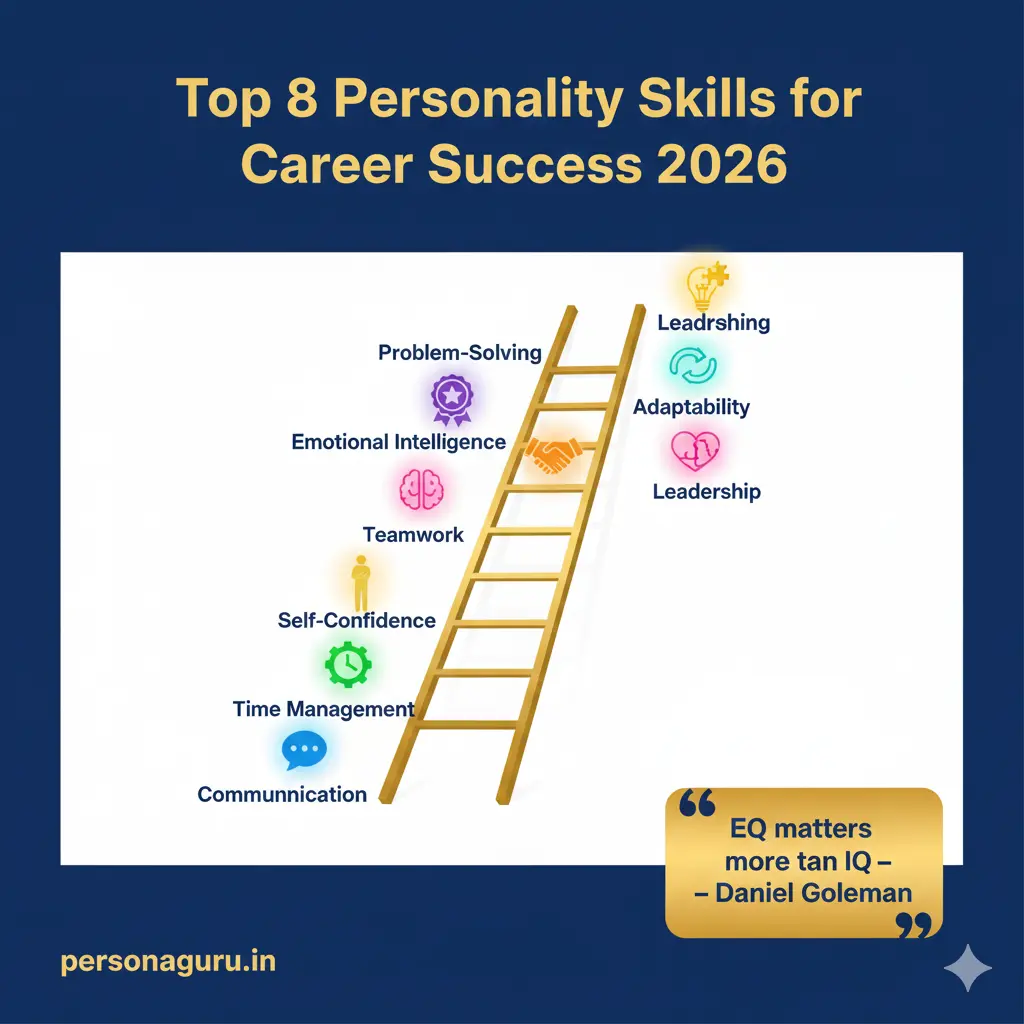
Quick List: Top Personality Development Skills for Career Growth
- Communication
- Time management
- Self-confidence
- Teamwork
- Emotional intelligence
- Leadership
- Adaptability & resilience
- Problem-solving & critical thinking
Final Thoughts
Your technical skills might get you the interview, but personality development skills for career growth are what help you keep growing, lead teams, and build a career you’re proud of.
Pick one skill today—maybe communication or confidence—and start small. You’ll be surprised how quickly it pays off.
You’ve got this!
FAQs
1. Can personality development skills really contribute to career growth?
Absolutely! Developing personality skills can significantly impact your career growth. These skills, including effective communication, emotional intelligence, leadership, adaptability, and problem-solving, boost your overall effectiveness at work, improve your relationships, and make you more valuable to your organization.
2. How can I improve my communication skills?
Improving communication skills can be achieved through practice and exposure. Engage in conversations, actively listen to others, seek feedback, and enhance your written communication skills through writing exercises. Additionally, enrolling in communication courses or workshops can also greatly improve your abilities.
3. Is it possible to develop emotional intelligence?
Yes, emotional intelligence can be developed. Start by focusing on self-awareness and self-management. Practice recognizing and understanding your emotions and those of others. Develop empathy by actively listening and being attentive to others’ needs.

Ayanshi | MBA (HR) & Personality Coach
MBA in HR | 250+ posts helping 50,000+ readers build confidence, emotional intelligence, and healthy relationships. Over 3 years transforming real-life experience into practical, proven growth strategies.
From corporate HR professional to full-time blogger sharing actionable personal development insights.