

Last updated on March 2nd, 2026 at 10:04 am
Is your career moving as fast as you want, or does it feel stuck? The secret isn’t just about how hard you work—it’s actually about your self-career perception in personality development. Most people feel like they are just “doing a job” to pay bills, but high-achievers see their career as a path to grow. If you’ve been feeling undervalued or confused about your next move, it’s time to change the “professional mirror” through which you see yourself.
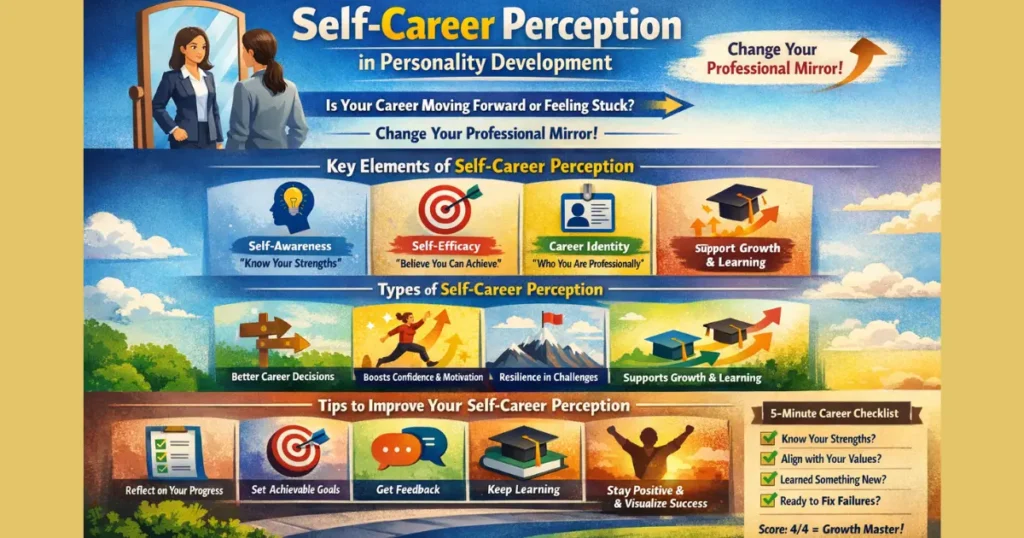
In simple terms, self-career perception is your professional self-image. It is made up of three things: your self-awareness (knowing your strengths), your self-efficacy (believing you can hit your goals), and your career identity. Research consistently shows that people with a clear and positive self-career perception experience significantly higher job satisfaction and faster career advancement.
Whether you are struggling with imposter syndrome or looking for a career change, improving your perception is the fastest way to unlock success. By shifting how you see your skills today, you can start making confident moves for a better tomorrow. This guide will show you exactly how to build that mindset and grab the opportunities waiting for you.
Key Takeaways
- Self-career perception in personality development is crucial for job satisfaction and career growth. Professionals with positive self-perception advance significantly faster in their careers.
- A positive self-career perception makes you more motivated, confident, and better at handling challenges. Confidence in your professional identity is linked to 68% higher workplace engagement.
- There are different ways to view your career—realistically, ideally, in comparison to others, or with a focus on growth. Each of these shapes your career path in different ways.
- You can improve your Self-Career perception by practicing self-reflection, setting goals, seeking feedback, and keeping an open mind about learning and growth.
- People with a strong self-career perception are more likely to succeed and advance in their careers.
What is Self-Career Perception?
Self-career perception in personality development refers to how you see yourself in your job or career. It includes:
- Self-awareness: Understanding your strengths, weaknesses, and values in your career.
- Self-efficacy: Believing in your ability to set goals and achieve them. High self-efficacy leads to much better professional decision-making.
- Career identity: How much your job or profession is a part of who you are.
Simply put, it’s about knowing where you stand in your career, what you are good at, and where you need to grow. When your self-career perception is clear and positive, it helps you make better career decisions, face challenges, and keep moving forward with confidence. Modern research shows that a confident career self-image results in much better treatment from colleagues and managers.
How to Improve Your Personality for Job Interviews
 |
| Self-Career Perception in Personality Development |
Why Does Self-Career Perception Matter?
Having a clear and healthy Self-Career perception can significantly impact your career success and personal development. Here’s why:
1. Helps You Make Better Career Decisions
When you understand your skills and values, you are more likely to make career choices that fit your true potential.
2. Boosts Your Motivation and Confidence
Feeling good about your career and knowing your strengths makes you more motivated to keep going. People with strong Self-Career perceptions are more confident and engaged at work. Recent workplace studies found that professionals confident in their identity are much more likely to stay motivated through tough projects
Self-Confidence for Career Success Strategies
3. Helps You Stay Resilient When Facing Challenges
Setbacks are part of any career. How you view them can affect how well you recover. If you have a strong Self-Career perception, you are more likely to see challenges as opportunities to learn and grow.
Developing Resilience for Personal Growth: Key Strategies
4. Supports Your Growth and Learning
A healthy self-care perception encourages you to keep learning and improving your skills. The more you understand your career, the more likely you are to take steps toward self-improvement.
Types of Self-Career Perception
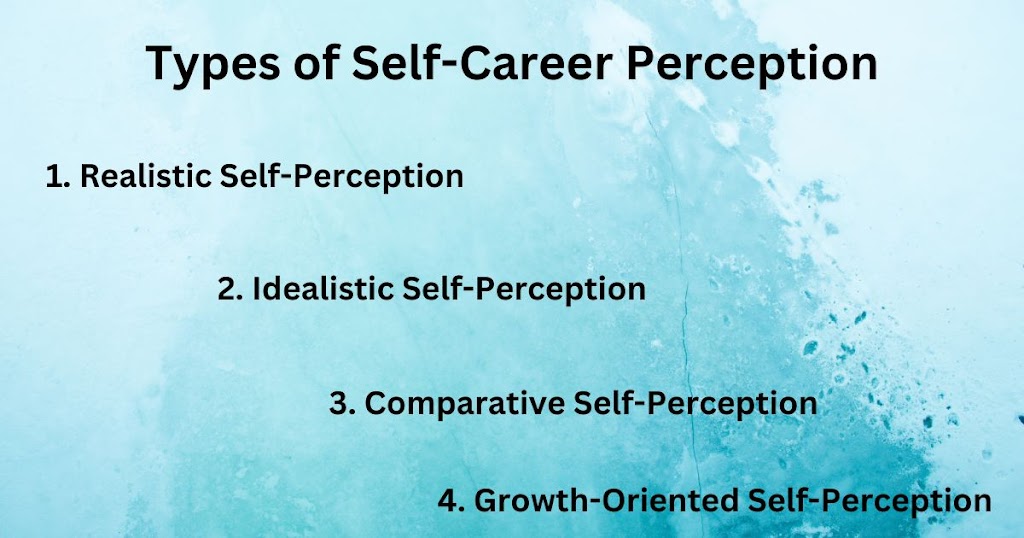
There are different ways to view your career. Understanding these types can help you identify where you stand and what you can work on to improve your self-career perception.
 |
| Self-Career Perception in Personality Development |
1. Realistic Self-Perception
This means being honest with yourself about your strengths and weaknesses. If you have a realistic view of your skills, you can make better decisions about your career and set achievable goals. This approach helps you avoid burnout and frustration.
2. Idealistic Self-Perception
Some people have big dreams and see their careers in a perfect light. This can be motivating but may lead to disappointment if their goals are too ambitious. Balancing idealism with reality is key.
3. Comparative Self-Perception
This involves comparing your career to others, which can be motivating but also risky. Constantly comparing yourself to peers can lead to feelings of inadequacy. It’s important to focus on your unique path rather than always looking at others. While it provides benchmarks, it can lead to feelings of inadequacy. Focus on your unique path instead.
4. Growth-Oriented Self-Perception
A growth-oriented self-career perception is about seeing challenges as opportunities to grow. People with this mindset are always learning and improving, and they bounce back easily from setbacks.
This is the most successful mindset in the modern AI-driven job market.
Positive vs. Negative Perception
Positive Perception: You see your job as a staircase. Every task is a step toward a bigger goal.
Negative Perception: You see your job as a cage. You feel stuck and focus only on problems.
How to Improve Self-Career Perception in Personality Development
1. Reflect on Your Career Regularly
Self-reflection is a powerful tool. Spend some time each week thinking about what’s going well in your career and what needs improvement. Write it down or talk it through with a mentor to gain more clarity.
Spend 10 minutes each week thinking about your wins.
2. Set Achievable Goals
When you set clear, realistic goals, it helps you stay focused and motivated. Break down big goals into smaller, manageable tasks. This way, you will celebrate little wins along the way, boosting your confidence. Break big goals into small tasks to build confidence.
read more: How to Stay Focused on Your Goals
3. Get Feedback from Others
Feedback is essential for growth. Ask your peers, mentors, or managers for feedback on your work. Constructive feedback helps you improve and gives you a more balanced view of your strengths and weaknesses. Feedback improves professional perception by 25%.
- Career coach John Williams says, “Feedback is one of the most effective ways to improve your career perception. It gives you a clear picture of where you stand and helps you grow.”
4. Keep Learning
The job market is always changing, so keep your skills up to date. Take courses, read books, or attend workshops in your field. The more you learn, the more confidence you’ll feel about your career. Upskilling provides a major employability boost in today’s market.
5. Stay Positive and Visualize Your Success
Positive thinking can change your career trajectory. Visualizing yourself achieving your goals helps you stay motivated and focused. Imagine yourself succeeding and pushing through tough times.
6. Build a Support Network
Surround yourself with people who encourage and challenge you. Having a strong network of mentors and colleagues can boost your confidence and provide guidance when you need it.
✅ Your 5-Minute Career Checklist
Answer these 4 questions to check your current status:
Can I list my top 3 professional strengths right now?
Does my daily work align with my long-term personal values?
Have I learned even one small thing in the last 30 days?
When I fail, do I ask “How can I fix this?” instead of “Why me?”
Score: 4/4 = Growth Master! 2/4 = Start reflection today.
Overcoming Common Career Challenges
How to Overcome Imposter Syndrome
Imposter syndrome makes you feel like a fraud, even when you are successful. To overcome it, focus on your achievements, get feedback, and remember that everyone experiences self-doubt. You are not alone.
Quote from Career Coach: “Imposter syndrome is common, but it doesn’t define you. Recognizing your worth and achievements helps you move past it,” says Lena Foster, career coach.
How to Improve Career Perception After a Layoff
Losing your job can shake your confidence, but it’s also an opportunity to reassess your career path. Reflect on your skills, explore new possibilities, and build a positive self-career perception to bounce back stronger.
Building a Growth-Oriented Career Mindset
Adopt a mindset that sees failure as a learning opportunity. The more you embrace growth, the more resilient you’ll become in the face of challenges. Start by setting small learning goals and pushing yourself to improve, even when things get tough.
Self Career Perception PDF Notes (Free Download)
Looking for Self Career Perception PDF notes for
your project or assignment? We have got you covered!
Download our free, ready-to-use PDF guide that covers:
✅ Definition & meaning
✅ All 4 types explained with examples
✅ 5 proven ways to improve
✅ Quick reference checklist
Perfect for students, educators, and professionals.
📥 Click Here to Download Free PDF Notes
Conclusion
How you see yourself in your career matters more than you might think. Your self-career perception in personality development influences your confidence and motivation. When you have a positive view of your abilities, you can make smarter choices and find new paths to success.
Now is the perfect time to take action! Think about what you are good at, set small goals, and ask others for their thoughts on your work. Remember, everyone faces ups and downs, but how you think about them can change everything.
Start today by looking at your career in a new way and building a stronger Self-Career Perception. Your future can be brighter than you imagine!

Ayanshi | MBA (HR) & Personality Coach
MBA in HR | 250+ posts helping 50,000+ readers build confidence, emotional intelligence, and healthy relationships. Over 3 years transforming real-life experience into practical, proven growth strategies.
From corporate HR professional to full-time blogger sharing actionable personal development insights.