

Last updated on September 14th, 2026 at 07:35 am
How to motivate team members as a leader comes down to eight consistent habits: setting clear goals, recognizing contributions, building a collaborative environment, investing in growth, empowering people, protecting work-life balance, leading by example, and communicating openly. None of these work as a one-time gesture. Gallup research confirms highly engaged teams are 21% more productive and 23% more profitable than disengaged ones, and the difference almost always traces back to leadership, not the team itself.
Are you struggling to motivate your team? As a leader, one of your most important responsibilities is to keep your team motivated. A motivated team not only achieves great results but also sparks creativity, improves collaboration, and ensures long-term success. When your team feels engaged and energized, their productivity soars, turning the workplace into a dynamic hub of innovation.
In this article, we will explore how to motivate team members as a leader using effective strategies, helpful statistics, and inspiring quotes. Whether you want to inspire individual team members or boost overall morale, you will find practical insights here to help you lead successfully.
Why Motivation Matters in Leadership
- Key Takeaway: Understanding how to motivate team members as a leader is not just about performance, it drives creativity, engagement, and long-term success.
Strategies for Motivating Your Team
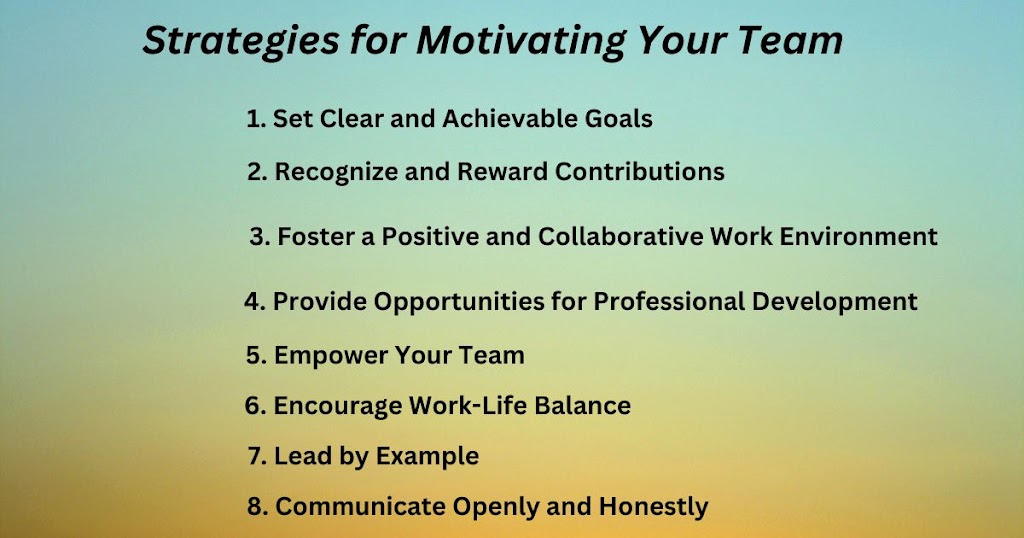
- Break Down Goals: Divide larger objectives into smaller, manageable tasks to prevent overwhelm and allow for quick wins.
- Regular Check-Ins: Schedule regular progress meetings to discuss milestones and adjust goals as necessary.
Statistics: Teams with clearly defined goals consistently outperform teams without one, according to Harvard Business Review research on goal clarity and productivity.
2. Recognize and Reward Contributions
- Use Peer Recognition: Encourage team members to recognize each other’s efforts through a “shout-out” board or a dedicated channel in team communication tools.
- Tailor Rewards: Understand what motivates each team member and personalize rewards to match their preferences, whether a day off, a gift card, or extra professional development opportunities.
Quote: “You don’t have to be great to start, but you have to start to be great.” — Zig Ziglar
3. Foster a Positive and Collaborative Work Environment
Motivating your team requires understanding their emotions and needs. Emotional intelligence in leadership plays a key role in building strong connections and fostering a positive atmosphere.
Statistics: Companies with strong communication practices are 25% more productive than those that lack effective communication. Encouraging open dialogues, whether through team meetings, feedback sessions, or casual conversations, fosters trust and drives team cohesion.
- Create Safe Spaces: Establish an environment where team members can express ideas and concerns without fear of judgment.
- Engage in Team-Building Activities: Organize regular team-building exercises, both virtual and in-person, to strengthen relationships and collaboration.
4. Provide Opportunities for Professional Development
- Encourage Goal Setting: Have team members set their own professional development goals and discuss them during performance reviews.
- Mentorship Programs: Pair less experienced team members with mentors in the organization to foster growth and knowledge sharing.
Key Takeaway: A real commitment to development enhances motivation by showing team members their future at the company matters.
Building this habit connects directly to developing a positive mindset for personality development, since growth-minded leaders tend to build growth-minded teams.
5. Empower Your Team
Quote: “Leadership is not about being in charge. It’s about taking care of those in your charge.” — Simon Sinek.
Example: Instead of micromanaging, assign tasks with clear expectations and let your team decide how they get there. This autonomy builds trust and drives performance.
Tips:
- Create a platform where team members can propose new ideas without unnecessary friction.
- Give people the resources and information they need to make informed decisions on their own.
Statistic: A McKinsey study on employee autonomy found that most employees say autonomy in their role positively affects both job satisfaction and performance.
 |
6. Encourage Work-Life Balance
- Promote Time Off: Encourage employees to take their vacation days and use personal time to recharge.
- Wellness Initiatives: Implement wellness programs that support mental and physical health, such as yoga classes or mindfulness sessions.
Quote: “Balance is not something you find; it’s something you create.” — Janna King
7. Lead by Example
- Share Your Challenges: Be open about your own challenges and how you overcome them, showing vulnerability and relatability.
- Celebrate Together: When the team achieves a goal, celebrate collectively to reinforce the idea that everyone’s contribution matters.
Quote: “The key to successful leadership is influence, not authority.” — Kenneth Blanchard
8. Communicate Openly and Honestly
- Use Feedback Tools: Implement anonymous feedback tools to gather insights and suggestions from team members.
- Be Approachable: Make it clear that you are available for discussions, encouraging team members to come to you with any issues.
 |
| How to Motivate Team Members as a Leader: Top Tips |
Conclusion:
Motivating your team as a leader is not a one-time task, it is a continuous effort that requires understanding, care, and consistency. By setting clear goals, appreciating hard work, encouraging teamwork, offering growth, and giving people the freedom to make decisions, you build a genuinely motivated and productive team.
Good leadership is not just about using strategies. It is about truly knowing your team, listening to their needs, and making sure they feel valued. For the deeper traits behind all of this, see our complete leadership guide.
As Steve Jobs said, “The only way to do great work is to love what you do.” When your team is genuinely motivated, they don’t just do their work, they thrive at it.
- Set clear goals that are realistic and aligned with your team’s and company’s objectives.
- Appreciate and reward their efforts to keep them motivated and happy.
- Create a positive environment where teamwork and open communication are encouraged.
- Help them grow by providing learning opportunities and showing you care about their future.
- Give them responsibility so they feel trusted and empowered.
- Lead by example to inspire them through your own actions and attitude.
FAQs
1. How can I effectively motivate my team?
Focus on setting clear and achievable goals, recognizing and rewarding contributions, building a positive work environment, encouraging open communication, and offering development opportunities tailored to individual needs.
2. What are some quick motivational tips for team leaders?
Quick motivational tips for team leaders include:
- Providing regular feedback.
Celebrating small wins. - Encouraging collaboration among team members.
- Offering flexible work arrangements.
- Creating a culture of appreciation through simple gestures like thank-you notes.
3. Why is employee recognition important for motivation?
Employee recognition is crucial because it:
- Makes team members feel valued and appreciated.
- Increases engagement and productivity.
- Motivates employees to be more committed to their work, leading to better performance.
4. What strategies can I use to boost team morale?
To boost team morale, consider:
- Implementing team-building activities.
- Providing opportunities for professional growth.
- Encouraging social interactions among team members.
- Recognizing individual and team achievements.
- Maintaining a positive and inclusive work culture with regular check-ins.
5. How do I identify what motivates my team members?
You can identify what motivates your team members by:
- Conducting surveys to gather insights.
- Having one-on-one conversations to understand their preferences.
- Observing their behaviors and interactions.
- Asking about their career aspirations and what they value most in their work environment.

Ayanshi is the founder of PersonaGuru.in, a blog focused on personality development, career, relationships, and mental well-being. With over 3 years of writing experience, she turns psychology and everyday experiences into practical, easy-to-understand advice for real life.