
Last updated on February 7th, 2026 at 09:00 am
Have you ever felt like you are your own biggest obstacle? You set a big goal for the New Year, but somehow, you end up doing everything except the work required. This is self-sabotage, and it’s more common than you think. Did you know that 70% of people struggle with some form of self-destructive behavior that stops them from reaching their true potential?
In this article, we’ll break down the real Self-Sabotage Meaning, identify the hidden triggers, and give you a practical roadmap on how to stop self-sabotaging so you can dominate 2026.
What is Self-Sabotage? (Self-Sabotage Meaning)
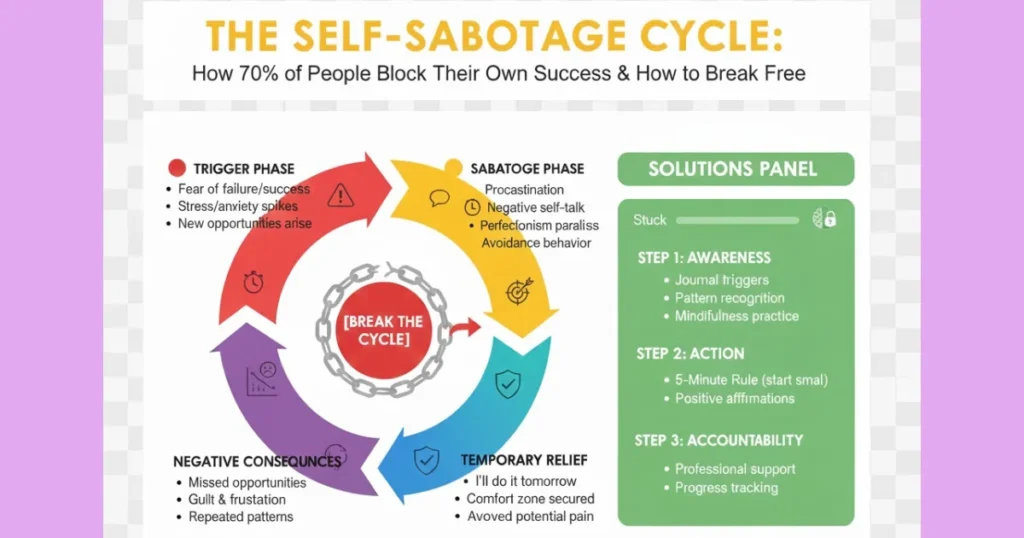
The real Self-Sabotage Meaning refers to conscious or unconscious thoughts and habits that act as internal roadblocks. It happens when your “Inner Critic” tries to protect you from the fear of failure (or even success) by making you fail on purpose.
The paradox of self-sabotage meaning is simple: You want to win, but your brain is wired to keep you safe in your comfort zone. This creates a self-defeating cycle of guilt and frustration.
Shocking Statistics You Can’t Ignore
- 70% of adults experience self-sabotage (APA, 2023).
- 85% of us find it nearly impossible to break these patterns alone.
- 40% loss in productivity occurs in workplaces due to self-destructive behavior.
Self-sabotage is when we say we want something and then go about making sure it doesn’t happen.” – Alyce Cornyn-Selby
Types of Self-Sabotaging Behaviors
This pattern can take many forms. Here are some common types of self-defeating behaviors
1.Procrastination: Delaying tasks because you’re afraid you won’t do them “perfectly.”
- Example: Putting off a presentation until 2 AM the night before.
2. Perfectionism: Setting such high standards that you get paralyzed.
- Example: Spending hours on one email and never hitting “send.”
3. Negative Self-Talk: That constant voice saying, “I’m not good enough.”
4. Avoidance: Turning down great opportunities because they feel “scary.”
5. Self-Destructive Habits: Emotional eating, overspending, or binge-watching to avoid reality.
6. People-Pleasing: Saying “yes” to everyone else while your own goals suffer.
7. Imposter Syndrome: Feeling like a fraud even when you achieve something great.
Self-Sabotage in 2026: Modern Challenges
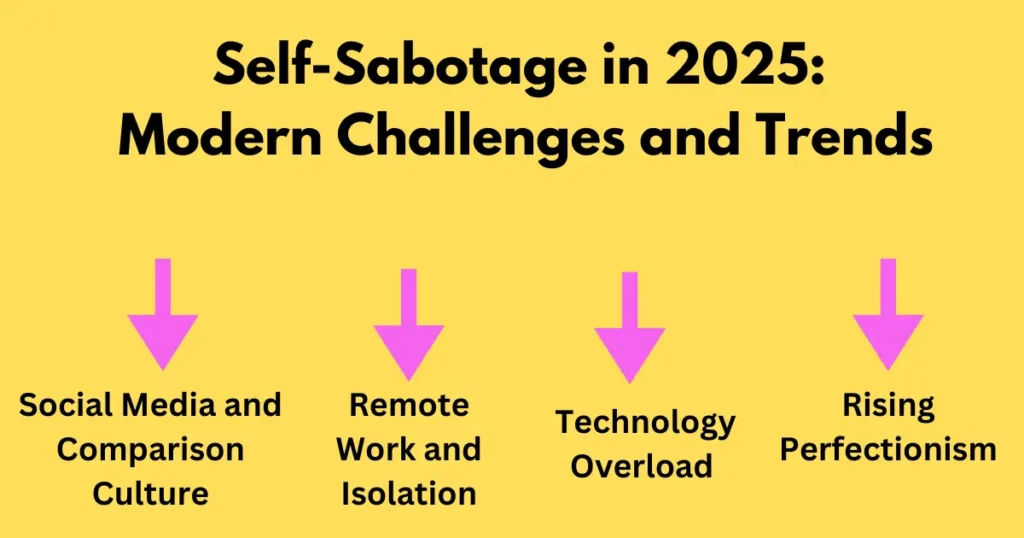
As we move into 2026, self-sabotage is becoming more common due to unique modern pressures:
- Social Media & Comparison: Scrolling makes 60% of people feel “lesser,” triggering the urge to quit before even trying.
- Remote Work Isolation: Working alone often leads to overthinking and “procrastination loops.”
- Technology Overload: 70% of people feel overwhelmed by notifications, which leads to decision fatigue.
- Rising Perfectionism: There is immense pressure to look “perfect” online, which stops Gen Z and Millennials from taking risks.
Read more: Social Media is Bad Pink: Protect Yourself from Hidden Dangers
Why Do We Self-Sabotage? (Causes of Self-Sabotage)
Understanding the “Why” is key to breaking the cycle:
- Fear of Failure: Sabotaging efforts so you have an “excuse” if things go wrong.
- Fear of Success: Fearing the new responsibilities that come with winning.
- Low Self-Esteem: A deep belief that you don’t actually deserve success.
- Childhood Experiences: Early criticism creating a lifelong habit of doubting yourself.
- Anxiety & Overthinking: Worrying so much that you end up doing nothing.
- Fear of Change: Sabotaging growth just to keep things the “same.”
- Unresolved Emotional Pain: Past guilt or shame manifesting as modern-day bad habits.
A lack of confidence makes people believe they don’t deserve success. If you struggle with self-doubt, especially in professional settings, check out our guide on how to stop self-doubt at work and build confidence.
Self-Sabotage in Relationships
Relationships are where self-destructive behavior often hurts the most. You might be pushing love away without realizing it.

- Pushing People Away: Creating distance to avoid emotional vulnerability.
- Picking Fights: Starting arguments over minor issues.
- Avoiding Commitment: Refusing to take the next step in the relationship due to fear of getting hurt.
- Jealousy and Possessiveness: Doubting your partner’s loyalty without reason.
- Emotional Withdrawal: Shutting down or avoiding emotional intimacy.
The Solution: Open communication and building self-worth are the only ways to stop self-sabotaging your happiness.
How to Stop Self-Sabotaging: Your 5-Step Plan
- Identify Your Triggers: Keep a journal. Notice the exact moment you feel the urge to “quit” or “distract” yourself.
- Challenge Your Inner Critic: Swap “I am a failure” with “I am learning.” This is vital for your personality development.
- Micro-Goals Only: Don’t look at the mountain. Just look at the next step. Small wins kill self-sabotage.
- Practice Mindfulness: Stay grounded in the present. Most sabotage lives in the fear of the future.
- Seek Professional Support: Sometimes, a coach or therapist is needed to decode your personal Self-Sabotage Meaning.
Related read: Good Habits for Personality Development
Self-Sabotage and Anxiety: How They Are Linked
Self-sabotage is often fueled by anxiety. Here are some common links:
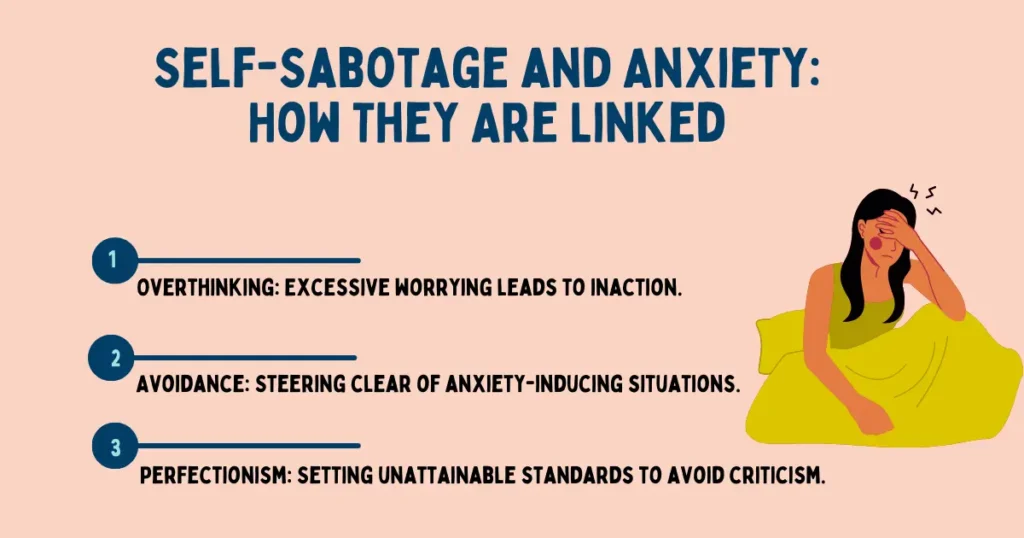
- Overthinking: Excessive worrying leads to inaction.
- Avoidance: Steering clear of anxiety-inducing situations.
- Perfectionism: Setting unattainable standards to avoid criticism.
Related read: Mindfulness for Personal Growth a Transformed Personality
Helping Someone Who Self-Sabotages
If someone you care about is struggling with self-sabotage, here are ways to help:
- Be Supportive: Offer encouragement without judgment.
- Listen Actively: Allow them to express their feelings without interruption.
- Encourage Professional Help: Suggest therapy or counseling if needed.
- Celebrate Their Small Victories: Acknowledge their progress, no matter how small.
Final Thoughts
Self-sabotage is not a life sentence. It is just an old habit that no longer serves you. By recognizing the signs of self-sabotage and taking action today, you can reclaim your success.
“Your own worst enemy cannot harm you as much as your own thoughts, unguarded.” – Buddha
Start today—take one small step! Check out our guide on building self-confidence to stop the cycle once and for all!

Ayanshi | MBA (HR) & Personality Coach
MBA in HR | 250+ posts helping 50,000+ readers build confidence, emotional intelligence, and healthy relationships. Over 3 years transforming real-life experience into practical, proven growth strategies.
From corporate HR professional to full-time blogger sharing actionable personal development insights.