

Last updated on March 23rd, 2026 at 08:29 am
Have you ever wondered if it’s possible to love more than one person at the same time? In today’s world, many people are exploring polyamorous relationships, where individuals have multiple romantic partners with everyone’s consent. But what does polyamory really mean? How is it different from being in a monogamous relationship or an open relationship?
If you want a clear side-by-side comparison, read our guide on monogamy vs polyamory to understand both relationship styles in depth.
In this article, we will explain what polyamory is, the different ways it can look, and the important rules that help these relationships thrive. We will also answer some common questions and share helpful tips for anyone interested in this type of love. Let’s get started!
Key Takeaways
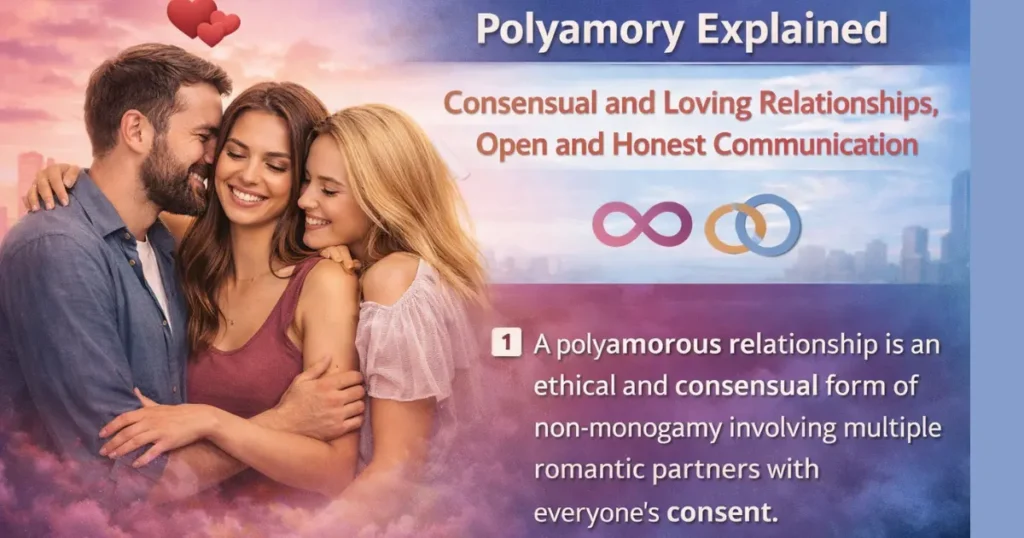
- Polyamory is an ethical form of non-monogamy involving consensual relationships with multiple partners.
- Successful polyamorous relationships rely on honesty, communication, and mutual consent.
- Various relationship models, including hierarchical, non-hierarchical, and solo polyamory, enable individuals to find structures that fit them best.
- Effective jealousy management, time management, and safe practices are crucial for navigating polyamory successfully.
- While still emerging in places like India, polyamory is gaining recognition and acceptance globally.
What is a Polyamorous Relationship?
A polyamorous relationship is a consensual, ethical, and non-monogamous relationship where individuals engage in multiple romantic or emotional relationships simultaneously. What distinguishes polyamory from cheating is the emphasis on honesty, communication, and mutual agreement. Unlike traditional monogamous relationships, which typically involve just one romantic partner, polyamory allows people to form loving relationships with more than one partner at a time, with full transparency and consent from everyone involved.
Research published in the Journal of Sex Research found that people in consensual non-monogamous relationships report similar satisfaction levels as those in monogamous relationships.
If you want to understand the other side first, read our guide on monogamy meaning.
- Polyamory Meaning: The term “polyamory” comes from the Greek word “poly,” meaning many, and the Latin word “amor,” meaning love. Essentially, it means “many loves”—a practice where individuals are open to forming multiple romantic relationships based on mutual love and respect.
- Polyamorous vs Open Relationship: While both involve non-monogamy, polyamory focuses on emotional and romantic connections with multiple partners. In contrast, open relationships typically allow one primary couple to engage in sexual connections with others without romantic attachments.
- Polyamory vs Polygamy: Polygamy refers to one person being married to multiple spouses, often rooted in cultural or religious frameworks. In contrast, polyamory involves multiple consensual, loving relationships without the necessity of marriage, emphasizing equality among all partners.
Different Polyamorous Relationship Models
Polyamory isn’t a one-size-fits-all approach, it encompasses various relationship models. Here are some common polyamorous relationship models:
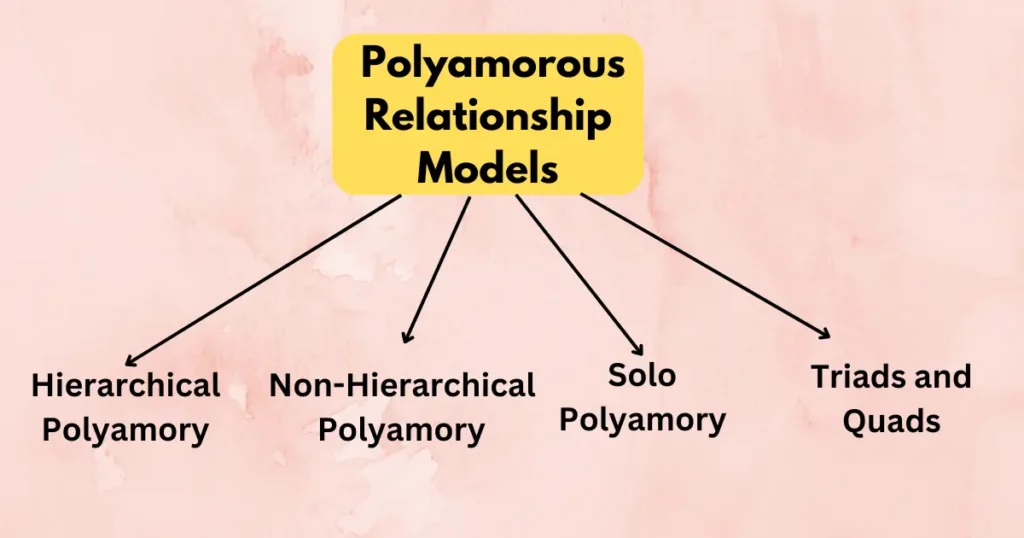
- Hierarchical Polyamory: In this model, partners are ranked in order of importance (e.g., primary, secondary). This model is common among people who prefer structure in their relationships.
- Non-Hierarchical Polyamory: All partners are treated as equals, with no ranking system. Relationships are built on mutual respect and balance.
- Solo Polyamory: Individuals prioritize their independence and do not view any one partner as more significant than others. They maintain their autonomy while having multiple relationships.
- Triads and Quads: A triad involves three people in a committed romantic relationship with each other, while a quad involves four. In these models, all members may be romantically and sexually involved with one another, creating complex emotional bonds.
Polyamorous Relationship Rules: What Makes Them Work?
For any polyamorous relationship to function smoothly, clear rules and boundaries must be established. Here are some essential polyamorous relationship rules that can help make relationships work:
- Honesty and Transparency: Open communication is key. All partners must be informed about feelings, new relationships, and any changes in dynamics to avoid feelings of betrayal.
- Consent: Each partner should agree to the relationship structure and feel comfortable with the decisions being made. Regular check-ins help ensure everyone feels respected.
- Time Management: Balancing multiple relationships requires careful time management. Partners must ensure that no one feels neglected and that each person’s needs for affection and intimacy are met.
- Jealousy Management: Jealousy is a natural emotion, but it must be acknowledged and addressed constructively. Open discussions about feelings of jealousy help create a trusting environment.
- Safe Practices: Prioritize sexual health by practicing safe sex, getting regular check-ups, and discussing sexual boundaries openly.
Related read: Ghosting in Relationships: Causes, Signs & How to Cope
Rules vs Agreements: What Actually Works
Most people entering polyamory focus on setting rules. But relationship experts suggest a different approach. There is an important difference between a rule and an agreement.
A rule tries to control what your partner does. An agreement is something both people choose freely and maintain out of mutual respect.
For example, saying “you cannot meet your other partner on weekends” is a rule. It creates resentment over time. But saying “we both agree to keep weekends as our time together” is an agreement. Both feel the same on the surface, but work very differently in practice.
Agreements build trust. Rules breed resistance.
Psychology of Polyamorous Relationships
Understanding the psychology of polyamory involves exploring the emotional and mental aspects of managing multiple relationships. Many people are drawn to polyamory because it fosters deeper emotional self-awareness and personal growth. Successful polyamorous relationships often rely on:
- Secure Attachment: Feeling emotionally secure in each relationship.
- Emotional Intelligence: The ability to manage complex emotions, including jealousy and insecurity.
- Conflict Resolution: Addressing issues with empathy and communication, avoiding escalations.
Sexual connections are a significant part of any relationship, including polyamorous ones. Learn how sex fosters trust and intimacy in relationships with our article on Sex in Relationships: Key to Love, Trust, and Connection.
One concept that sets polyamory apart from other relationship styles is comparison. It is the feeling of genuine happiness you experience when your partner is happy with someone else. Think of it as the opposite of jealousy. Developing comparison takes time and emotional work, but most experienced polyamorous people describe it as one of the most rewarding aspects of this lifestyle.
Can a Polyamorous Relationship Work?
Yes, a polyamorous relationship can work! Many individuals find fulfillment and joy in managing multiple loving relationships. The success of such relationships often hinges on strong communication, mutual respect, and the ability to navigate complex emotions. By prioritizing honesty and transparency, partners can build a solid foundation that supports the health of all relationships involved.
Research shows that 1 in 9 Americans has been in a polyamorous relationship at some point in their lives, suggesting this lifestyle is far more common than most people realize.
Related read: Soul Ties & Twin Flames: Signs, Types, and How to Heal
Are Polyamorous Relationships Healthy?
Yes, they can be healthy when based on trust, consent, and open communication. This relationship style allows individuals to explore their emotional needs and desires while fostering personal growth. However, like any relationship, they can also encounter challenges. The health of a polyamorous relationship often depends on how partners manage their emotional well-being and support each other.
Polyamorous Relationship Advice
Here are some practical tips for anyone considering or currently exploring this type of relationship:
- Communicate Regularly: Schedule consistent check-ins with your partners to discuss feelings, boundaries, and any new developments.
- Educate Yourself: Read books or join forums about polyamory to gain insights and learn from other’s experiences.
- Set Clear Boundaries: Discuss and agree on what is acceptable behavior with each partner to avoid misunderstandings.
- Practice Self-Care: Ensure you are taking care of your emotional and mental well-being, as managing multiple relationships can be demanding.
Polyamorous Relationships in India and Global Acceptance
In India, polyamorous relationships are still relatively new and often misunderstood due to cultural norms favoring monogamy. While there are no laws against polyamory, societal stigma can make it difficult for individuals to explore non-monogamous relationships openly.
Globally, polyamory is becoming more visible, with online communities and resources supporting those who wish to explore this relationship style. Celebrities like Willow Smith, Tilda Swinton, and Will and Jada Pinkett Smith have shared their experiences, helping to normalize polyamory in public discourse.
Globally, legal recognition is slowly expanding. In April 2025, a court in Quebec ruled that families with more than two parents must be legally recognized, marking a significant step forward for polyamorous families worldwide.

Can I Handle a Polyamorous Relationship?
If you’re wondering, “Can I handle a polyamorous relationship?”, consider these questions:
- Am I comfortable with my partner having other romantic relationships?
- Can I communicate my needs and boundaries effectively?
- Am I emotionally mature enough to handle the complexities of multiple relationships?
Polyamory isn’t for everyone, and it requires self-reflection and emotional maturity. For those who can manage these complexities, polyamory can be an enriching and fulfilling way to experience love.
Conclusion
Polyamorous relationships offer a unique way to love and connect with multiple partners. They allow individuals to build deep and meaningful connections with more than one person at the same time. For polyamory to work effectively, it’s essential to prioritize clear communication, mutual consent, and a strong understanding of each other’s feelings. While polyamory can be rewarding, it also requires self-awareness and maturity to navigate complex emotions.
If you are considering a polyamorous relationship, take time to reflect on your desires. Discuss your feelings and boundaries openly with your partners, ensuring everyone is comfortable with the arrangement. Whether you’re exploring different polyamorous relationship models or comparing polyamory to monogamy or open relationships, remember that the keys to success are communication, respect, and trust.
What are your thoughts on polyamory? Have you ever considered or experienced a polyamorous relationship? Share your thoughts or questions in the comments below—we’d love to hear from you! If you found this article helpful, explore more content on relationships and personal growth on our website.
FAQs
What is a Polyamorous Relationship?
A polyamorous relationship is a consensual, non-monogamous relationship where individuals have multiple romantic partners simultaneously. Unlike cheating, polyamory is based on honesty, communication, and mutual agreement.
What Are the Rules for Polyamory?
The rules for polyamory vary depending on the individuals involved, but some essential principles include honesty, consent, time management, and safe practices.
Why Do Men Want Poly?
Some men are drawn to polyamory because it allows them to explore emotional and physical variety while maintaining honesty and consent.
How Do You Be Okay in a Polyamorous Relationship?
Acknowledge your feelings, communicate openly, set boundaries, practice self-care, and focus on the positives.

Ayanshi | MBA (HR) & Personality Coach
MBA in HR | 250+ posts helping 50,000+ readers build confidence, emotional intelligence, and healthy relationships. Over 3 years transforming real-life experience into practical, proven growth strategies.
From corporate HR professional to full-time blogger sharing actionable personal development insights.