
Last updated on March 2nd, 2026 at 11:21 am
Have you ever found yourself in a disagreement with your partner, where holding your ground feels more exhausting than helpful? Maybe it’s a small argument about weekend plans or a difference in opinion that just won’t resolve. That’s the moment many choose to raise the white flag in a relationship—not as a sign of defeat, but as a powerful step toward peace, understanding, and deeper connection.
In today’s world, where relationships face constant pressures, understanding the white flag meaning in a relationship is key to lasting happiness. It’s about choosing harmony over ego, compromise over conflict, and love over winning. Whether you are in early dating, a long-term partnership, or part of the LGBTQ+ community, embracing the white flag meaning in relationship psychology can turn challenges into opportunities for growth.
Relationship expert Dr. John Gottman highlights: “Being adaptable and willing to compromise strengthens a relationship.”
Let’s explore what it really means to wave the white flag in love.
read more: Flags in Dating
What Is the White Flag’s Meaning in a Relationship?
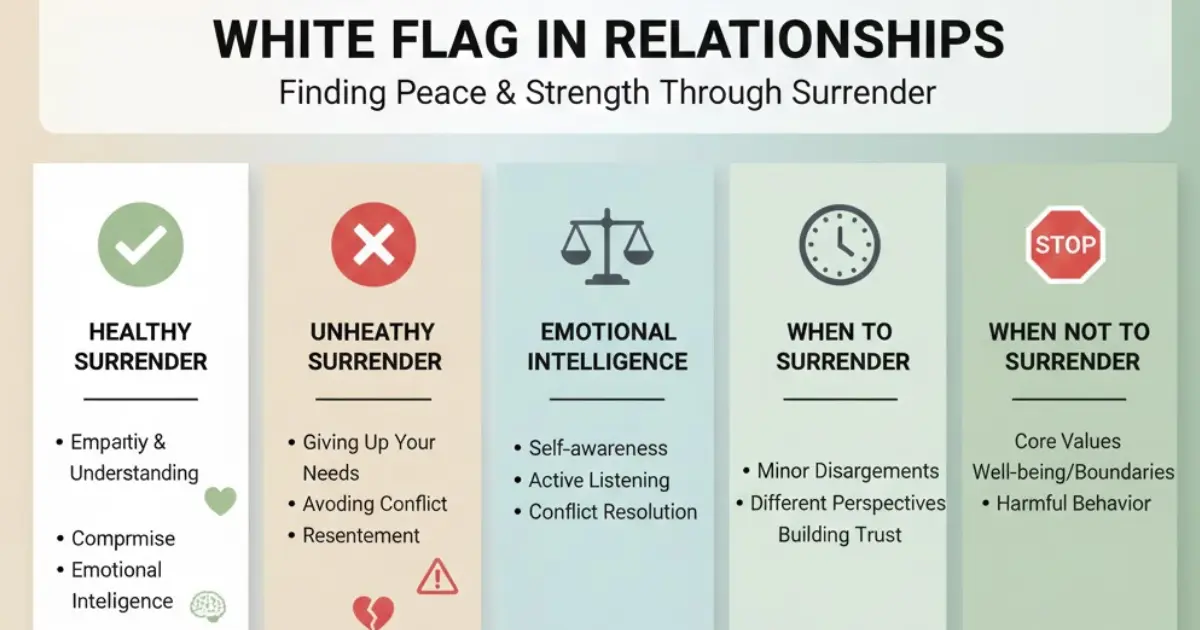
The meaning of the white flag in a relationship revolves around healthy surrender—a conscious choice to prioritize peace and connection over ego. Unlike red flags that signal danger, white flags represent vulnerability, empathy, and flexibility.
Key aspects include:
- Admitting faults and showing empathy.
- Prioritizing “us” over “me” in conflicts.
- Building trust through small acts of compromise.
Overall, U.S. divorce rates have declined in recent decades, with projections suggesting around 40% of newer marriages may end in divorce, thanks in part to greater adaptability among couples.
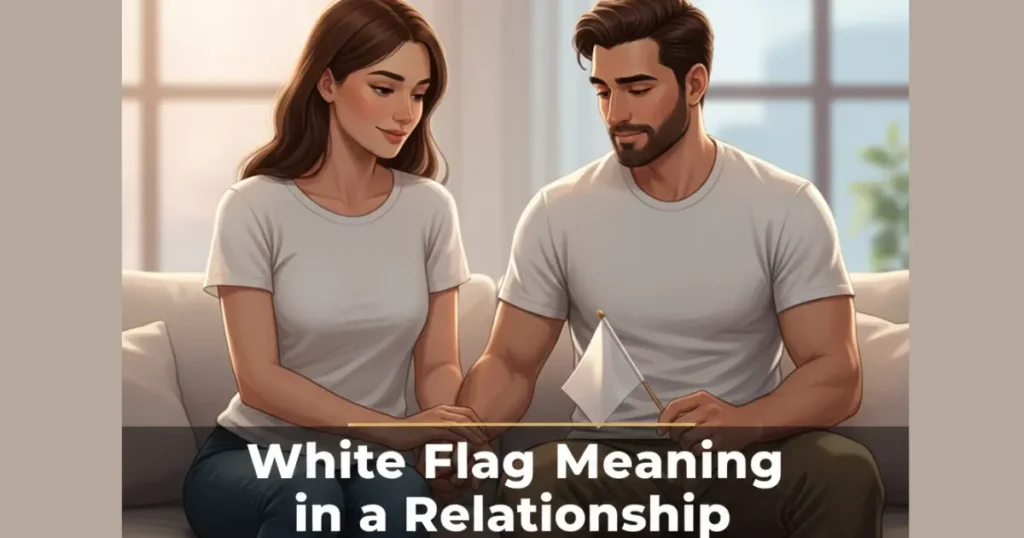
What Is the Meaning of White Flags in Relationships?
White flags in relationships go beyond single compromises—they form a pattern of peacemaking. The meaning of white flags in relationships involves consistently letting go of minor issues to foster joy and resilience.
For instance, raising my white flag meaning in a relationship could mean dropping a grudge or adapting plans for your partner’s sake. Adaptability strengthens bonds, though one-sided surrender can breed resentment.
What Does Raising My White Flag Mean in a Relationship?
Saying “I wave my white flag, meaning in a relationship,” signals pausing conflict for compromise. Examples:
- Choosing your partner’s preferred activity.
- Forgive minor oversights for peace.
- Adjusting to support each other.
This reflects emotional maturity, but never sacrifice core values.
White Flag Meaning in Relationship Psychology
Emotional Intelligence Connection
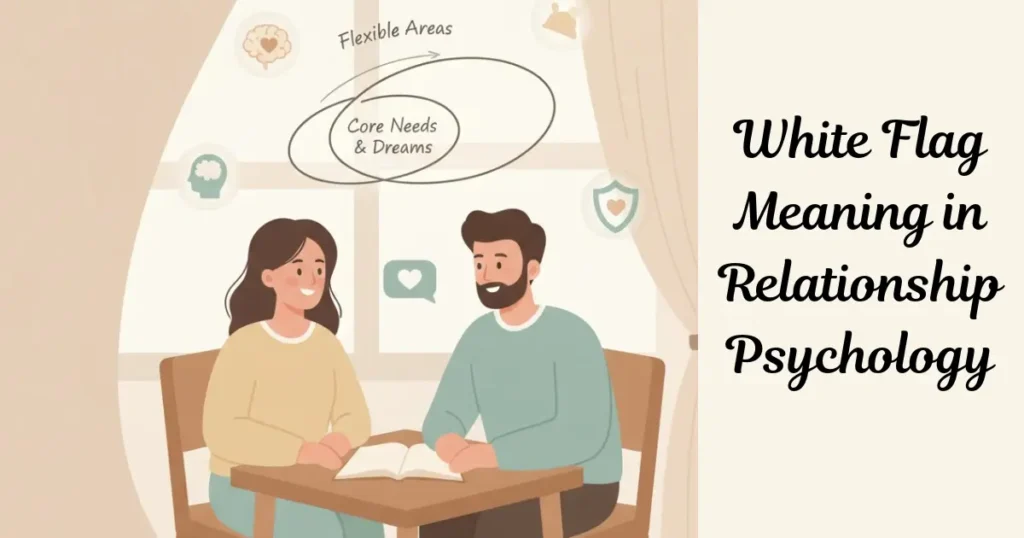
The white flag meaning in relationship psychology links directly to emotional intelligence. Healthy surrender encourages forgiveness and connection by allowing partners to accept influence from each other, reduce defensiveness, and prioritize emotional safety over “winning” an argument.
Dr. Esther Perel states: “A strong, meaningful apology goes a long way in repairing major and minor rifts in any relationship.”
Dr. John Gottman’s research on the “Art of Compromise” perfectly illustrates this concept. In his approach, couples draw two ovals: a smaller inner one for inflexible areas (core needs and dreams that are non-negotiable) and a larger outer one for flexible areas (where you’re willing to bend). By identifying these, partners negotiate together—focusing on understanding each other’s underlying dreams and finding overlaps for mutual solutions.
As Gottman explains: “Remember, you can only be influential if you accept influence. Compromise never feels perfect. Everyone gains something and everyone loses something. The important thing is feeling understood, respected, and honored in your dreams.”
Waving a white flag is essentially putting Gottman’s compromise exercise into action: choosing to yield on flexible issues, protect core dreams without rigidity, and surrender the need to be right for the sake of the relationship. This builds deeper trust, promotes growth, and turns potential conflicts into opportunities for intimacy.
Source: Manage Conflict: The Art of Compromise – The Gottman Institute
read more: emotional intelligence in relationships
What Does a White Flag Typically Symbolize?
A white flag typically symbolizes truce and peace. In relationships, the white flag meaning in a relationship means pausing resistance for connection.
White Flag Meaning in Person
White flag meaning in person describes peacemakers who apologize quickly and seek harmony. Balance is essential to avoid losing self-respect.
White Flag Meaning in Relationship LGBT
The white flag meaning in relationship LGBT follows the same principles of compromise and vulnerability. Recent data shows same-sex couples often have similar divorce rates to heterosexual ones, with strong public support—approximately 90% of non-LGBTQ Americans believe the LGBTQ community deserves to live free from discrimination, per GLAAD’s 2025 findings.
How White Flags Change Over Time
White flags evolve with relationship stages:
| Stage | White Flag Behavior |
| Early Dating | Small compromises on activities. |
| Mid-Term | Larger sacrifices for shared goals. |
| Long-Term | Deep vulnerability and adjustments. |
“Gray divorce” (over 50) has risen but stabilized, with about 36% of current divorces involving older adults.
When to Surrender in Your Relationship
Surrender when conflicts repeat or drain energy, and the bond matters more than winning. Avoid if it violates boundaries or enables toxicity.
Can White Flags Be Red Flags?
Yes—can white flags be red flags? Constant or one-sided surrender signals imbalance. Healthy ones foster mutual growth; unhealthy ones hide issues.
read more: red flags you should never ignore
White Flag Meaning in Relationship Quotes
- “Being adaptable and willing to compromise strengthens a relationship.” – Dr. John Gottman
- “A strong, meaningful apology goes a long way in repairing major and minor rifts in any relationship.” – Dr. Esther Perel
- “In love, surrendering isn’t losing—it’s winning together.” – Anonymous
Key Takeaways
- The white flag meaning in a relationship builds trust via compromise.
- Surrender on minor issues, protect core boundaries.
- Psychology ties healthy white flags to stronger connections.
- White flags evolve; mutual effort supports longevity.
- Balance avoids turning white flags into red flags.
Waving the white flag isn’t weakness—it’s mature courage for enduring love. Have you raised yours lately?
Conclusion
The white flag meaning in a relationship isn’t about giving up or losing your voice. It’s about choosing understanding and calm over pride. When both partners surrender in a healthy way, it helps reduce fights, build trust, and make the relationship feel safe and caring. This kind of compromise can make your bond stronger and help your love grow over time.
But remember, waving the white flag only works well when both people respect each other’s boundaries. If one person always gives in and ignores their own needs, that can become a problem—a red flag. The secret is balance: knowing when to stand your ground and when to let go for the good of your relationship.
👉 Think about your own relationship—are you surrendering in a healthy way, or giving up too much? Share your thoughts below and keep learning how to make your connection even stronger!
FAQs
What Does It Mean for Someone to Be a White Flag?
It means prioritizing peace and compromise while maintaining self-respect.
What Is a White Flag in Dating?
Early vulnerability and willingness to adjust plans for harmony.
What Does a White Flag Typically Symbolize?
Truce, surrender, and peace.
What Is the Opposite of a White Flag?
Stubborn resistance or red flags like escalation and refusal to compromise.
White Flag Meaning in Relationship LGBT?
Same as others: compromise and vulnerability for harmony and stability.
Can White Flags Be Red Flags?
Yes, if one-sided or enabling harm.

Hi, I am Ayanshi. I share simple and practical tips to help you grow your personality and build healthy relationships. My blog provides easy-to-follow advice that empowers you to improve your life and connect better with others. For over three years, blogging has been my passion and a way to earn income doing what I love.