
Last updated on March 24th, 2026 at 10:56 am
Most people think assertiveness means being bold or loud. But that is not what it actually is.
Think about that one person in your office or friend group who always says what they mean, never steps on anyone, and still gets their point across clearly. That is assertiveness. And the truth is, not everyone grows up with it naturally. Factors affecting assertiveness include childhood, self-esteem, emotional intelligence, culture, gender roles, and personal growth.
The factors affecting assertiveness in personality development run much deeper than personality or confidence alone. Your childhood, your culture, your self-worth, and even your emotional awareness all play a role in how assertive you become as an adult.
In this article, we will break down exactly what shapes assertiveness, why some people struggle with it, and what you can practically do to build it over time.

However, assertiveness is not an innate trait it is influenced by a range of factors. Let’s explore these factors in detail.
Understanding what drives this skill is important. The factors affecting assertiveness in personality development are different for every person, but the patterns are consistent.
Key Factors Affecting Assertiveness in Personality Development
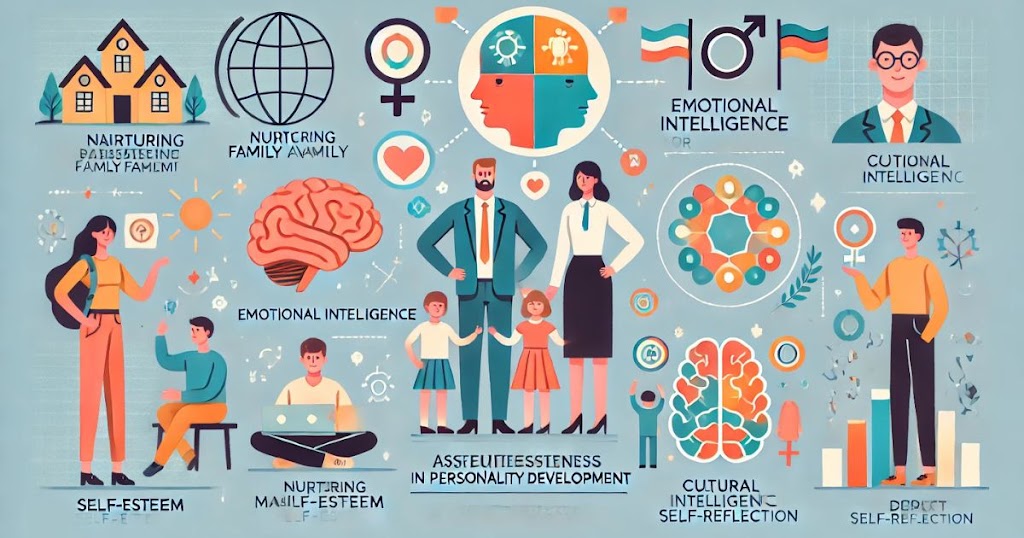 |
1. Childhood and Early Life Experiences
- Supportive Parenting: Children who are encouraged to express their thoughts, engage in healthy debates, and ask questions tend to grow up with strong assertive communication skills.
- Overly Controlling or Dismissive Parenting: Conversely, children raised in authoritarian or neglectful environments may suppress their needs and develop passive behaviors due to fear of rejection or criticism.
2. Self-Esteem and Confidence
- High Self-Esteem: Confident individuals stand up for their rights and express their needs without fear of criticism.
- Low Self-Esteem: Those with a poor self-image may avoid conflict or feel unworthy of asserting their rights, leading to passive behavior.
Quote by Nathaniel Branden (Psychologist):
“Self-esteem is the reputation we acquire with ourselves.”
Controlling your thoughts and emotions is vital in building and maintaining high self-esteem. Discover how controlling your mind plays a key role in personality development.
3. Emotional Intelligence (EQ)
- Self-Awareness: People with high EQ can express their emotions clearly and assertively while controlling their reactions.
- Empathy: High EQ also helps individuals empathize with others, ensuring their assertive communication is balanced and respectful.
Quote by Daniel Goleman (Author of Emotional Intelligence):“The most effective leaders are not those with the highest IQ, but those with the highest emotional intelligence.”
Developing EQ isn’t just important for personal relationships but also for professional settings, especially leadership. Learn more about emotional intelligence in leadership.
4. Cultural and Societal Norms
- Individualistic Cultures: Assertiveness is generally viewed as a positive trait and a sign of self-confidence.
- Collectivist Cultures: Assertiveness may be seen as rude or selfish, as the emphasis is on maintaining harmony and avoiding conflict.
A 2023 study by Geert Hofstede’s Dimensions of Culture found that people in individualistic societies (e.g., U.S., Canada) are 45% more likely to engage in assertive behavior than those in collectivist societies (e.g., Japan, China).
5. Gender Expectations and Social Conditioning
- Men and Assertiveness: In many societies, assertiveness is encouraged in men, where they are expected to be leaders and decision-makers.
- Women and Assertiveness: Women, however, may be judged harshly for being “too aggressive” or “too outspoken,” which can lead to suppressed assertiveness in professional and personal contexts.
Statistical Insight: A 2023 study by Pew Research Center found that women who demonstrate assertiveness in the workplace are 55% more likely to receive leadership opportunities compared to their less assertive counterparts.
For more on workplace assertiveness and gender, visit Psychology Today.
6. Personal Development and Self-Reflection
Assertiveness can be learned and refined over time through personal development. Individuals who actively engage in self-reflection and work on their communication skills tend to become more assertive. Practices like therapy, coaching, and self-help resources can foster the growth of assertive behaviors.
- Self-Reflection: Regularly evaluating one’s communication patterns helps identify passive or aggressive tendencies, making it easier to adopt a more assertive approach.
- Learning and Growth: Engaging in leadership development programs, workshops, or reading assertiveness-focused books can significantly improve assertive behaviors.
Statistical Insight: A 2023 article by Harvard Business Review highlighted that 72% of professionals who participated in assertiveness training showed a measurable increase in assertive communication after just six months.
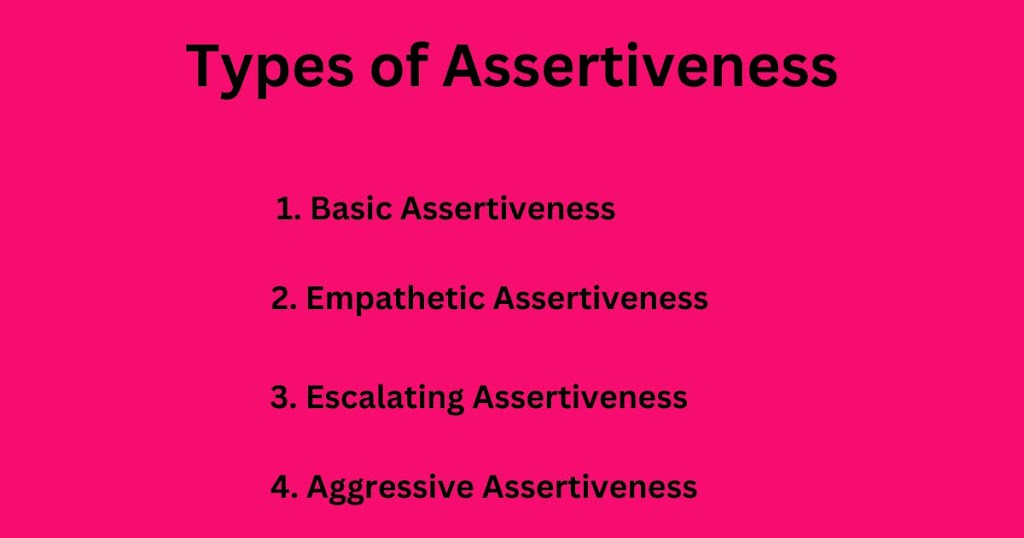
Types of Assertiveness
Assertiveness is not one-size-fits-all. It can manifest in different styles depending on the individual’s personality and the situation. Here are the four primary types of assertiveness:
 |
| Factors Affecting Assertiveness in Personality Development |
1. Basic Assertiveness:
Directly expressing needs and opinions without being rude or overly aggressive.
2. Empathetic Assertiveness:
Expressing your needs while acknowledging and considering others’ feelings.
3. Escalating Assertiveness:
Increasing your assertiveness when initial attempts to communicate effectively don’t work.
4. Aggressive Assertiveness:
Forcefully asserting yourself, which may cross into aggressive or disrespectful behavior.
Practical Tips for Enhancing Assertiveness
- Practice Saying No:
Saying “no” firmly but politely is an essential assertiveness skill for setting boundaries.
- Use “I” Statements:
Frame your feelings using “I” statements, such as “I feel” or “I need,” to express yourself without blaming others.
- Body Language:
Maintain good posture, make eye contact, and speak with a calm tone to reinforce your assertive communication.
- Role-Playing:
Practice assertive conversations with a trusted friend to build confidence in real situations.
- 48 Hour Rule:
When someone says something that makes you want to react aggressively, give yourself 48 hours before responding in writing or 10 seconds before responding verbally. This pause is what separates an assertive response from an aggressive one. Most people who struggle with assertiveness either react too fast or stay silent too long. The pause fixes both.
- Mirror Test:
Once a week, stand in front of a mirror and practice saying something you have been avoiding saying to someone in your life. It sounds strange, but it works. Therapists use this technique because speaking out loud, even alone, trains your brain to treat assertive communication as normal rather than threatening.
How to Know If You Are Being Assertive or Aggressive
This is where most people get confused. Assertiveness means you speak up for yourself while still respecting the other person. Aggression means speaking up at the expense of someone else’s comfort or dignity.
A simple way to check yourself after a conversation is to ask this one question: Did both people feel heard? If yes, that was assertiveness. If only you felt satisfied and the other person felt attacked or shut down, that was aggression.
Knowing this difference is what separates people who grow their relationships through communication from those who damage them.
Conclusion: Building Assertiveness for Personality Growth

Ayanshi | MBA (HR) & Personality Coach
MBA in HR | 250+ posts helping 50,000+ readers build confidence, emotional intelligence, and healthy relationships. Over 3 years transforming real-life experience into practical, proven growth strategies.
From corporate HR professional to full-time blogger sharing actionable personal development insights.