
Last updated on July 30th, 2026 at 02:23 pm
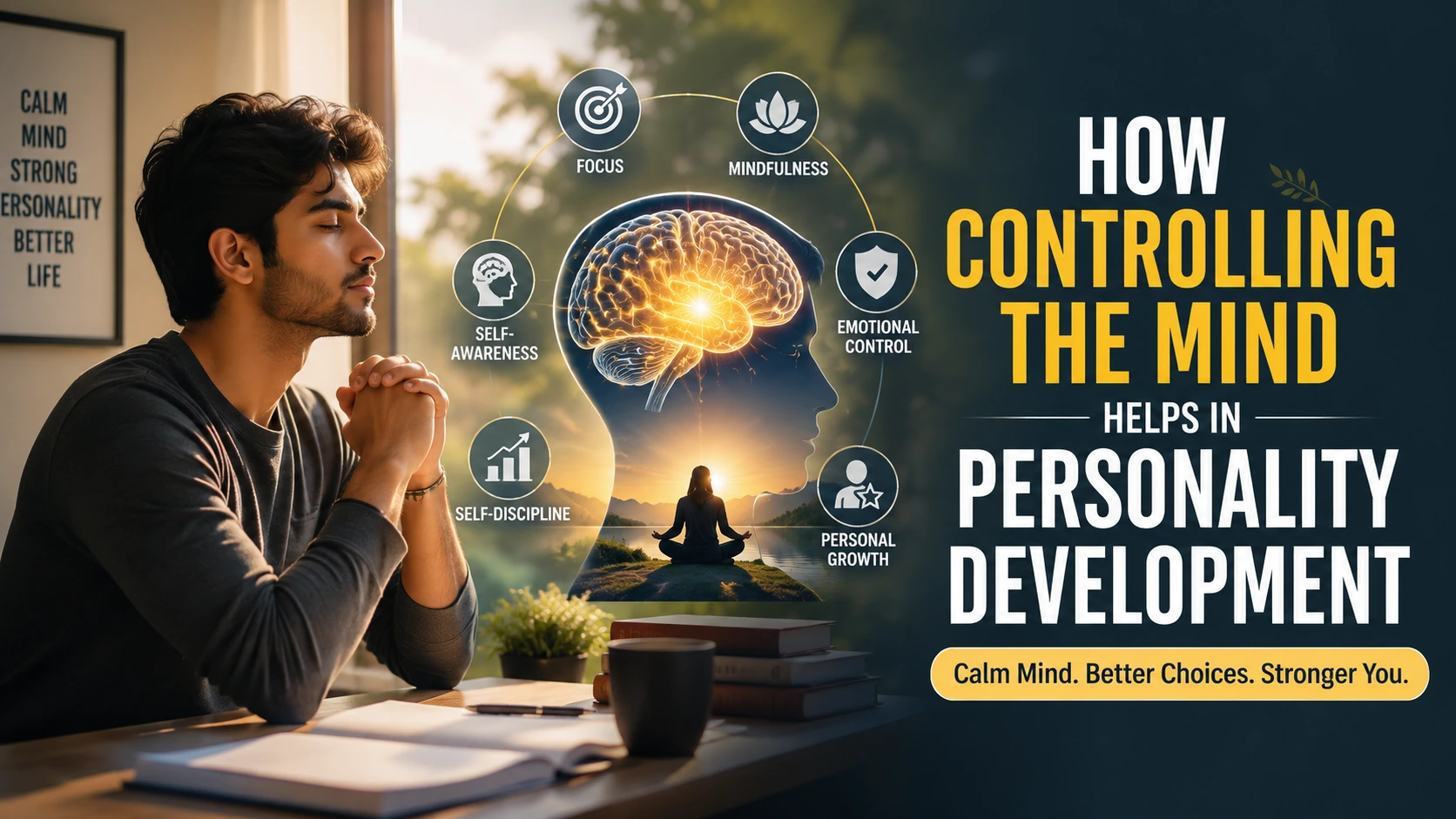
How controlling the mind helps in personality development becomes obvious the moment you notice your own reactions. Have you ever said something in anger? Then regretted it five minutes later. Or picked up your phone for “two minutes” and lost an hour. That is your mind driving. Not you.
Controlling the mind helps in personality development in a very direct way. It is not a spiritual idea. It is a skill. When you guide your thoughts instead of chasing them, you get calmer. You get sharper. Your habits shift. Your reactions shift. And slowly, your whole personality shifts with them.
I have watched this play out with people around me. A friend, Priya, used to lose her temper over small things at work. She started pausing for ten seconds before replying to anything stressful. Six months later, her own team started calling her “the calm one.” Same person. Same job. Different mind habits.
This article breaks down exactly how controlling the mind helps in personality development. Fresh research. Simple tips. Real names, real examples.
Key Takeaways
- Controlling the mind helps in personality development by building better emotional regulation first.
- Mindfulness practice among US adults more than tripled between 2012 and 2017.
- Small daily habits, like a ten-second pause before reacting, build long-term self-control. This is one of the clearest benefits of controlling your mind; you will notice it fast.
- Controlling the mind does not mean hiding your emotions. It means understanding them first.
- Personality development is slow. Mind control speeds it up by keeping you consistent.
What Does Controlling the Mind Actually Mean?
Controlling the mind does not mean forcing your brain to go blank. It does not mean blocking every negative thought either. That is not realistic. It is not even healthy.
It means catching a thought before it turns into words or actions. It means pausing between a trigger and your response. Psychologist Viktor Frankl said it best: “Between stimulus and response there is a space.” That space is where you choose who you want to be.
Think of your mind like a small garden. Thoughts grow there all day. Some help you. Some do not. Controlling the mind is not about stopping thoughts from growing. It is about deciding which ones you water.
How Controlling the Mind Helps in Personality Development, Backed by Research
Your personality is really just the sum of your repeated thoughts and choices. A scattered mind usually leads to a scattered personality. Mood swings. Impulsive decisions. Strained relationships.
Research backs this up. A 2025 meta-analysis covering nearly 2,200 participants found that mindfulness training meaningfully improved self-awareness across dozens of clinical trials. Meditation has also gone mainstream fast. In the US, adult meditation practice jumped from about 4% in 2012 to over 14% just five years later, based on recent mindfulness and meditation statistics.
That growth is not random. People are realizing a trained mind is the fastest route to a better personality and better decisions. This is really the core of how controlling the mind helps in personality development, it changes the input, so the output changes too.
If you want the full picture of how personality actually forms, this personality development guide is a solid place to start.
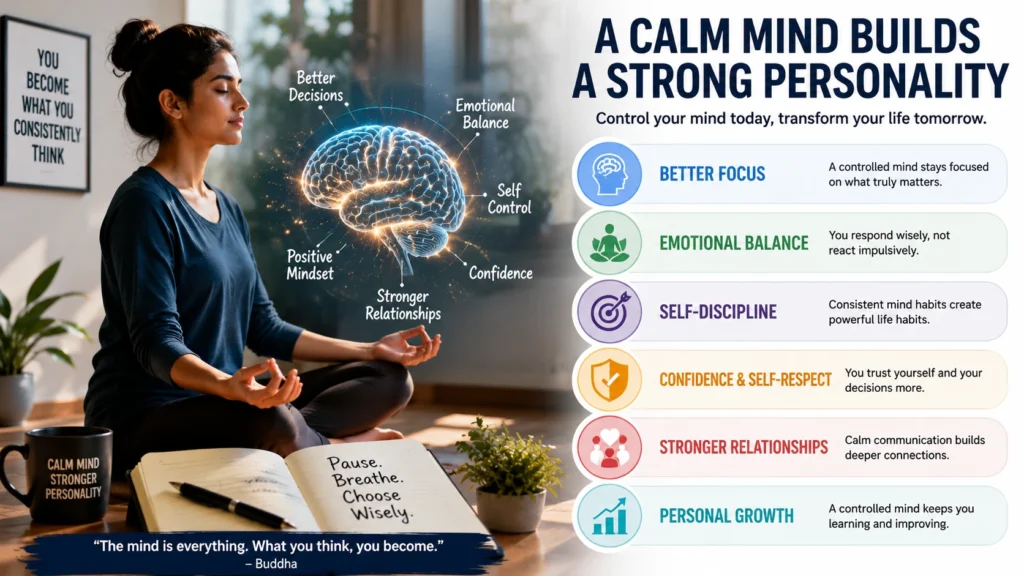
10 Ways Controlling the Mind Builds a Strong Personality
1. Better Emotional Regulation
You catch emotions before they catch you. This does not mean hiding how you feel. You still feel angry or anxious. But you respond on purpose, not on autopilot. This link between emotional regulation and personality growth is the fastest change most people notice.
Example: Priya, the friend I mentioned earlier, still gets frustrated at work. The difference is her ten-second pause. That single habit changed how her whole team sees her.
2. Stronger Behavioral Control
A controlled mind makes bad habits easier to drop. Instead of reaching for your phone out of boredom, you pause. Then you choose something better. A walk. A book. A real conversation. This is a small, everyday example of how controlling the mind helps in personality development, one swapped habit at a time.
3. Resilience That Actually Holds Up
Life throws curveballs. A trained mind bends instead of breaking. It adjusts and keeps moving. Resilience is one of the most attractive personality traits, at work and at home.
4. Sharper Focus and Concentration
Controlling wandering thoughts means you finish what you start. Consistent mindfulness practice can reduce mind-wandering and improve task engagement within a few months. Focus is one of the clearest, most visible signs of controlling the mind helping personality development in daily life.
5. Improved Interpersonal Skills
Good communication starts inside your head, not your mouth. A calm mind produces clearer words. Kinder words too. This is exactly why building strong emotional intelligence goes hand in hand with mind control.
6. Honest Self-Reflection
A quiet mind gives you room to actually look at yourself. What worked today? What did not? This one habit can fast-track personal growth faster than almost anything else.
7. A Genuinely Positive Mindset
This is not forced positivity. It is not ignoring real problems. It is training your default thought pattern to look for solutions instead of spiraling.
8. Less Impulsive Decision-Making
A controlled mind adds a pause button before decisions. My cousin Rohan once bought a gaming console at 2 AM during a stressful week. He returned it three days later. Now he waits 24 hours before any purchase over a small amount. That one rule alone saved him a lot of regret.
9. Deeper Empathy and Compassion
A quieter mind has more room to notice what other people are feeling. This builds trust. It makes you the kind of person others actually open up to.
10. Continuous, Steady Growth
Personality development is not a one-time event. It is a habit. A controlled mind keeps you consistent even when motivation runs low. And consistency is what changes personality over months, not days.
Controlled Mind vs Uncontrolled Mind
| Situation | Uncontrolled Mind | Controlled Mind |
|---|---|---|
| Receiving criticism | Gets defensive, argues back | Listens first, responds calmly |
| Facing a deadline | Panics, procrastinates | Plans, breaks the task into steps |
| Feeling angry | Says something hurtful | Pauses, chooses words carefully |
| Facing failure | Gives up, harsh self-talk | Reflects, tries a new approach |
| Making decisions | Acts on impulse | Thinks through consequences first |
5 Simple Tips for Controlling the Mind Starting Today
You do not need hours of meditation to start. Small honest steps beat big promises you will not keep. Each of these tips shows how controlling the mind helps in personality development in a small, practical way that adds up fast.
- Try the 5-minute pause. Before reacting to anything stressful, wait five minutes. Most impulsive reactions lose their intensity in that window.
- Name the emotion. Just say “I feel frustrated right now” to yourself. This one line creates distance between you and the emotion.
- Journal for two minutes a night. Write one thing that went well. Write one thought that kept bothering you. That is it.
- Limit decision fatigue. Set simple daily routines- what to wear, what to eat- so your mind has energy left for decisions that actually matter.
- Practice single-tasking. Pick one task. Close every other tab. Finish it before moving on. Focus is a muscle. It grows through repetition, not willpower alone.
This kind of steady, holistic personality development works best when you stack small habits like these over weeks, not days.
Final Thoughts on Controlling the Mind and Personality Development
Controlling the mind helps in personality development because your personality is built one thought at a time. One reaction at a time. One choice at a time. You do not need to become a monk. You need small, repeatable habits. A pause here. A journal entry there. One honest check-in each night.
Your attitude plays a huge part in this too. If you want to see how your outlook shapes the way people see you, read this piece on the role of attitude in personality development next. And if you are working through a rough patch right now, learning how embracing challenges contributes to personal growth will help you see it as practice, not a setback.
Start small today. Priya did not become “the calm one” overnight. She just did not skip her pause. That is really all controlling the mind takes.
Frequently Asked Questions
Is it actually possible to control the mind?
Yes. “Complete control” is not realistic for anyone. But through simple, repeated practices, mindfulness, journaling, and short breathing exercises, you can shape your thoughts and reactions over time. It is a skill. Not a switch.
Can I control someone else’s mind?
No, and that is not the goal here. This article is about self-regulation. Managing your own thoughts and emotions. That alone is a realistic and genuinely valuable goal.
Can controlling the mind help break bad habits?
Yes. When you catch a thought before it becomes an action, you get a real choice. Over time, this replaces impulsive habits with intentional ones. It is one of the key aspects of personality development that people skip too often.
How does mindfulness connect to personality growth?
Mindfulness trains you to notice thoughts without judging them right away. This builds self-awareness. And self-awareness is the base almost every personality trait sits on: confidence, empathy, discipline included.
What are simple exercises to build mental discipline?
Journaling. Small daily goals. A short pause before reacting. These three are the easiest starting points. Consistency beats intensity here. Five honest minutes a day will always beat one long session a month.

Ayanshi is the founder of PersonaGuru.in, a blog focused on personality development, career, relationships, and mental well-being. With over 3 years of writing experience, she turns psychology and everyday experiences into practical, easy-to-understand advice for real life.