
Last updated on February 8th, 2026 at 07:47 am
In our daily lives, we often focus on technical skills or degrees, but the real secret to a successful and happy life lies in how we treat people. Whether it is talking well to others, understanding their feelings, or supporting them during tough times, these are all parts of Interpersonal Skills.
When you master these skills, your relationships improve, your career grows, and you leave a lasting positive impression on everyone you meet. In this article, we will dive deep into what these skills are and how you can make them a part of your personality.
 |
| What are Interpersonal Skills –6 ways to develop them |
What Exactly are Interpersonal Skills?
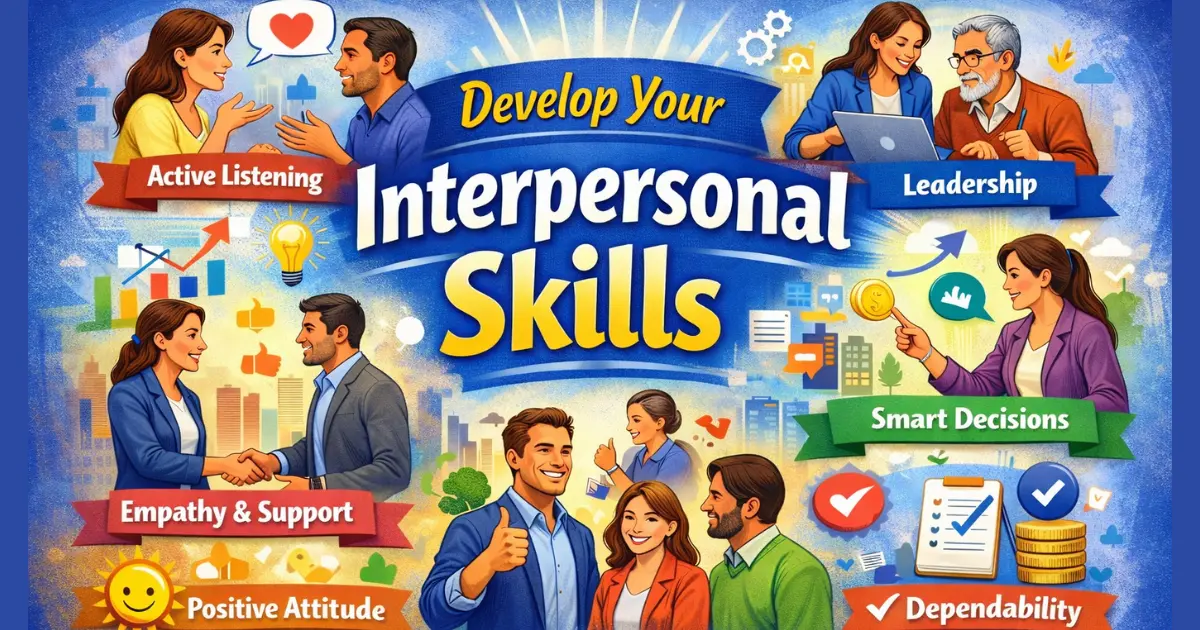
Interpersonal skills are the tools we use to interact and communicate with others. It’s not just about being “nice.” It involves being a good listener, having control over your behavior, making the right decisions, and leading others with a positive attitude.
Essentially, it is about being a human that others want to be around. It’s about being a good leader who understands people’s hearts, not just their work. Think of it as the way you connect in family chats, office meetings, or even helping a neighbor—these moments build your life.
Why Should You Focus on Interpersonal Skills?
(Top Benefits)
Improving these skills brings huge advantages to your personal and professional life:
Increased Value: You become a person people look up to.
Trust: People start to believe in your words and your intentions.
Better Relationships: Your bonds with family, friends, and coworkers become much stronger.
Self-Awareness: You learn more about your own strengths and weaknesses.
New Opportunities: People are more likely to offer opportunities to someone who is easy to work with and reliable.
- A quick fact: A 2024 LinkedIn study found that 92% of hiring managers value these skills over hard skills alone.
6 Practical Ways to Develop Your Interpersonal Skills (With Tips)
1) Communication Skills (Active Listening)
 |
| What are Interpersonal Skills –6 ways to develop them |
Communication is the most important part of this journey. But remember, talking is only half of it. The other half is Active Listening.
How to do it: When someone is talking, give them your full attention. Understand their words before you react.
The Tone: Keep your voice calm and polite. Avoid shouting or using harsh words. Your body language should be open and friendly—this tells the other person that you are truly present.
- Fresh Unique Tip: Try the “5-Second Pause”—after they speak, wait 5 seconds before replying (use a silent phone timer). This kills the urge to interrupt and makes talks deeper. A 2025 Cornell study showed it boosts understanding by 35% in conversations.
read more: effective communication skills for career growth
2) Leadership Skills:
You don’t need a “Manager” title to be a leader. Leadership is about how you treat your team or your peers.
The Secret: You cannot force people to follow you. They will only listen to you if they respect and like you.
Support others: Help your teammates, motivate them, and find solutions together. When you give respect, you get respect back. Share goals clearly so everyone feels part of the team.
- Fresh Unique Tip: Use “Reverse Mentoring”—ask a younger teammate to teach you one quick skill weekly. It flips power dynamics, builds instant bonds, and sparks fresh ideas. Popular at companies like Unilever for 25% better team vibes.
read more: Leadership Trends That Will Shape 2026
3) Maintaining a Positive Attitude:
Life will always throw difficulties at you. What matters is how you look at them.
Change your perspective: Try to find the “silver lining” in negative situations. Instead of giving up, think about how to make things better.
Self-Care: Take responsibility for your own happiness. Stay away from things that hurt your peace of mind, and always keep your head held high. Start your day listing three good things to build this habit.
- Fresh Unique Tip: Do the “Gratitude Mirror Hack”—stand in front of a mirror each morning, name three things you’re thankful for (about people, not stuff), and smile big. A UPenn experiment found it rewires your brain for positivity in just 21 days, cutting negative thoughts by 28%.
4) Emotional Intelligence:
This is the ability to understand feelings—yours and theirs.
Put yourself in their shoes: Before getting angry, try to understand why the other person is acting that way. Show sympathy and be there for people in their joys and sorrows.
Get Feedback: Ask your family or close friends about your behavior. Sometimes others see our mistakes better than we do. Using their feedback to improve is a sign of great emotional strength.
- Fresh Unique Tip: Play “Emotion Charades” solo or with family—act out feelings like “frustrated boss” without words, then guess and discuss triggers. Free app like “EQ Gym” has daily versions; Yale research says it sharpens empathy 40% faster than talking alone.
5) Smart Decision Making:
The choices you make today define your tomorrow.
Think it through: Don’t make big decisions when you are too angry, too sad, or too greedy.
Ask for advice: It is okay to talk to experienced people, friends, or family before choosing a path. Consider the pros and cons carefully—write them down if it helps.
- Fresh Unique Tip: Grab a coin for “Decision Flip”—assign heads/tails to options, flip it, then argue why the “losing” side is actually good. Forces fresh angles; from Dan Ariely’s behavioral books, it cuts regret by 50% on small choices.
6) Becoming Dependable
Make yourself so capable that people can count on you.
Expertise: Work hard on your skills and your job. When you are an expert, people naturally come to you for help.
Reliability: If you say you will do something, do it. This builds a reputation that is worth more than money.
- Fresh Unique Tip: Set “Promise Alerts” in your phone calendar—right after agreeing to help, add a 24-hour nudge: “Follow up on [name’s request].” Pair with a “win streak” tracker; a Buffer study showed it makes you 3x more likely to deliver consistently.
What are Examples of Interpersonal Skills
Sometimes we don’t realize we are using these skills. Here are a few examples:
Conflict Resolution: Helping two friends settle an argument without taking sides.
Teamwork: Sharing the credit for a successful project with your whole group.
Empathy: Noticing a coworker is stressed and offering to help them with their workload.
Public Speaking: Sharing your ideas clearly in front of a group so everyone feels included.
How to Say You Have Strong Interpersonal Skills
When you are in a job interview or writing a resume, avoid just saying “I’m good with people.” Instead, try saying it like this:
“I am skilled at listening to feedback and using it to improve my work.”
“I have a knack for keeping my team motivated, even when we are under a lot of pressure.”
“I pride myself on being a clear communicator who can solve problems peacefully.”
Sharing a small story of a time you helped someone or solved a problem is the best way to prove you have these skills.
related read: How to Improve Your Personality for Job Interviews
How to Demonstrate These Skills Every Day
You can practice these right now:
Be Present: When talking to someone, put your phone away. It shows you value them.
Give Praise: If someone does something well, tell them! A little appreciation goes a long way.
Own Your Mistakes: If you mess up, admit it. People trust someone who is honest about their faults more than someone who tries to hide them.
read more: Personal Development for Women
Conclusion
Improving your interpersonal skills is a lifelong journey. It’s about talking right, feeling for others, and living with a positive outlook. As you work on these, you will notice your Self-Career Perception changing too. You will feel more confident and ready to take on the world.
How did you like this article? Please let us know in the comments if you have any suggestions or if there is a specific topic you want us to cover next!

Ayanshi | MBA (HR) & Personality Coach
MBA in HR | 250+ posts helping 50,000+ readers build confidence, emotional intelligence, and healthy relationships. Over 3 years transforming real-life experience into practical, proven growth strategies.
From corporate HR professional to full-time blogger sharing actionable personal development insights.