
Last updated on September 22nd, 2026 at 09:30 am
Starting your personal growth journey is a big deal. It is your way to become the best version of yourself. Making a personal development plan (PDP) is a great start, but you need to check if it is working. In 2025, with the self-improvement market worth over $53 billion, more people than ever are focusing on their growth.
This article will show you how to evaluate your personal development plan with easy steps and practical tips to keep you on track. Whether you want a better job, happier relationships, or more joy, checking your PDP makes your goals easier to reach. For the full framework, see our career and workplace growth guide.
Let’s get started.
Key Takeaways
- Use SMART goals to make things clear.
- Check your PDP every month, every 3 months, and every year.
- Try tools like Asana to track progress.
- Ask for feedback and celebrate your wins.
- Update your plan when life changes.
 |
| How to Evaluate Your Personal Development Plan |
What is a Personal Development Plan?
A personal development plan, or PDP, is like a map for your life. It lists your goals, skills you want to get better at, and steps to take. It helps you grow in areas like your job, health, or friendships.
Right now, personal growth is genuinely popular. Industry reports suggest the self-improvement market will grow from around $53 billion in 2025 to nearly $87 billion by 2034, at roughly 5.5% a year. As Tony Robbins put it, “Your past does not decide your future.” To evaluate your personal development plan, you need a clear plan to guide your growth.
Why Check Your PDP?
Checking your PDP is like making sure you are on the right road. When you evaluate your personal development plan, you see what is working, spot your wins, and fix what is not. It is like how a business checks its progress. You should do it for your life too.
Regularly checking in on your growth tends to keep people more motivated than chasing a bigger paycheck alone. Checking your plan keeps you excited and moving toward your goals.
Why It Helps
- Keeps You On Track: Stops you from getting lost.
- Shows Your Wins: Tracks new skills or habits.
- Lets You Fix Things: Adjusts your plan when life changes, like working through toxic personality traits you want to move past.
How Do You Set Clear Goals?
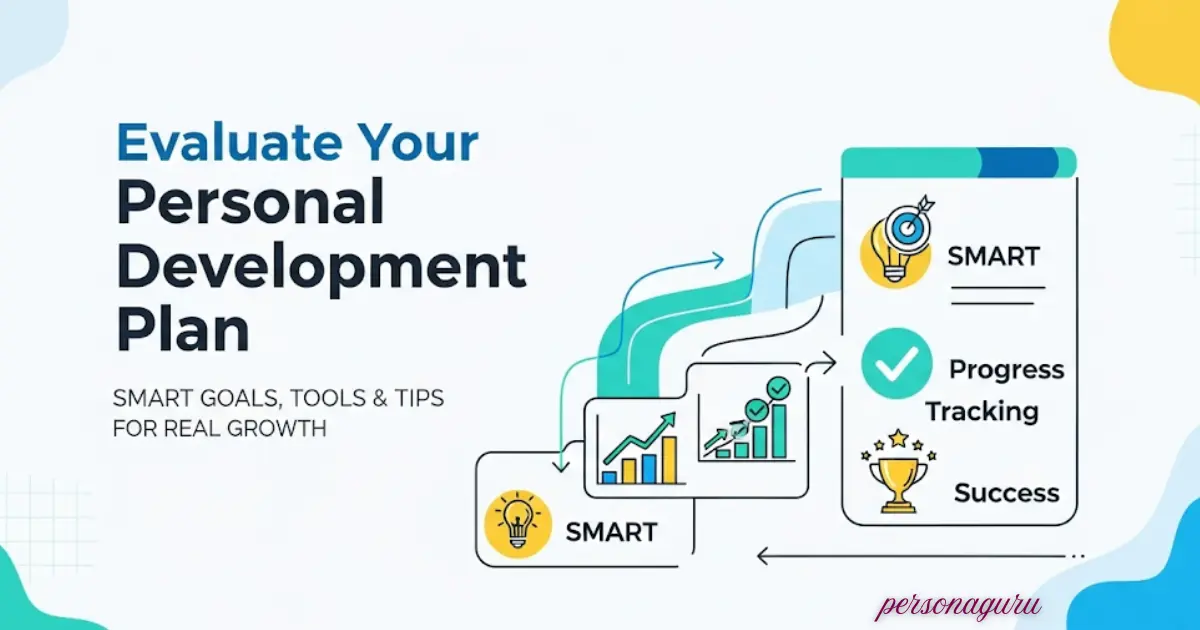
Clear goals make it easy to evaluate your personal development plan. Use SMART goals: Specific, Measurable, Achievable, Relevant, and Time-bound. This turns big dreams into steps you can check.
For example, instead of “talk better,” say: “Give a 10-minute talk at work by March 2026, practicing twice a week.”
As Michael Porter once said, strategy is often about picking what not to do. SMART goals help you focus on what matters, like your career or health. See our full guide on goal setting that actually works for more ways to make your goals stick.
Tips for SMART Goals
- What do you want to do exactly?
- How will you know you did it?
- Can you do it with what you have?
- Does it match your bigger goals?
- Set a deadline to keep going.
How Do You Measure Progress?
To evaluate your personal development plan, you need ways to see how you are doing, like a score for your goals. Pick measures that fit, like finishing a class (something you can count) or feeling more confident (something you notice).
Apps make this easier than ever. Try tools like Habitica for habits or Asana for tasks. Asking friends or mentors for feedback helps too. Tracking your progress in some visible way, even a simple checklist, tends to help you stick with a goal longer than relying on memory alone.
Use a journal, surveys, or a simple list to see how far you have come.
Ways to Measure
- Numbers: Books you read, weight you lost, or raises you got.
- Feelings: Happier friendships or less stress, written in a journal.
- Mix of Both: Rate your confidence from 1 to 10 after goals.
How Often Should You Check Your PDP?
Do not wait until the end of the year to evaluate your personal development plan. Check every month for quick updates, every three months for bigger reviews, and once a year for the whole picture. This keeps you moving forward without losing momentum.
Life and priorities shift over a year, so revisiting your plan on a set schedule keeps it honest instead of letting it go stale. A schedule keeps you on track without adding stress.
Check-In Plan
- Every Month: Look at your weekly steps.
- Every 3 Months: Check your measures and tweak goals.
- Every Year: Think about your growth and make new plans.
How Do You Think About Your Growth?
Thinking about your journey helps you evaluate your personal development plan. Ask: What went well? What was hard? This shows what’s working and what needs a little help.
Write in a journal or use mindfulness apps to think clearly. Rainer Maria Rilke said, “The only journey is the one inside you.” In 2025, try energy checks: What makes you happy? What feels tough?
Ways to Think
- Journal: Write your thoughts every day.
- Meditation: Clear your mind to focus.
- Life Check: Rate things like work or health from 1 to 3.
What Tools Can Help You Track?
Tracking makes it easy to evaluate your personal development plan. Use apps like Trello for lists, Google Sheets for data, or LinkedIn Learning for skills.
In 2025, new tools give you tips just for you. One expert says, “Tracking your progress helps you win.” Pick tools that feel right for you.
Best Tools
- Apps: Asana or Habitica.
- Spreadsheets: For your own tracking.
- Journals: For writing down thoughts.
How Do You Fix Your PDP?
When you evaluate your personal development plan, look at your progress: Where did you start, and where are you now? If you’re behind, change your steps—maybe talk to a mentor or adjust your timeline.
Dwight D. Eisenhower said, “Plans don’t matter, but planning does.” Use this to make things better and turn tough spots into chances to grow.
How to Fix
- Find Problems: Where are you stuck?
- Think of Ideas: Try new steps or get help.
- Check Again: See if your changes work.
Why Ask for Feedback?
Feedback helps you evaluate your personal development plan by showing what you might miss. Ask mentors, friends, or coaches for ideas—it’s like a free helper.
Talk to them or send a quick survey. Experts say, “Feedback makes you better.” It keeps you going and gives you new ideas.
Who to Ask
- Mentors: They give smart advice.
- Friends: They share ideas you relate to.
- Coaches: They’re experts who can guide you.
How Do You Celebrate Wins?
Celebrate every step you take. When you evaluate your personal development plan and see progress, reward yourself with something small and genuine, like a good meal or a relaxing day.
Small, consistent rewards tend to keep you motivated far more than waiting for one big finish line.
Fun Ways to Celebrate
- Treat Yourself: Enjoy a favorite snack or hobby.
- Rest: Take a day to chill.
- Share: Tell friends about your wins.
How Do You Update Your PDP?
Life can bring surprises, new jobs, new priorities. When you evaluate your personal development plan, be ready to update it to fit what is new. If your goals themselves have shifted, it may be worth revisiting your personal development goals for work directly rather than forcing your old plan to fit.
Take it slow. You do not need every answer right away.
Final Thoughts
Checking your PDP is the real secret to growing. With SMART goals, clear ways to measure progress, regular time to reflect, and small fixes along the way, you will stay on track and motivated. With the self-improvement market projected to near $87 billion by 2034, this kind of consistent self-checking is only becoming more valuable, not less.
As Brian Tracy put it, personal growth saves time. The better you get, the faster you reach your goals. Start today, and watch yourself grow.

Ayanshi is the founder of PersonaGuru.in, a blog focused on personality development, career, relationships, and mental well-being. With over 3 years of writing experience, she turns psychology and everyday experiences into practical, easy-to-understand advice for real life.