
Last updated on July 21st, 2026 at 10:14 am
In today’s increasingly competitive world, academic performance alone is no longer enough to guarantee. Personality Development for Students has become equally essential in shaping a student’s future. Personality development for students is the process of enhancing one’s behavior, attitude, communication skills, and emotional intelligence.
Key Takeaways:
- Personality development for students works best when it combines confidence, communication, and emotional intelligence.
- Engaging in extracurricular activities and workshops enhances leadership and social skills.
- Self-reflection and goal-setting provide clarity and direction in the development journey.
- Employers now rank emotional intelligence among their core skills through 2030, not just a future trend.
- Emotional intelligence will be a top priority for employers in the coming years.
- Start your journey toward personality development today—your future self will thank you.
Importance of Personality Development for Students
1. Boosts Self-Confidence
A developed personality builds real confidence, both personally and professionally. A recent NACE survey found that more than three-quarters of employers see confidence and communication as critical hiring qualities, so building this skill now pays off later too.
2. Enhances Communication Skills
Effective communication is vital in both academic and professional spheres. A well-developed personality helps students articulate their thoughts clearly and listen actively.
As Jim Rohn famously said, “Effective communication is 20% what you know and 80% how you feel about what you know.” Strong communication skills open doors to leadership roles, meaningful relationships, and successful career opportunities.
3. Cultivates Leadership Qualities
Students with refined personalities are often better equipped to inspire and lead others. Leadership qualities like decisiveness, empathy, and vision are essential in collaborative environments. This is especially valuable in group projects, extracurricular activities, and later in professional roles.
4. Improves Academic and Professional Prospects
A confident, articulate student is more likely to excel in interviews, group discussions, and public speaking engagements. Employers today highly value soft skills, including emotional intelligence, which helps students manage stress, adapt to new situations, and resolve conflicts effectively.
5. Encourages Social Adaptability
In today’s interconnected world, personality development helps students interact with peers from diverse backgrounds and adapt to varying social and cultural settings. Building this adaptability is crucial for personal and professional growth in multicultural environments.
6. Increase Emotional Intelligence
Emotional intelligence (EQ) enables students to understand and manage their emotions and empathize with others. Learning the different types of emotional intelligence is a strong place to start.
Practical Strategies for Personality Development
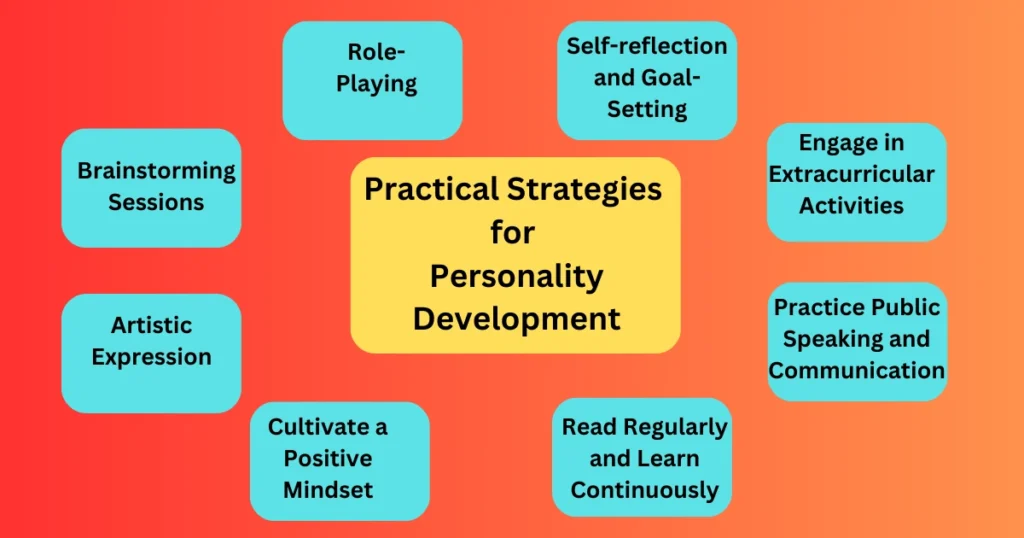
1. Self-reflection and Goal-Setting
Reflect on your strengths and growth areas regularly. Set SMART goals. For example, instead of “get better at public speaking,” try “speak up in one class discussion every week this month.”
2. Engage in Extracurricular Activities
Extracurricular activities, such as sports, drama, music, or volunteering, provide opportunities to develop leadership, teamwork, and communication skills and encourage personal growth outside the academic environment.
3. Practice Public Speaking and Communication
Joining clubs like Toastmasters, debates, or school plays helps you beat stage fear. Simple, structured ways to speak more smartly can speed this up.
4. Read Regularly and Learn Continuously
Books on personal development and leadership, like Stephen Covey’s “The 7 Habits of Highly Effective People,” offer real insight. A curated list of personality development books for students is a good starting point.
5. Cultivate a Positive Mindset
A positive mindset doesn’t mean ignoring problems. It means facing challenges with a strong, steady attitude instead of giving up early.
6. Build Strong Relationships and Network
Networking is not just for professionals; students can benefit greatly by building relationships with mentors, teachers, and peers. Strong social connections enhance interpersonal skills and provide support for personal and academic growth.
7. Artistic Expression
8. Brainstorming Sessions
9. Role-Playing
Simulating real-life scenarios through role-playing exercises helps students build adaptability and prepare for challenges they may encounter in both personal and professional settings.
Technology-Assisted Growth
- Communication Apps: Platforms like Duolingo for language learning enhance communication skills by making learning engaging and interactive.
- Public Speaking Platforms: Organizations like Toastmasters provide structured environments for students to practice and refine their public speaking skills.Mindfulness Apps: Meditation apps can help students develop emotional regulation and reduce stress, contributing to better emotional intelligence.
Teacher’s Role in Personality Development
Teachers play a big part in how personality development for students actually happens in the classroom.
- Encouraging Active Participation: Creating opportunities for students to participate actively in discussions and activities fosters confidence and engagement.
- Providing Constructive Feedback: Feedback helps students identify areas for improvement and reinforces positive behaviors.
- Creating a Positive Learning Environment: A supportive atmosphere encourages students to express themselves freely and take risks in their personal growth journey.

Effective Activities for Personality Development
Hands-on activities like these turn personality development for students into something you practice, not just read about.
1. Workshops and Seminars
2. Role-Playing and Simulations
Role-playing exercises, such as mock interviews or conflict resolution scenarios, provide students with the opportunity to practice problem-solving, decision-making, and empathy in real-life situations. These activities help students prepare for challenges they may face personally and professionally.
3. Group Discussions and Collaborative Projects
Engaging in group discussions or collaborating on projects fosters teamwork, communication, and critical thinking. These activities teach students how to navigate differing opinions and work toward common goals.
4. Volunteer Work
Volunteering in the community helps students build empathy, social responsibility, and collaboration skills. It also broadens their perspectives and encourages them to understand the challenges faced by others.
5. Journaling and Self-Assessment
Encouraging students to keep a journal allows them to track their thoughts, progress, and challenges. It promotes self-reflection, which is crucial for developing emotional intelligence and self-awareness.
Role of Emotional Intelligence in Personality Development
As the world grows more connected, emotional intelligence matters more. The World Economic Forum’s Future of Jobs Report 2025 lists strong interpersonal skills and emotional intelligence among the core skills employers expect through 2030, alongside analytical thinking and leadership. Developing EQ now helps you manage stress, handle emotions, and build better relationships, in school and later at work.
Conclusion
Personality development for students is an ongoing process, not a one-time fix. By focusing on self-awareness, communication, emotional intelligence, and leadership, you build a stronger foundation for your whole future, not just your next exam.
Start small today. Your future self will thank you for it.

Ayanshi is the founder of PersonaGuru.in, a blog focused on personality development, career, relationships, and mental well-being. With over 3 years of writing experience, she turns psychology and everyday experiences into practical, easy-to-understand advice for real life.