
Last updated on April 1st, 2026 at 11:20 am
In a world where our personalities greatly influence our relationships and life experiences, being an extrovert stands out as a remarkable trait. Extroverts are known for bringing infectious energy, strong social skills, and unwavering enthusiasm to various aspects of life.
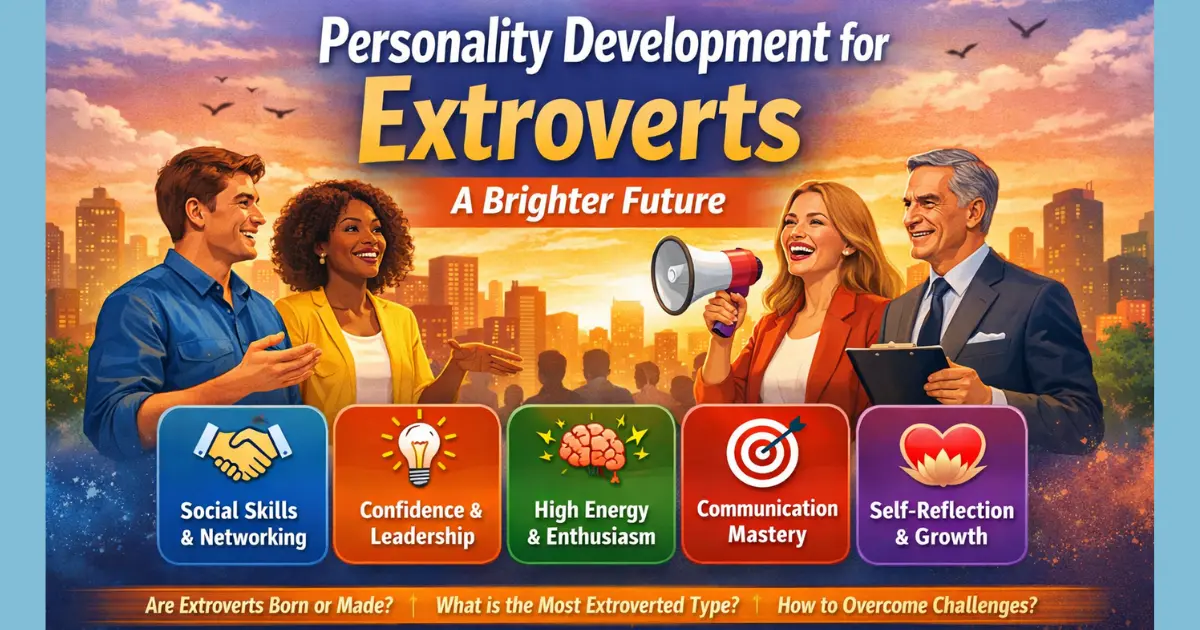
.jpg "Personality Development for Extroverts: A Brighter Future") |
| Personality Development for Extroverts: A Brighter Future |
What is an Extrovert?
An extrovert is someone who gains energy from social interaction. Psychologist Carl Jung introduced this concept in the early 20th century, and it remains one of the most studied areas in personality psychology.
A simple way to know if you are an extrovert: you feel tired after a long day alone, but feel recharged the moment you start talking to someone. Research in the Journal of Neuroscience confirms this is neurological. Extroverts have greater dopamine sensitivity, which means social interaction literally feels rewarding to their brain. Understanding this neurological fact is the foundation of real personality development for extroverts.
related read: Personality Development for Introverts
Are Extroverts Born or Made?
This is one of the most common questions people ask, and the answer is both.
| Factor | Contribution |
|---|---|
| Genetics and brain chemistry | 40 to 60 percent |
| Environment and upbringing | 40 to 60 percent |
You may be born with a natural lean toward people and activity, but the skills you build around that lean are entirely your choice.
Characteristics and Qualities of an Extrovert
Extroverts exhibit a range of characteristics that define their outgoing nature. They are often described as lively, spontaneous, and expressive. Their enthusiasm for socializing and their ability to engage with a wide variety of people make them natural networkers and communicators.
Additionally, extroverts are generally optimistic and open to new experiences, making them adaptable and approachable.
Key Characteristics:
- Sociable: Extroverts love being around people and enjoy building relationships.
- Talkative: They are often the life of the party, sharing stories and jokes.
- Assertive: Extroverts confidently express their opinions and ideas.
- Optimistic: They tend to have a positive outlook on life.
- Adventurous: Extroverts enjoy trying new things and exploring the world.
Qualities:
- Empathy: They can easily understand and share the feelings of others.
- Leadership: Extroverts often take charge and inspire others.
- Creativity: Their love for social interaction sparks innovative ideas.
- Persuasiveness: They can effectively communicate their thoughts and influence others.
- High Energy: Making any environment more dynamic and engaging
read more: Leadership: objective, Feature, Importance & traits
Benefits of Being an Extrovert
The benefits of being an extrovert play a huge role in personality development for extroverts at every stage of life.
- Extroverts report 30% higher life satisfaction compared to introverts (Personality and Social Psychology Bulletin)
- 25% more likely to be promoted into leadership roles (Harvard Business Review)
- Build strong social connections that help during tough life transitions
- Recover faster from social rejection than introverts on average
- Thrive in sales, marketing, teaching, management, and public-facing roles
Key Benefits at a Glance:
- Strong social connections and wide support networks
- Enhanced leadership and team management skills
- Improved communication in professional settings
- Higher self-confidence through regular social interaction
- Greater overall happiness and life satisfaction
.jpg "Personality Development for Extroverts: A Brighter Future") |
| Personality Development for Extroverts: A Brighter Future |
Personality Types and Extroversion
Extroversion is one of the key dimensions of personality and is a central component of various personality theories. According to the Myers-Briggs Type Indicator (MBTI), extroverts are often categorized as E (for extroverted) in one’s personality type.
Common Extroverted Personality Types:
| Type | Description | Real Example |
|---|---|---|
| ESFP | Performer, people-first, high energy | Robin Williams |
| ENTJ | Commander, goal-driven leader | Steve Jobs |
| ENFP | Champion, inspires others around a vision | Oprah Winfrey |
| ESTJ | Director, structured and organized | Judge Judy |
Most Extroverted Personality Type
ESFP is widely considered the most extroverted MBTI type. ESFPs are spontaneous, energetic, and completely people-oriented. They are happiest when surrounded by others and often become the emotional center of any group.
What Drains an Extrovert?
Extroverts do get drained, just not from socializing. Common energy drains include:
- Working alone for long hours without team interaction
- Repetitive tasks with no human connection
- Environments where they cannot speak or share ideas freely
- Being ignored or left out in social situations
- Prolonged isolation with no stimulation
Knowing your drains helps you plan your day better and avoid burnout before it happens.
How Do Extroverts Learn Best?
Extroverts are auditory and experiential learners. They retain information best when they:
- Discuss the topic with someone else right after learning it
- Teach the concept to another person
- Join group study sessions, workshops, or live seminars
- Participate in debates, Q and A sessions, or role-play exercises
Solo reading for long hours is rarely effective for this personality type. Talking through what you learn is the fastest path to retaining it.
Extraversion in Personality Development
Extraversion in personality development focuses on enhancing your natural ability to connect with others, build relationships, and thrive in social settings.
Extrovert Personality Weaknesses
Every personality has blind spots. Here is an honest look at extrovert weaknesses:
| Weakness | How It Shows Up |
|---|---|
| Impulsiveness | Making decisions without thinking through consequences |
| Difficulty Focusing | Constant need for stimulation leads to procrastination |
| Overconfidence | Underestimating risks or challenges |
| Talking Over Others | Interrupting before someone finishes their point |
| Surface-Level Relationships | Wide network but few deep, meaningful friendships |
Common Challenges Extroverts Face:
- Spending extended time alone without feeling restless
- Handling rejection or harsh criticism
- Controlling impulses in high-energy situations
- Processing emotions internally before reacting
- Building trust slowly rather than jumping into full openness
Practical Tips for Personality Development
These practical tips are specifically designed for personality development for extroverts who want real, measurable growth.
- Active Listening — In your next conversation, ask two questions before sharing your own opinion. This single habit changes how people see you.
- The 3-Second Pause — Before responding to anything, wait three seconds. It improves what you say and shows the other person you are actually listening.
- Solitude Practice — Ten minutes of quiet journaling each morning helps you process emotions before reacting to them.
- Deep Work Blocks — Set a 45-minute timer and work on one task only. This builds the focus muscle that extroverts often leave underdeveloped.
- Selective Socializing — Invest in two or three deep friendships alongside your wide network. Quality connections give you grounding that a large social circle alone cannot provide.
- Public Speaking Practice — Join a group like Toastmasters to channel your natural communication energy into a structured, high-impact skill.
read more: How to be Confident in Public Speaking
Can Extroverts Turn Into Introverts?
Not exactly. Life events like burnout, grief, or major transitions can make an extrovert temporarily withdraw. Long-term changes in the environment and aging can also soften extroverted tendencies over time.
This is not a personality change. It is emotional maturity. Their social energy becomes more intentional and selective rather than disappearing.
Who Is Happier: Introverts or Extroverts?
Research shows extroverts report slightly higher average life satisfaction, largely because of their strong social networks. But happiness depends more on living in alignment with your own values than on where you fall on the personality scale.
Extroverts with no deep relationships often feel empty despite a full social calendar. Connection quality matters more than connection quantity.
Example of an Extroverted Personality
Picture a project manager during a product launch crisis. The team is stressed, deadlines are slipping, and everyone is panicking. The extroverted project manager walks in, reads the room, makes a calm and well-timed comment to ease the tension, asks one focused question that reframes the problem, and then delegates tasks clearly.
This person is not just being social. They are using their extroversion as a leadership tool: situational awareness, emotional read, and communication, working together to provide stability. This is personality development for extroverts at its best: social energy converted into real-world impact.
Conclusion
Effective personality development for extroverts is not about changing who you are. It is about understanding yourself clearly enough to use what you already have more skillfully. Your energy, communication ability, and natural enthusiasm are real assets in both personal and professional life.
The biggest growth for most extroverts happens inward: building focus, reflection, and deeper connection alongside your natural strengths. Start with one habit today. In your very next conversation, listen more than you speak. That single shift will open up a quality of connection that even the most outgoing extrovert has not yet fully experienced.
Remember, personality development for extroverts is a journey, not a destination. Every conversation, every challenge, and every moment of quiet reflection brings you one step closer to becoming the most complete version of yourself.
Frequently Asked Questions
1. What drains an extrovert the most?
Long periods of isolation, repetitive solo work, and environments where they cannot freely communicate are the biggest drains for extroverts.
2. Are extroverts born or made?
Both. Genetics contributes 40 to 60 percent, but environment and life experiences shape how extroversion develops and is expressed over time.
3. What is the most extroverted personality type?
ESFP is widely considered the most extroverted MBTI type due to their high energy, spontaneous nature, and people-first approach to everything.
4. Can an extrovert also be shy?
Yes. Gaining energy from people and feeling nervous in new social situations can both exist together. This is called being a shy extrovert, and it improves significantly with practice.
5. Who lives a happier life, introverts or extroverts?
Studies show extroverts report slightly higher average life satisfaction. But true happiness depends on living in alignment with your personal values, not your personality type alone.
6. How do extroverts learn best?
Through discussion, group activities, teaching others, and hands-on practice. Explaining a concept to someone else right after learning it is the fastest retention method for extroverts.

Ayanshi is the founder of PersonaGuru.in, a blog focused on personality development, career, relationships, and mental well-being. With over 3 years of writing experience, she turns psychology and everyday experiences into practical, easy-to-understand advice for real life.