
Last updated on September 18th, 2026 at 10:34 am
How to become emotionally strong, in short: think before you react, protect your energy from people who drain it, and stop letting attachment or fear make your decisions for you. Emotions aren’t the enemy. Letting them run the whole show is.
I once said yes to a huge favor because I felt guilty saying no. It cost me a weekend I badly needed. Looking back, the guilt wasn’t even about the other person. It was about my own discomfort with disappointing someone. That’s usually how emotional decisions sneak up on us. Not as big dramatic moments, but as small moments where we let a feeling decide instead of us.
Key Takeaways
- How to become emotionally strong starts with pausing before you react, not suppressing how you feel.
- Emotional strength tips work best when practiced daily, not just during a crisis.
- Watch for people who only reach out when they need something.
- How to build emotional resilience often means loosening your grip on things you can’t control.
- A support system and a bit of mindfulness go further than willpower alone.
 |
| How to Become Emotionally Strong? With Additional Tips |
Signs of Emotional Weakness to Watch For
| Sign | What It Looks Like | What Helps |
|---|---|---|
| Deciding in extreme emotion | Big decisions made while angry or overjoyed | Wait 24 hours before committing |
| Over-attachment | Feeling anxious without constant contact from someone | Build a life that doesn’t depend on one person |
| Letting opportunists in | Friends who vanish unless they need a favor | Notice the pattern, then say no |
| Getting stuck on small things | A minor comment ruins your whole day | Ask if it’ll matter in a week |
| Worrying about the uncontrollable | Replaying things you can’t change | Redirect energy to what you can control |
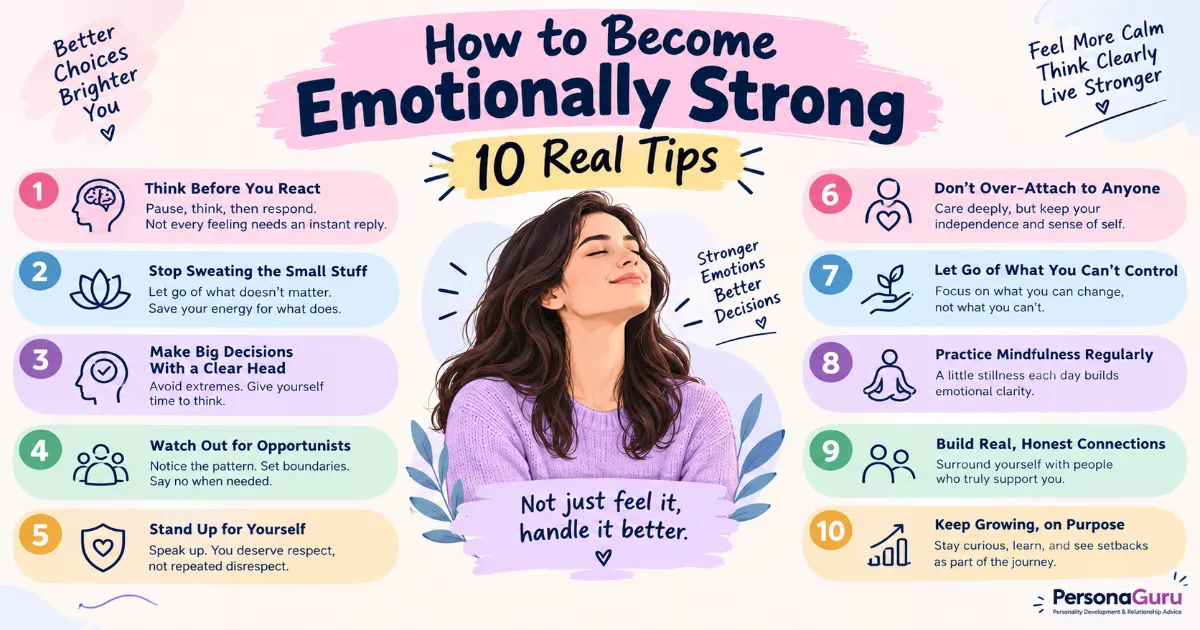
1. Think Practically, Not Just Emotionally
People sometimes use emotional pressure to get what they want from you. A guilt trip, a sob story, a flattering ask, right before a favor. Pause before reacting to persuasive words. Ask yourself what a practical, level-headed friend would say if they heard the situation from the outside.
2. Stop Sweating the Small Stuff
Small annoyances don’t deserve big reactions. Before you let something ruin your day, ask if it’ll matter in a week. If it won’t, let it go and move on. Living without constant pressure over minor things is its own kind of strength.
3. Make Big Decisions With a Clear Head
Don’t decide anything major while you’re furious, overjoyed, or overwhelmed. Emotions in the extreme cloud your judgment either way. Give yourself a day before committing to anything big. Ask what the decision could cost you six months from now, not just how it feels today.
4. Watch Out for Opportunists
Some people only show up when they need something. They’re warm and emotional right up until you need them back, then they’re suddenly busy. Notice the pattern. You don’t owe endless availability to someone who only remembers you on their terms. It’s okay to say no.
5. Stand Up for Yourself
If someone keeps disrespecting you and brushing off every conversation about it, staying quiet won’t fix it. Say clearly that it isn’t okay. Letting bad behavior slide, again and again, only teaches people they can keep doing it. Standing firm isn’t harsh; it’s necessary. If this keeps happening with the same person, our guide on setting boundaries with toxic people has more direct steps to try.
6. Don’t Over-Attach to Anyone
Caring deeply about someone is normal. Needing them just to function isn’t. If you can’t imagine a version of your life without one specific person in it, that’s worth noticing. Build enough of a life — friends, routines, interests — that losing any one person would hurt, but wouldn’t break you. Our guide on becoming self-dependent covers this in more depth.
7. Let Go of What You Can’t Control
Replaying things outside your control just wears you down. The weather, other people’s choices, decisions already made — none of it changes by worrying about it more. Put that energy toward what you can actually influence instead. Our guide on quieting a busy mind has more on this.
8. Practice Mindfulness Regularly
A few minutes of quiet attention, on your breath or your surroundings, builds real emotional clarity over time. It doesn’t erase hard feelings. It gives you a beat of space before you react to them. Our piece on mindfulness for personal growth is worth reading if you’re just starting out.
9. Build Real, Honest Connections
Not every relationship needs to be deep, but you need at least a few that are real. People you can be honest with, who don’t just show up when it’s convenient for them. A strong support network softens almost everything else on this list.
10. Keep Growing, on Purpose
Staying curious and open to learning keeps you adaptable when life throws something unexpected at you. This is close to what psychologist Carol Dweck calls a growth mindset, treating setbacks as something to learn from, not something that defines you. Our guide on building a growth mindset breaks this down further.
What Recent Research Says
Emotional strength isn’t just a personality trait; researchers now treat it as something you can actively build. A 2025 Frontiers in Psychology paper by psychologist Moshe Farchi introduced a framework showing resilience can be strengthened through acknowledgment, reframing, and tailoring your response to a situation, not just raw willpower. Separate 2025 research on resilience and emotion regulation found the two are closely linked. People who manage their emotions well also tend to bounce back from setbacks faster.
A Real Example
A colleague of mine used to say yes to every last-minute request from a particular friend, even when it wrecked her own plans. She finally said no to one, expecting the friendship to fall apart. It didn’t. The friend adjusted. What she learned was simple: the anxiety about saying no was worse than actually saying it.
Conclusion
How to become emotionally strong isn’t about shutting your feelings off. It’s about not letting them steer every decision you make. Think before reacting. Watch for people who only show up when it’s convenient. Build a life that doesn’t depend on any one person to feel steady. Start with just one or two tips from this list, and give it time. For more ways to build resilience day to day, our guide on becoming mentally strong pairs well with this one.
FAQs
Q: What’s the first step to becoming emotionally strong? A: Pause before reacting. Even a few seconds of space before you respond changes most emotional decisions for the better.
Q: Does being emotionally strong mean not feeling things deeply? A: No. It means feeling things fully without letting them make every decision for you.
Q: How do I stop being taken advantage of by emotional people? A: Notice patterns. If someone only reaches out when they need something, that’s information, not an accident.
Q: Can mindfulness really help with emotional strength? A: Yes. Even a few minutes a day builds the pause you need between a feeling and your reaction to it.
Q: Is it normal to still feel hurt sometimes, even when you’re emotionally strong? A: Yes, completely. Emotional strength isn’t about never feeling hurt; it’s about not staying stuck there.

Ayanshi is the founder of PersonaGuru.in, a blog dedicated to personality development, relationships, and mental health. With 3+ years of writing experience and 250+ published articles, she simplifies psychology into practical, everyday advice for real people.