
Last updated on September 26th, 2026 at 12:46 pm
Communication skills matter in an interview because they prove everything else about you. You can have the right experience. You can have the right answers. But if you cannot say them clearly and calmly, the interviewer never actually sees it.
Have you ever felt nervous before an interview? Worried you would not make a good impression? That worry usually comes down to one thing. How well you communicate.
Good communication makes you sound confident. It helps you connect with the person across the table. And honestly, it can decide whether you get the job.
So why are communication skills important in an interview? They help you say what you mean, connect with the interviewer, and handle tough questions without falling apart. This guide walks through why, with tips you can actually use. This is part of our complete career and workplace growth guide.
Key Takeaways
- Good communication sets the tone from the first minute.
- It helps you connect, not just answer questions.
- Clear answers show your real strengths.
- Staying calm under pressure shows you can adapt.
- Listening well matters as much as speaking well.
- AI tools now judge your communication too, not just the interviewer.
- Reading the room and adjusting your tone matters more than ever.
 |
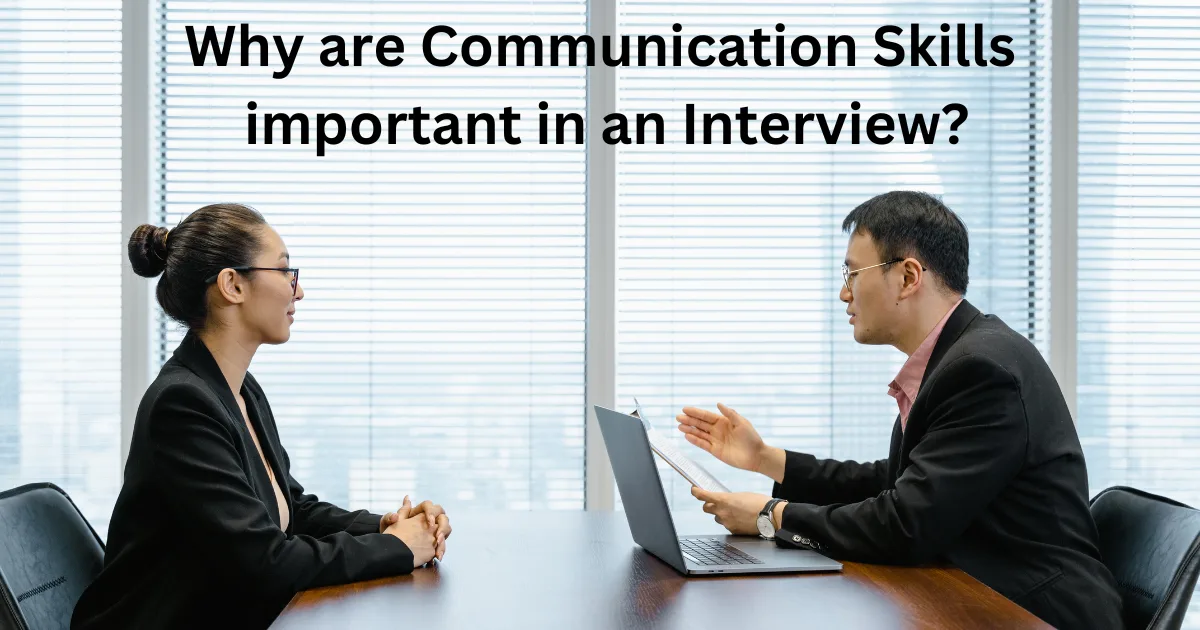
| Why are Communication Skills Important in an Interview? |
Why Communication Skills Matter So Much in an Interview
1. First Impressions Matter
You rarely get a second chance to fix a first impression. In the first few minutes, the interviewer forms an opinion. About your confidence. About your energy. How you dress and carry yourself shapes that just as much as what you say.
A NACE survey found that more than three-quarters of employers see communication as a critical skill in new hires. That is why the first few minutes matter so much. For more on building that early confidence, see our guide on how to boost your self-confidence.
2. Building Rapport with the Interviewer
Good communication helps you connect fast. It turns a formal chat into a real conversation.
Listen closely. Respond to what they actually asked, not what you rehearsed. Keep eye contact. Use simple, polite language. This builds trust quickly, and people remember you for it.
3. Showcasing Your Skills and Experiences
An interview is your one chance to talk about your work in your own words. Use clear, simple examples. Skip the jargon from your last job. The interviewer probably does not know it anyway.
Why are communication skills important in an interview? Because they help you explain your fit in a way the interviewer actually understands. Not just in a way that sounds impressive on paper.
4. Handling Difficult Questions with Confidence
Tough questions test more than your knowledge. They test how calm you stay under pressure.
Try this: say your answer in one short line first. Then explain it. This one habit stops you from rambling when you feel nervous.
5. Role of Active Listening
Communication is not just talking. It is listening well too. Nod. Ask a follow-up question. Do not repeat something the interviewer already said. This shows respect, and it ties directly into the body language and tone that make your words land. See our full guide on active listening skills for more.
A quick example: Aryan, a second-year analyst in Gurgaon, used to answer every question the second it finished, before he had really processed it. His mentor gave him one rule before his next round of interviews. Pause for two seconds before answering, every time. He felt awkward doing it at first. But the interviewer later told him his answers felt “thought through, not rehearsed.” That one small pause changed how the whole conversation landed.
Role of AI in Recruitment
Many companies now use AI tools to screen interviews. These tools check your tone, your pace, and how clearly you speak. That makes clear, simple speech matter more than ever.
NACE’s Job Outlook 2026 survey found that 70% of employers now use skills-based hiring, up from 65% the year before. Among employers who use it, 87% lean on it most heavily at the interview stage. So interviewers want real proof now, not just claims. One clear example beats ten vague adjectives, every time. See the full NACE report on skills-based hiring for the complete numbers.
Why Video Interviews Are Different
Video interviews are common now. A few small habits go a long way:
- Look at the camera, not the screen. It reads as real eye contact on the other end, even though it feels strange to you.
- Test your mic and light a day before. Not five minutes before.
- Keep a backup plan ready, like a phone hotspot, in case the call drops.
- Speak a little slower than usual. Video flattens your tone more than you think.
Adjusting for Diverse Workplaces
Today’s workplaces are diverse. Adjusting your communication style shows you can fit in without losing who you are.
- Match the company’s tone. Stay formal if they are formal.
- Skip local slang; the interviewer may not follow.
- Pick the clear word over the clever one, every time.
Good Communication Skills in an Interview: Examples
- Clarity and conciseness: Speak clearly. Do not ramble. Keep answers to the point.
- Positive body language: Good posture, real eye contact, a genuine smile. See our guide on confident body language for specifics.
- Empathy: Show real interest in what the interviewer is asking, not just your own script.
- Confidence without arrogance: Answer with conviction, but stay humble.
- Adaptability: Adjust your tone as the conversation actually flows.
Why This Matters Even More for Freshers
Why are communication skills important in an interview for freshers, especially? You may not have much work experience yet. So communication becomes most of what you are actually selling.
- Show real excitement for the role.
- Talk about teamwork and your eagerness to learn.
- Explain how your college projects prepared you for this.
If they ask about your lack of experience, talk through a college project that taught you something close to what the role needs.
Common Mistakes to Avoid
- Talking too much or too little. Keep it balanced.
- Interrupting the interviewer. Let them finish first.
- Negative language. Do not criticize past employers.
- Poor body language. Do not slouch. Do not avoid eye contact.
- Being overconfident. Stay confident, not arrogant.
Why are communication skills important in an interview? Partly because dodging these five small mistakes matters as much as what you actually say. Real confidence, built before you walk in, is what helps you stay calm enough to avoid all five.
Practical Tips to Improve Your Interview Communication
- Practice common questions. Rehearse with a friend or mentor.
- Record a mock interview. Watch it back. You will spot habits you cannot feel in the moment.
- Join a speaking group. Toastmasters builds real speaking confidence, fast.
- Read and write daily. Your vocabulary grows without you noticing.
- Practice active listening. Paraphrase what others say in everyday chats too, not just interviews.
Most of this comes down to speaking smartly in any conversation. The same habits that make you a better talker at work make you a stronger candidate too.
Communication Starts Before the Interview
Why are communication skills important in an interview? Even your resume and cover letter speak before you say a word. A clear, well-written application is what gets you in the door. Once you are there, your self-career perception shapes how convincingly you talk about your own worth.
You can also read Indeed’s guide on making a strong interview impression, or check the latest hiring trends directly from NACE.
Conclusion
So, why are communication skills important in an interview? They help you say what you mean, connect with the person across the table, and answer hard questions without losing your footing.
As Dale Carnegie put it, confidence comes from doing the thing you fear, again and again, until you build a real record of success.
Start working on this today. It will not just help you in interviews. It will help your whole career.
Frequently Asked Questions
Why are communication skills important in an interview more than technical skills? Technical skills prove you can do the job on paper. Communication skills are what let you actually show that during a 30-minute conversation. Without them, even strong experience can come across as unclear or underwhelming.
What are good communication skills to mention in an interview? Active listening, clear and concise answers, calm body language, and the ability to explain your work without jargon all count. Naming a specific example, not just the skill itself, makes it far more convincing.
How can I improve my communication skills quickly before an interview? Practice one or two common questions out loud, not just in your head. Record yourself if you can. Most people are surprised by how different their answers sound once they actually hear them back.
Do video interviews need different communication skills than in-person ones? Mostly the same skills, with a few adjustments. Look at the camera instead of the screen, speak slightly slower, and test your setup well before the call. Small technical habits matter as much as what you actually say.
Why do communication skills matter more for freshers with no experience? Because you have less work history to lean on, how you explain what you do have carries more weight. A clearly told story about a college project often lands better than a vague list of skills.

Ayanshi is the founder of PersonaGuru.in, a blog focused on personality development, career, relationships, and mental well-being. With over 3 years of writing experience, she turns psychology and everyday experiences into practical, easy-to-understand advice for real life.