
Last updated on October 31st, 2026 at 11:35 am
Body language in personality development means how your posture, face, hands, and eyes show who you are, and how well you read the same things in other people. It does not change your personality. It changes how people see you, and it can change how you feel in the room.
This guide explains the types of body language, why first impressions form so fast, what research really says, and 12 easy tips you can practice from today. Body language is one part of personality development, so it works best when you build other habits along with it.
Two people walk into the same interview. Both have the same marks and the same resume. One comes in with shoulders pulled in, eyes on the floor, and hands tight in the lap. The other sits straight, looks at the panel, and nods while listening. Nobody has spoken yet. The panel has already started making up its mind.
That is why this topic matters. Your body talks before you do.
Key Takeaways
- Body language is what you say without words, through your face, posture, hands, eyes, and distance from people.
- People judge a face in a fraction of a second, so small habits count.
- The popular claim that 55 percent of communication is body language is a myth. Its own author says so.
- Power poses may change how you feel. The claim about hormones did not hold up.
- The same gesture can mean different things in different cultures.
- Pick two tips, practice them daily, and ask a friend for honest feedback.
 |
| Body Language in Personality Development: Master Your Confidence |
What is Body Language?
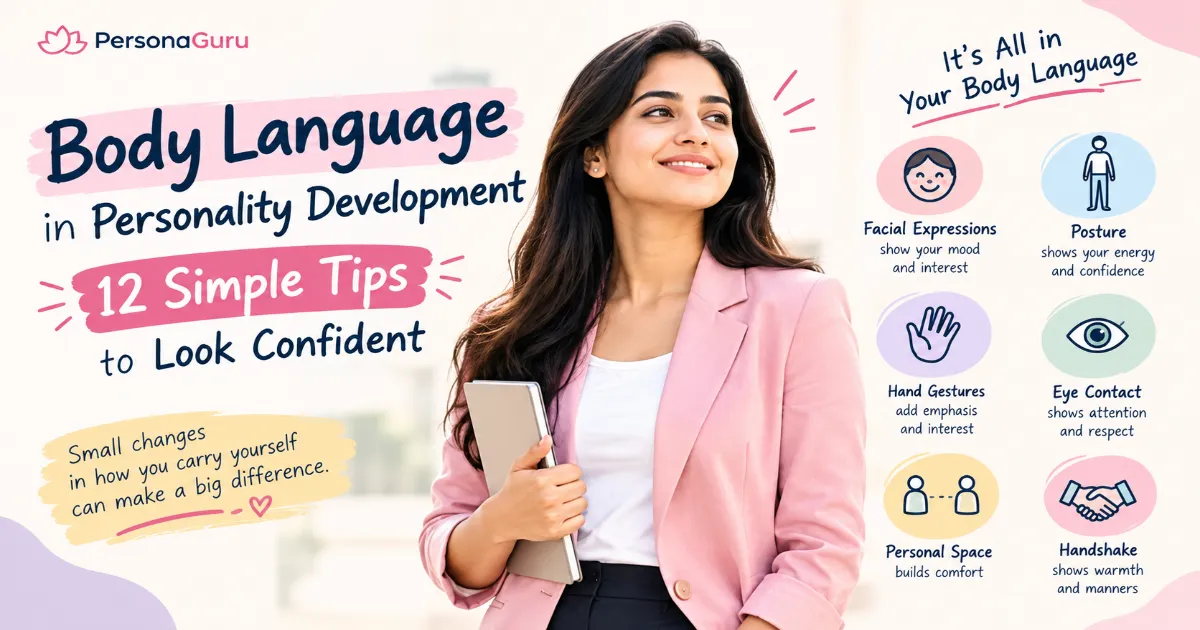
Body language is everything your body says without words. It covers your face, the way you sit and stand, what your hands do, where you look, and how close you stand to people.
Most of it happens without thought. Your face shows worry before you say you are worried. Your arms cross when you feel unsure. People notice these things, even when they cannot say why.
People judge you fast, and your body gives them the first clues. In a study by Willis and Todorov in Psychological Science, people saw faces for only 100 milliseconds. Their judgments about traits like trustworthiness and competence were close to the judgments they gave with no time limit. You can see the findings in the PubMed record of the study.
Do not read too much into this. That study looked at faces, not full body language. It does not prove that one gesture decides how people see you. It does show that first views form fast, and extra time mostly makes people more sure of them.
So body language in personality development does three jobs:
- It builds the first impression.
- It supports your words, or weakens them when your body says something else.
- It affects your own mood, because acting calm often helps you feel calm.
55 Percent Myth
You may have read that 7 percent of communication is words, 38 percent is tone, and 55 percent is body language. This comes from Albert Mehrabian’s experiments. But in his own statement, as summarized on Wikipedia, these numbers apply only when someone talks about feelings or attitudes. He says the equations do not apply otherwise.
So do not quote that number in a speech or an assignment. Words matter a lot. Body language matters most when it does not match the words, like someone who says “I am fine” with a tight face.
Types of Body Language in Personality Development
 |
| Body Language in Personality Development: Master Your Confidence |
| Type | What it shows | Example |
|---|---|---|
| Facial expressions | Mood and interest | A real smile shows warmth. A frown shows doubt |
| Posture | Energy and confidence | A straight back shows you are ready. Slouching can show tiredness |
| Hand gestures | Emphasis and interest | Open palms when you explain. A nod when you follow |
| Eye contact | Attention and respect | Looking at the person who is speaking |
| Personal space | Comfort | Standing too close can feel pushy |
| Handshake | Warmth and manners | A firm, short handshake at an interview |
No single sign tells the whole story. Look at a few signs together, and think about the situation.
How Body Language Builds Your Personality
Body language in personality development is the part of you that people can see. When you change your habits, people see a different side of you. Over time, you may start to see yourself that way too.
Confidence and Self-Esteem
When you stand tall and speak at an even pace, you often feel steadier. The effect is small, but many people notice it. It works like a loop. You act calm, people respond well, and you feel more sure of yourself. For more, read our guide to self-confidence development and these tips on confident body language.
What About Power Poses?
You may have heard that standing like a superhero for two minutes raises testosterone. The research does not support that. A larger study by Ranehill and others in 2015 found that posing made people feel stronger, but it found no change in hormones or behavior. One of the original authors, Dana Carney, said in 2016 that she no longer believed the effect was real. You can see a summary on Wikipedia’s power posing page.
Later reviews say posing may help how people feel, but even that evidence is mixed. So use a power pose to calm your nerves, not as a hormone trick.
Trust and Relationships
Good body language in personality development also builds trust. People trust you more when your face, words, and body agree. A warm voice with crossed arms and a blank face confuses people. Listening shows in your body too. Face the speaker, nod, and keep your phone down. Our guide on how to practice active listening skills has simple drills. It also links with emotional intelligence, because reading others is part of it.
Positive vs Negative Body Language in Personality Development
| Positive body language | Negative body language |
|---|---|
| Open posture, relaxed shoulders | Crossed arms, hunched shoulders |
| Steady, friendly eye contact | Staring, or never looking at the person |
| Calm, natural hand movements | Tapping, fidgeting, or clenched fists |
| Slight lean forward while listening | Leaning back with a blank face |
| Real smile | Forced smile or no smile |
| Nodding at the right moments | Checking the phone during a talk |
Negative body language does not always mean a bad attitude. A person with crossed arms may just be cold. Check the situation before you judge.
Body Language in Everyday Situations
In a Job Interview
Sit straight with your feet flat on the floor. Look at the person who asks the question. If there is a panel, move your eyes between the members. Keep your hands in view and calm. Give a firm, short handshake. For more, read how to improve your personality for job interviews and our list of top interview skills.
While Speaking in Public
Stand with both feet on the ground and keep your chest open. Use your hands to point at ideas, not to wave around. Look at different parts of the room. Pause between points. If your hands shake, rest them on the podium or hold a pen. If fear is the main problem, read how to overcome fear of public speaking. Want to use body language with slides? See this presentation guide.
At Work and on Video Calls
On a video call, people see only your face and shoulders. Sit with the camera at eye level. Look at the lens when you speak. Keep your face relaxed when others talk. Nod lightly so they know you are following. Our guide on communication skills for remote teams has more.
In Daily Conversations
Face the person, put your phone away, and keep a comfortable distance. Match their energy a little, but do not copy every move. Too much copying looks fake.
Body Language Across Cultures
The same gesture can mean different things in different places. Eye contact is a good example. In a study by researchers at the University of Tokyo and the University of Tampere, Japanese participants rated faces with direct eye contact as more unapproachable and angrier than Finnish participants did. You can read the summary on the University of Tokyo research news page.
This does not mean every person from a country acts the same way. It means you should watch how the other person behaves and change your style. With seniors, new teams, or people from other countries, start with softer eye contact and see how they respond. Read more on how to improve cross-cultural communication skills.
Body Language for Introverts and Shy People
You do not need to become loud. Quiet people can look warm and confident with small things: a calm face, a light smile, steady posture, and good listening. Start with one person, then try a small group. Our guide on personality development for introverts has more ideas.
12 Tips to Improve Body Language in Personality Development
Pick two to begin. Add more after two weeks.
1. Check Your Posture Twice a Day
Set two reminders on your phone. When they ring, drop your shoulders, lengthen your back, and breathe out slowly.
2. Hold Eye Contact for a Few Seconds at a Time
Look at the person while they speak. Look away for a moment when you think. Looking is not staring.
3. Smile When You Mean It
A real smile reaches your eyes. If you do not feel like smiling, relax your face instead of forcing a grin.
4. Keep Your Hands Open and Calm
Show your palms when you explain something. Rest your hands on your lap or the table when you listen.
5. Stop Fidgeting
Tapping, clicking a pen, and shaking a leg pull attention away from your words. Notice which one you do. Then keep that hand or leg still.
6. Face the Person You Talk To
Turn your shoulders and feet toward them. It shows interest without a word.
7. Slow Down
Fast movements and fast speech look nervous. Take one breath before you start talking.
8. Respect Personal Space
An arm’s length is a safe start for most casual talks. If the other person steps back, give more room.
9. Nod and Listen
A small nod shows you are following. Do not nod all the time, or it looks like you are not really listening.
10. Match Their Energy, Lightly
If a friend speaks softly, do not shout. If a colleague is excited, show some interest. Match the mood, not every move.
11. Record Yourself
Take a one-minute video of yourself talking about your day. Watch it with the sound off. You will spot habits you never noticed.
12. Ask for Honest Feedback
Pick one friend or colleague and ask, “What does my face do when I am nervous?” Listen without arguing. This also builds self-awareness.
A 7 Day Practice Plan
Use this plan to turn body language in personality development into a daily habit.
| Day | Focus | What to do |
|---|---|---|
| 1 | Posture | Check it at two fixed times |
| 2 | Eye contact | Hold it for a few seconds in each chat |
| 3 | Hands | Keep them calm and visible |
| 4 | Fidgeting | Find your habit and stop it |
| 5 | Listening | Face the speaker and nod lightly |
| 6 | Video | Record yourself for one minute |
| 7 | Feedback | Ask one person what they noticed |
Common Mistakes to Avoid
These mistakes slow down body language in personality development for most beginners.
- Copying someone exactly. It looks fake. Match the mood, not every move.
- Forcing eye contact. Staring makes people uneasy.
- Reading one sign alone. Crossed arms can mean the person is cold.
- Ignoring culture. What shows respect in one place may look rude in another.
- Acting like someone else. Aim to be a calmer version of yourself.
How to Read Other People’s Body Language
Reading others is the second half of body language in personality development. Look at a group of signs, not one. First notice how the person normally acts. Then look for a change. A talkative colleague who suddenly goes quiet and turns away tells you more than a person who is always quiet. If you are unsure, ask. “You look worried. Is everything okay?” works better than guessing.
Conclusion
Body language in personality development is a skill you can train. You do not need a big change. Fix your posture, keep your hands calm, look at people when they speak, and let your face show what you mean. Drop the myths, like the 55 percent rule and the hormone claim behind power poses. Focus on habits that you can practice and check for yourself.
Start with one tip today. Ask a friend how you come across in a conversation. Then follow the 7-day plan and see what changes.
FAQs
What is body language in personality development?
It is the way your posture, face, hands, eyes, and personal space show who you are, and how well you read others. It supports your personality but does not replace it.
How can I improve my body language in personality development?
Start with posture, eye contact, and calm hands, then ask a trusted person for feedback. Record a short video of yourself talking and watch it without sound.
What are examples of positive body language in personality development?
A real smile, open posture, steady eye contact, relaxed shoulders, a slight lean forward while listening, and gentle nodding.
Is body language in personality development more important than words?
No. The popular 55 percent claim is a myth. Body language matters most when it does not match your words, because people tend to believe what they see.
Can body language change your personality?
Not on its own, but calm and open habits can change how others see you and how confident you feel.

Ayanshi is the founder of PersonaGuru.in, a blog focused on personality development, career, relationships, and mental well-being. With over 3 years of writing experience, she turns psychology and everyday experiences into practical, easy-to-understand advice for real life.
3 thoughts on “Body Language in Personality Development: 12 Simple Tips to Look Confident”