Unconditional Positive Regard in Personality Development

Unconditional Positive Regard in Personality Development explained with Carl Rogers' theory, self-worth, and healthy relationships
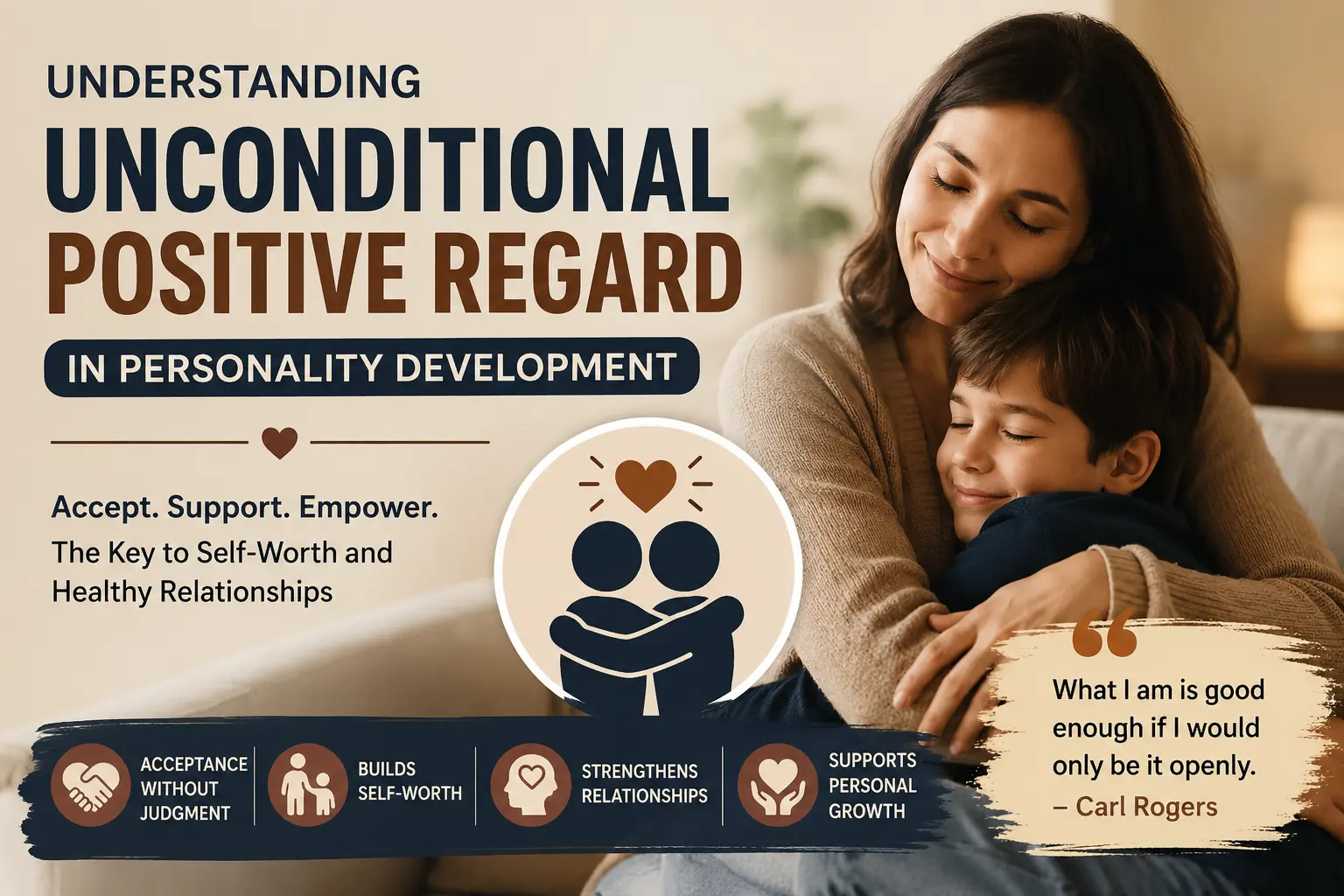
Have you ever felt loved only when you did everything right? That feeling has a name in psychology. Understanding it can change how you raise your children, treat your partner, and talk to yourself. Unconditional positive regard in personality development is the practice of accepting a person completely, without judgment, no matter what they say, … Read more
Stages of Personality Development: A Complete Guide to Freud, Erikson, and Beyond

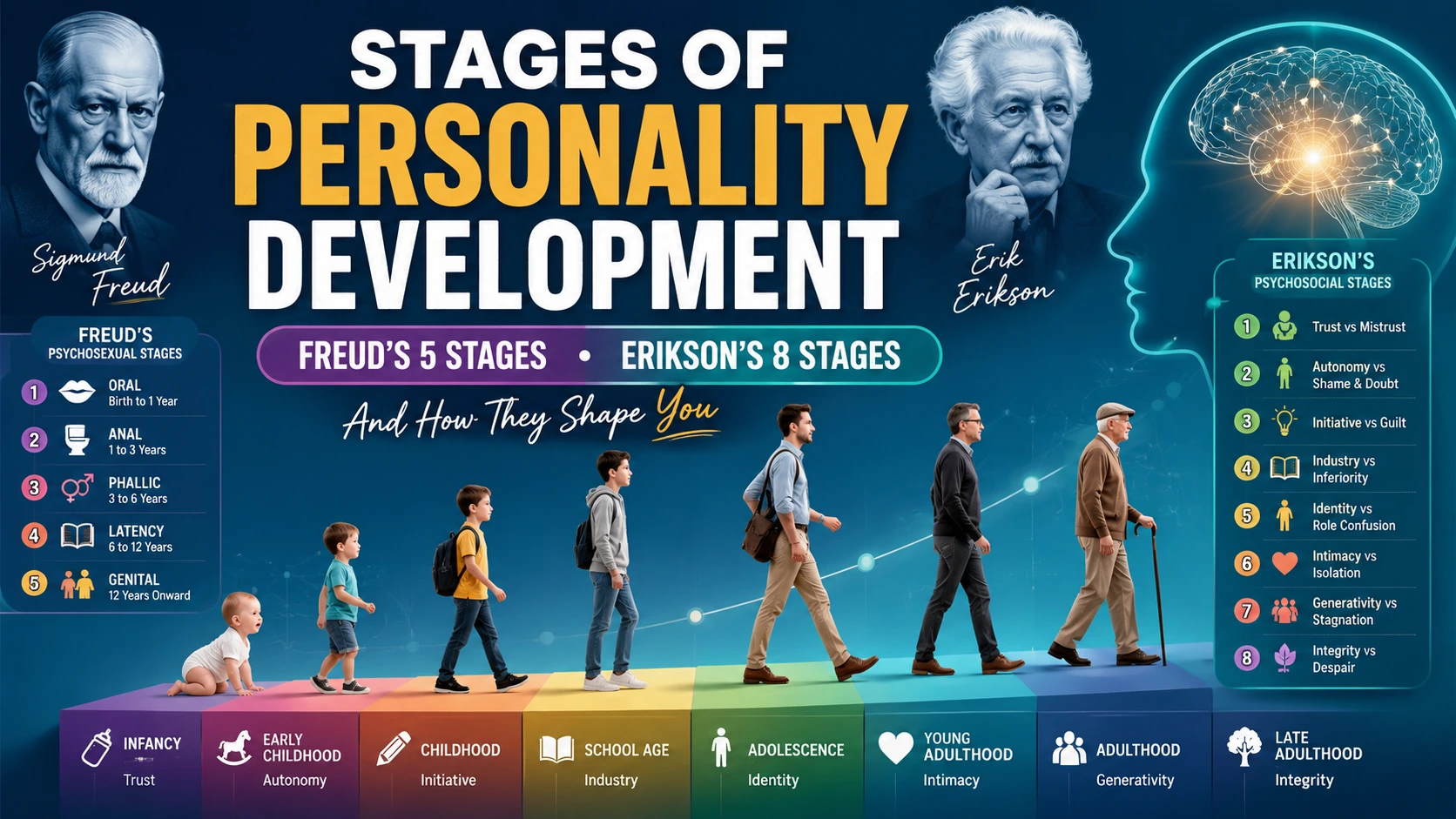
Stages of personality development infographic comparing Freud's 5 stages and Erikson's 8 stages across the human lifespan.

Meera’s son turned six last month. Overnight, he stopped asking her to tie his shoelaces. He wanted to do it himself, even when it took ten extra minutes and three tries. Meera almost stepped in to help. Then she remembered something from her own college psychology class. This was not stubbornness. This was a stage. … Read more

Personality Development: The Complete Guide (2026)

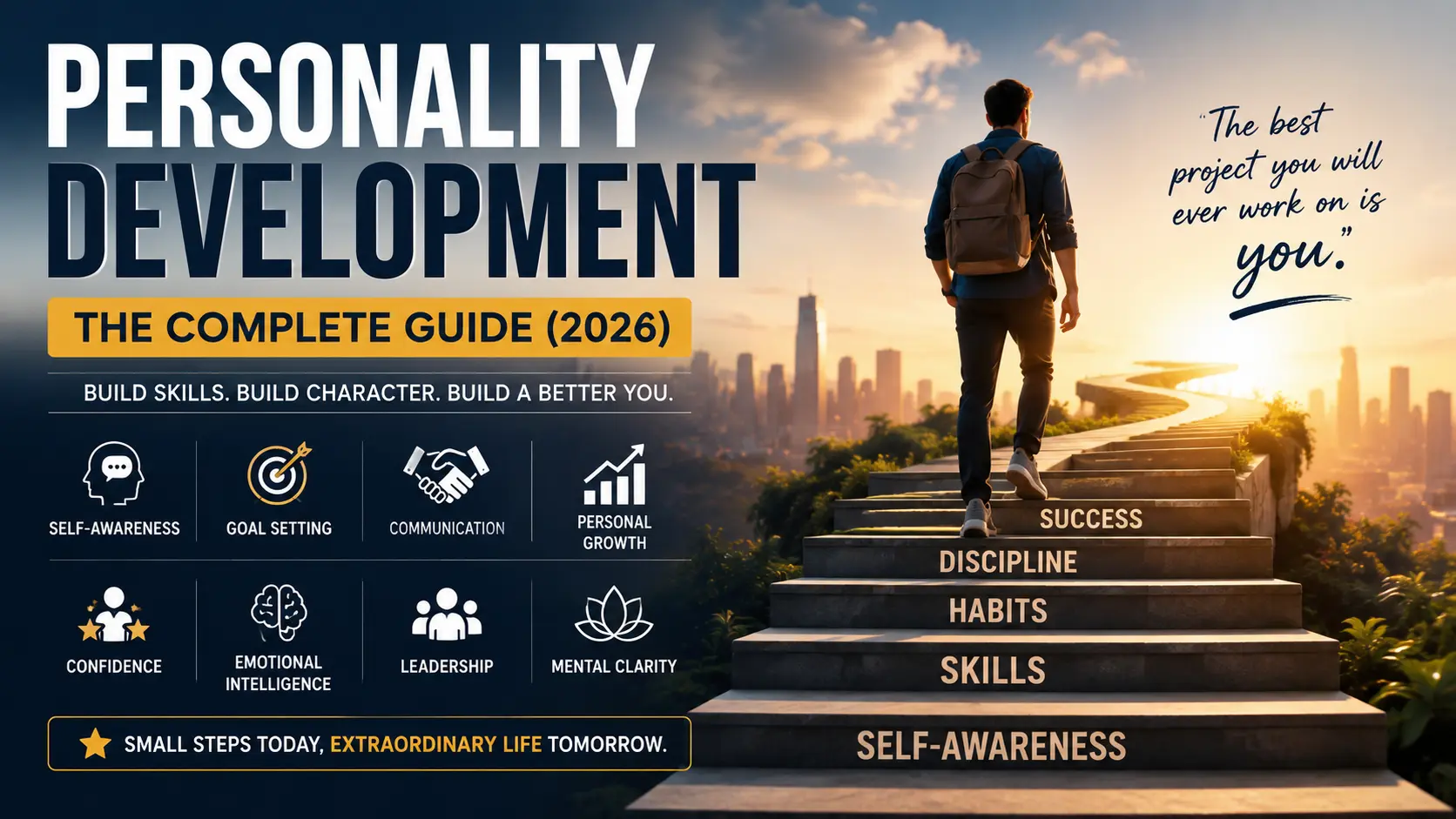
Personality development guide showing a confident person walking toward success, representing self-awareness, confidence, communication skills, leadership, and personal growth.

Personality development is the lifelong process of improving how you think, feel, behave, and connect with others. It covers six areas: emotional, social, intellectual, moral, professional, and physical growth. You cannot change your basic temperament. You can build habits, self-awareness, and skills that change how people experience you. Rohan was the smartest person in his … Read more

Social Intelligence in Personality Development (Complete Guide)

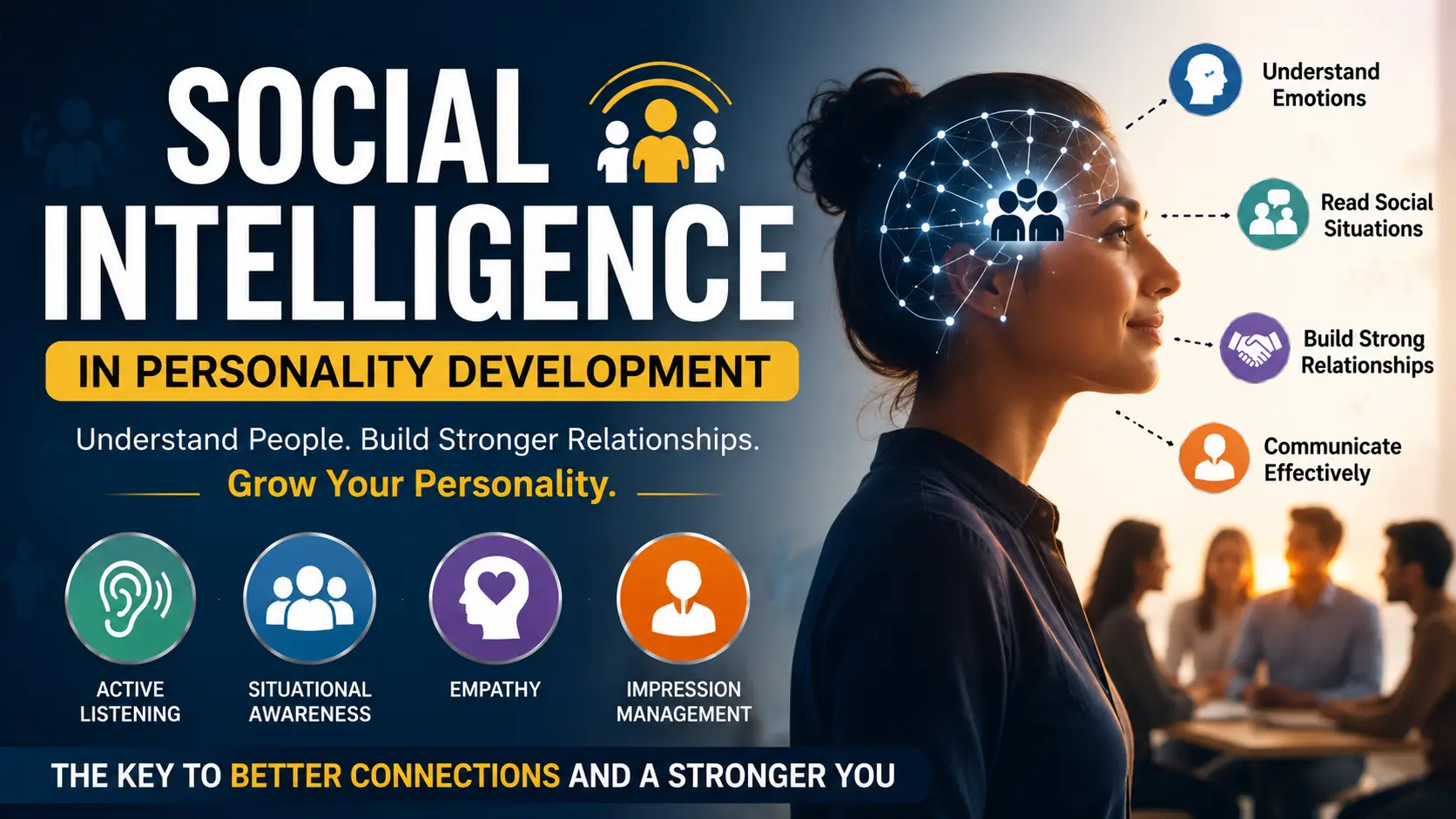
Social intelligence in personality development showing active listening, empathy, situational awareness, and impression management to build stronger relationships and communication skills.

Social intelligence in personality development is the ability to read people, understand social situations, and respond in a way that builds trust instead of tension. It sounds simple, but it shapes almost everything about how others experience you. Think about the last time you walked into a room and instantly felt the mood. Maybe your … Read more

7 Ways to Improve Your Negotiation Skills (With Real Examples)

Professional handshake illustrating 7 ways to improve your negotiation skills with real examples for work, relationships, and personality development.

If you are looking for practical ways to improve your negotiation skills, you are not alone. Most of us were never taught how to negotiate. We picked up habits by accident, some good, some not so good. John F. Kennedy once said, “Let us never negotiate out of fear. But let us never fear to … Read more

Locus of Control in Personality Development: Meaning, Types, and How to Build It

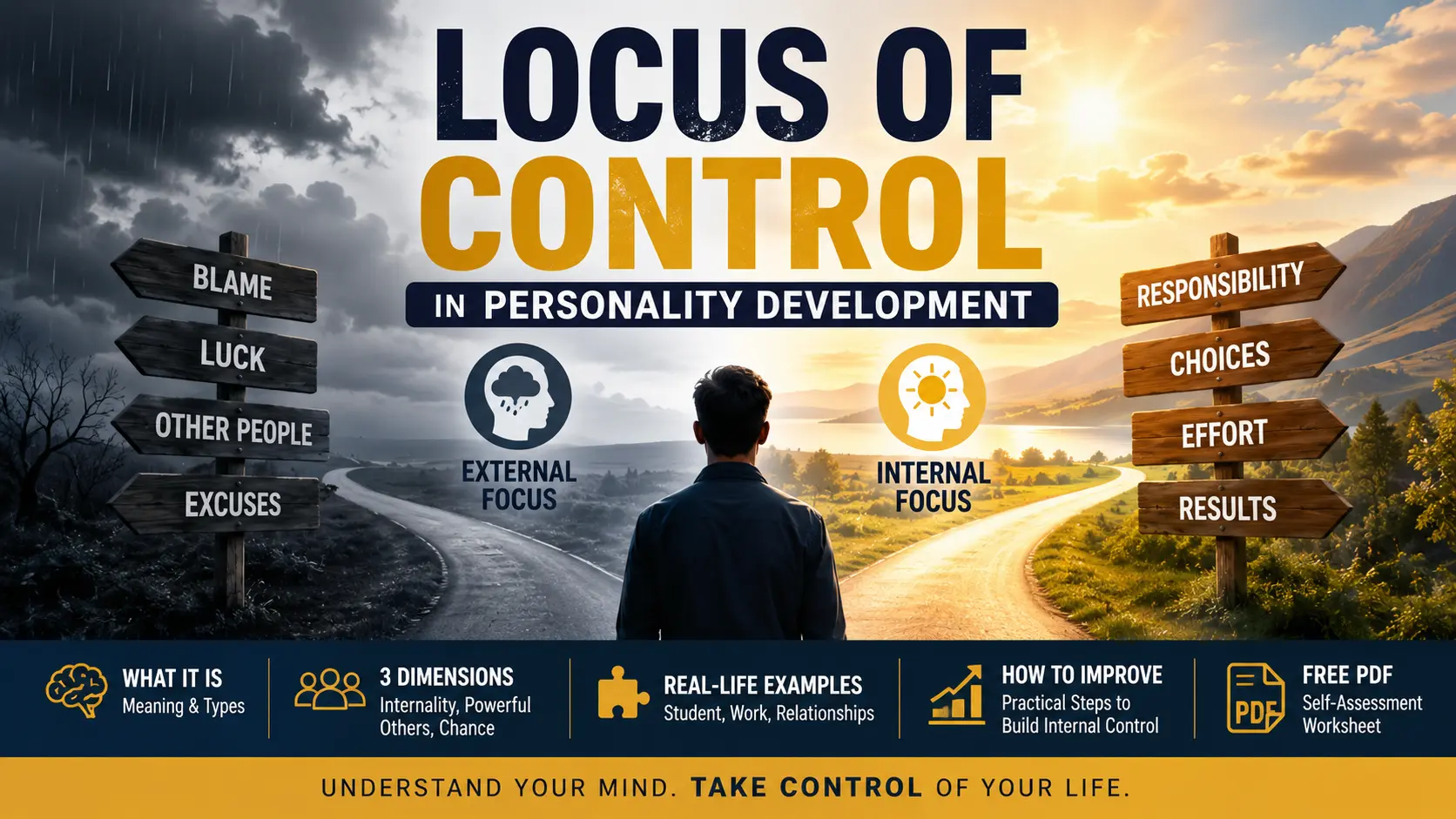
Locus of Control in Personality Development feature image showing internal vs external locus of control, key differences, personality growth, and the three dimensions of locus of control

Have you ever failed at something and blamed bad luck right away? Now think of someone you know who does the opposite. They fail, they sit with it for a minute, and then they ask, “What can I do differently next time?” That gap between the two of you is not just an attitude. It … Read more

SWOT Analysis in Personality Development: The Complete Guide (2026)

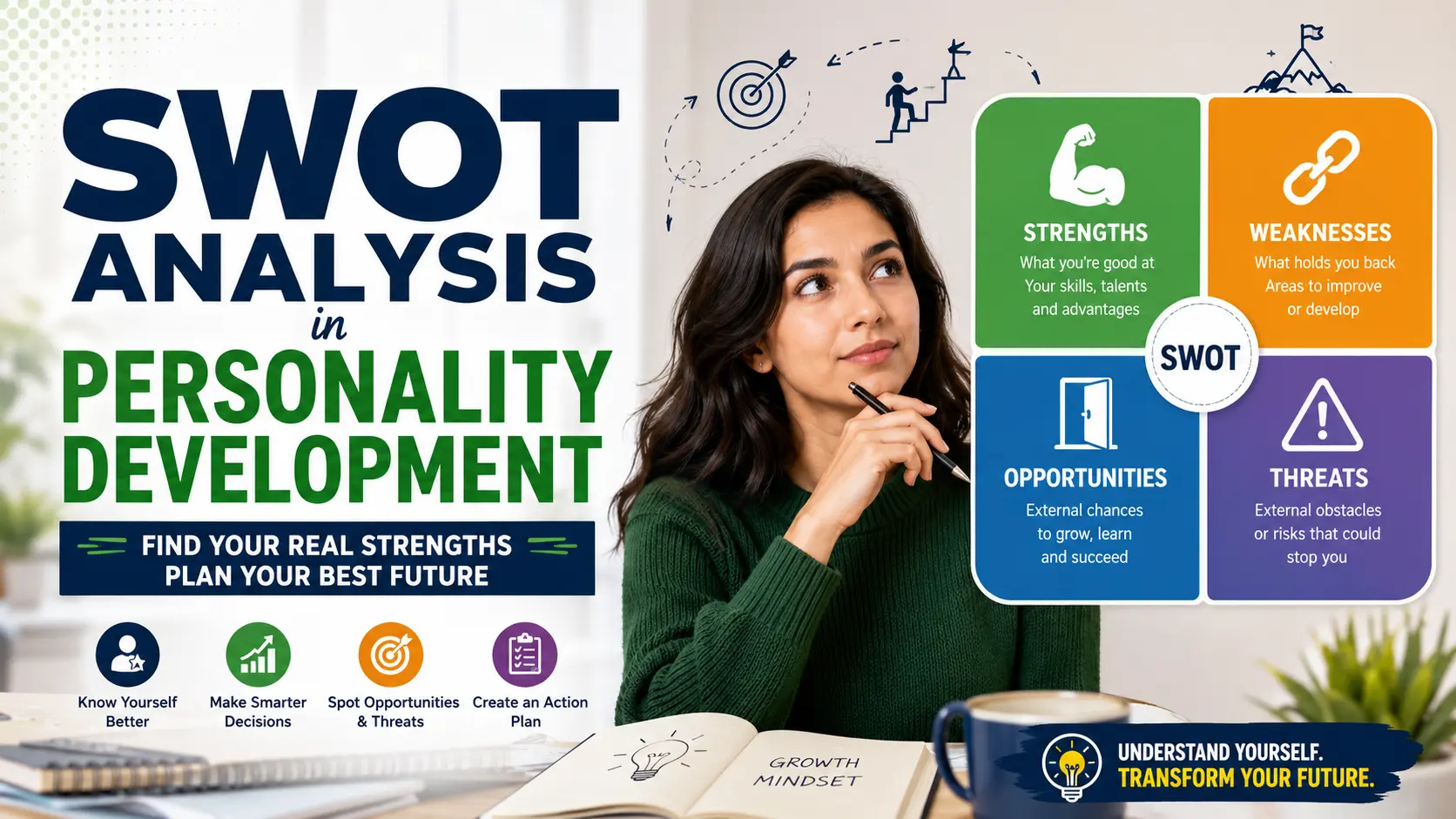
Illustration of SWOT analysis in personality development showing strengths, weaknesses, opportunities, and threats with a personal growth planning concept

You already know the SWOT framework from business classes or office meetings. Strengths, weaknesses, opportunities, threats. Four boxes, one grid. What most people do not realize is that the same tool works just as well when you point it at yourself instead of a company. A SWOT analysis in personality development is simply this framework … Read more

15 Selective Perception Examples in Everyday Life

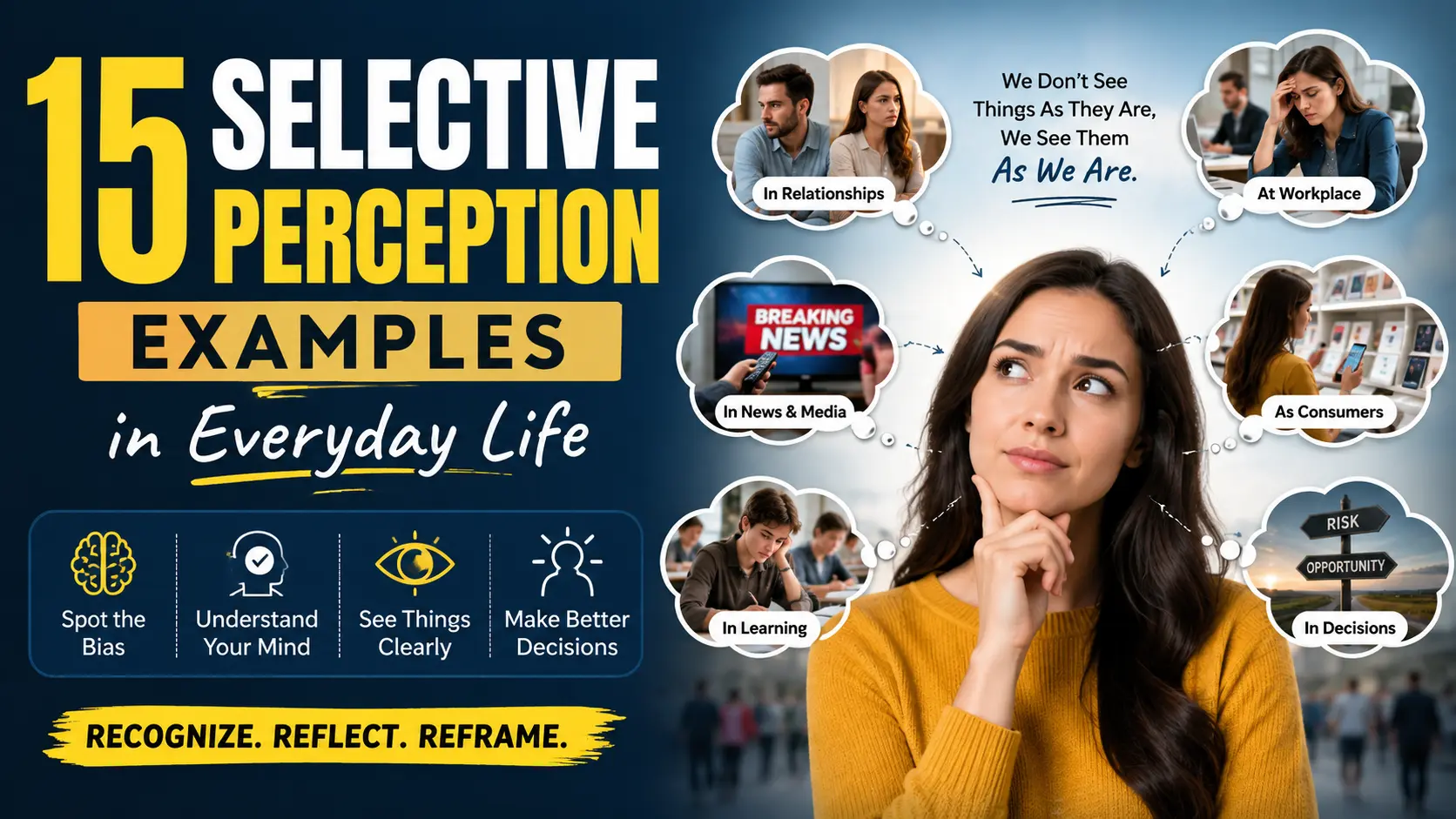
Illustration showing 15 selective perception examples in everyday life, including relationships, workplace, media, and decision making

Every second, your brain takes in millions of sensory signals. It cannot give equal attention to all of them, so it filters. It picks what to notice, what to ignore, and what to remember. This filtering habit is called selective perception. It is one of the most common forms of cognitive bias, and one of … Read more